
How Leather Is Made Step by Step: From Raw Hide to Bag
Understanding how leather is made step by step changes the way you look at a bag. Every tote, wallet and messenger starts as a raw hide, a by-product of the meat industry, and only becomes leather after a long sequence of washing, stripping, splitting, tanning and finishing. Here is that sequence in plain language, and what each stage means for the piece you eventually carry.
The Three Big Phases of Leather Production
Tanners group the work into three sub-processes that always happen in the same order: preparatory stages (sometimes called the beamhouse), tanning, and crusting. Many leathers then receive a fourth step, surface finishing. Not every hide goes through every operation. A rugged vegetable-tanned bag leather and a soft, pigmented upholstery leather follow very different recipes, but the backbone is the same.
- Preparatory stages: clean the hide and remove everything that is not useful collagen.
- Tanning: chemically stabilize that collagen so it no longer rots.
- Crusting: thin, retan, color and lubricate the leather, then dry it.
- Finishing: protect or change the surface, if the leather needs it.
Step 1: Curing and Soaking the Raw Hide
A fresh hide begins to decompose within hours, so the first job is preservation. Most hides are salted or chilled at the slaughterhouse and shipped to the tannery in that state. On arrival they go into large drums or pits for soaking, which washes away salt, dirt and blood and rehydrates the fibers so chemicals can penetrate evenly later on.
This is also the first quality checkpoint. Brands, insect bites, barbed-wire scratches and veins are visible now, and they decide whether a hide can become full-grain leather or will need its surface sanded later.
Step 2: Liming, Unhairing and Fleshing
Next comes liming. The hides tumble in an alkaline bath, traditionally lime with sodium sulfide, that loosens the hair, removes unwanted proteins and "opens up" the fiber structure. Hair is then removed in the unhairing step, and a fleshing machine scrapes off the fat and connective tissue on the underside, a step called fleshing.
This is the stage behind most of the unpleasant reputation tanneries carry. Liming and unhairing generate sulfide-rich effluent, and deliming can release ammonia. Modern alternatives exist, including enzyme-assisted low-sulfide unhairing and ammonia-free deliming, and several have reached commercial use. How a tannery handles this water is covered in detail in our guide to how tannery wastewater treatment works.
Step 3: Splitting the Hide into Layers
A cowhide is too thick for most bags, so it is fed through a splitting machine that slices it horizontally into layers. This single step determines the grade names you see on labels:
- The grain layer is the top, outer surface with the tightest, strongest fibers. Left intact, it becomes full-grain leather. Lightly sanded, it becomes top-grain.
- The split is the lower, fibrous layer. It can be sueded, or it can be coated and embossed to imitate grain.
Splitting can happen before tanning (in the "lime" state) or after, depending on the tannery. If you want to know how those grades compare on durability and price, our breakdown of corrected-grain vs. bonded leather picks up where this step leaves off.
Step 4: Deliming, Bating and Pickling
Before tanning, the alkaline hide must be brought back to a usable state:
- Deliming removes the lime and unhairing chemicals.
- Bating uses enzymes to break down remaining non-structural proteins and soften the grain.
- Degreasing removes natural fats, which matters especially for fatty skins such as sheep.
- Pickling lowers the pH into the acidic range with acid and salt. For chrome tanning, hides typically finish pickling at around pH 2.8 to 3.2, which lets the tanning agent penetrate the full thickness.
Step 5: Tanning, the Point of No Return
Tanning is what turns skin into leather. It locks the collagen fibers together so the material dries flexible instead of hard, and does not putrefy when it gets wet again. There are two dominant routes.
Chrome tanning
Chromium (III) salts are the most widely used tanning agent. Hides rotate in a drum with the tanning liquor until it has penetrated completely, then the pH is slowly raised (basification) to fix the chrome to the fibers, ending around pH 3.8 to 4.2. The result is a pale blue material known in the trade as wet blue. Chrome tanning is fast and produces soft, water-resistant, colorfast leather.
Vegetable tanning
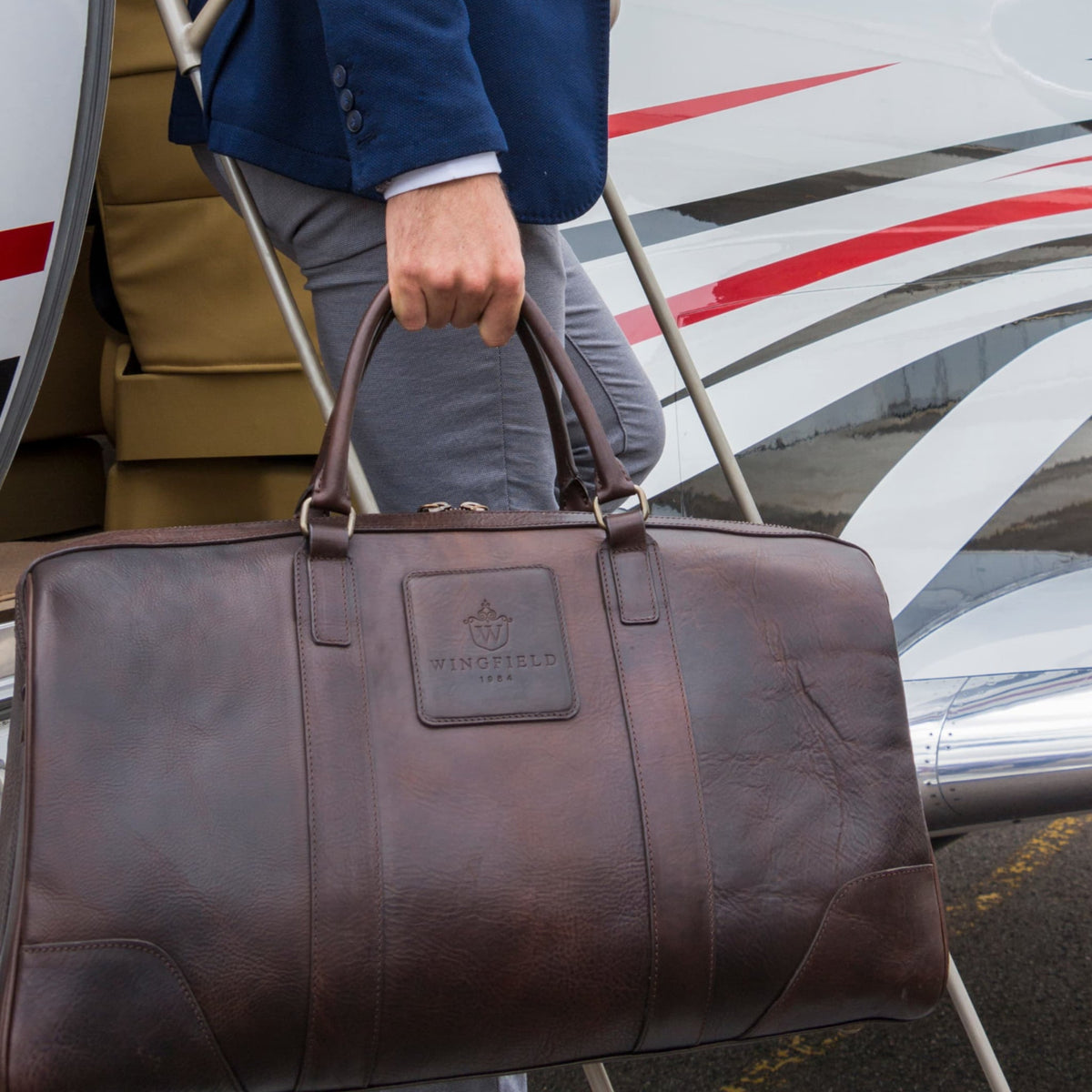
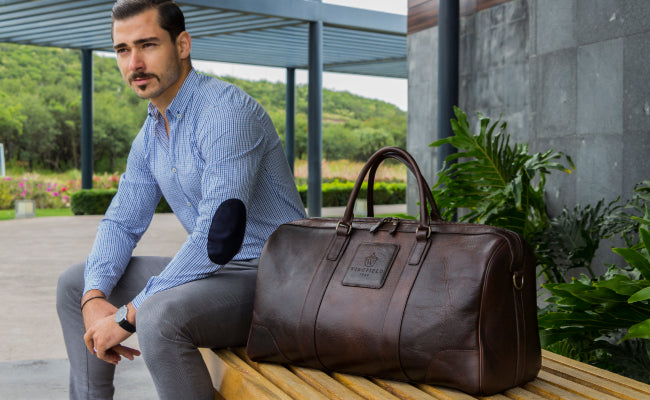
Vegetable tanning uses tannins from bark, wood and fruit such as mimosa, quebracho and chestnut. Traditional pit tanning can take weeks, and drum methods shorten that. The leather is firmer, holds a tooled or burnished edge beautifully, and develops a rich patina with use. Our Wingfield Leather Messenger Bag is made from vegetable-tanned leather, which is why its body keeps a structured shape and darkens gradually with handling.
Neither method is automatically "clean" or "dirty." Both have trade-offs, which we lay out without the marketing spin in vegetable-tanned vs chrome-tanned leather: the facts.
Step 6: Crusting, Where Character Is Decided
Freshly tanned leather is stable but not yet useful. Crusting gives it thickness, color, softness and feel. Typical operations include:
- Sammying: pressing out roughly half the water.
- Shaving: machining the leather to an exact, even thickness.
- Neutralizing and retanning: adjusting pH and adding secondary tanning agents to tune firmness and fullness.
- Dyeing: coloring the leather, often all the way through.
- Fatliquoring: fixing oils into the fibers, which controls how supple the leather feels.
- Drying and softening: drying to a controlled moisture level (commonly 14 to 25 percent), then mechanically flexing the fibers apart.
This is where two leathers from similar hides can end up feeling completely different. The unlined Emily Leather Tote is a good example: open it and you see the natural suede side of the full-grain hide, the part that fatliquoring and softening made pliable enough to fold and carry every day.
Step 7: Finishing the Surface
Finishing ranges from almost nothing to a thick engineered surface. Options include oiling, waxing, buffing, spraying pigment or protective topcoats, embossing a grain pattern, and plating or glazing for shine. Aniline and semi-aniline finishes let the natural grain show. Heavily pigmented and embossed finishes hide surface flaws, which is how corrected-grain leather is made.
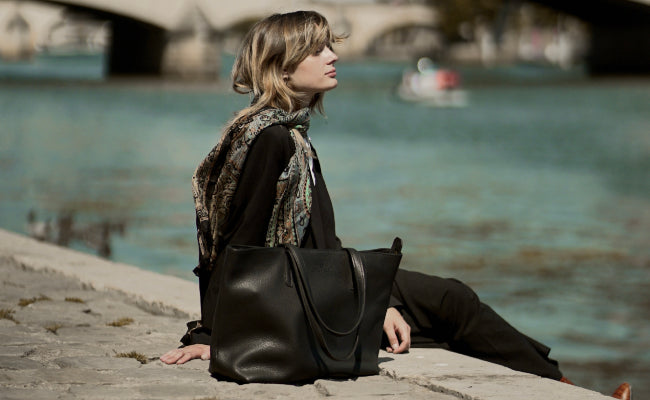
Full-grain leather usually receives the lightest touch, because the grain itself is the selling point. The Paris Leather Shoulder Bag uses full-grain leather, so small natural markings and batch-to-batch color variation remain visible rather than being sanded and painted away.
How Each Stage Shows Up in Your Bag
| Stage | What happens | What you notice in the finished bag |
|---|---|---|
| Curing and soaking | Hide preserved, washed and rehydrated | Natural marks that survive into full-grain leather |
| Liming and fleshing | Hair, fat and unwanted proteins removed | Clean grain surface and consistent texture |
| Splitting | Hide sliced into grain and split layers | The grade: full-grain, top-grain, suede or split |
| Pickling and tanning | Collagen stabilized with chrome or plant tannins | Softness vs structure, water resistance, patina |
| Crusting | Thinned, retanned, dyed, oiled and dried | Thickness, hand feel, color depth |
| Finishing | Surface oiled, coated or embossed | Shine, scratch resistance, how visible the grain is |
The Environmental Reality, Honestly
Leather making uses water and chemicals, and it would be misleading to pretend otherwise. Industry guidance from the World Bank Group has put conventional wastewater output at roughly 20 to 80 cubic meters per tonne of raw hide, and solid waste such as trimmings and shavings can represent a large share of the original hide weight. Where environmental rules are weak, untreated discharge has caused serious pollution.
The same data also shows how much control matters. A United Nations Industrial Development Organization review found that advanced technologies can cut the chrome pollution load by about 94 percent. Well-run tanneries recover chrome, treat effluent, and increasingly use enzyme processes, low-sulfide unhairing and chrome-free options. That is why asking where and how your leather was tanned is a better question than simply asking whether it is leather.
Frequently Asked Questions
How long does it take to make leather?
It depends on the method. Chrome tanning in rotating drums is relatively fast, while traditional vegetable tanning in pits can take weeks. Add preparation, crusting, drying and finishing, and the full process from raw hide to finished leather usually spans days to several weeks.
What is wet blue leather?
Wet blue is hide that has been chrome tanned but not yet crusted or finished. The chromium gives it a pale blue tint. It is a stable, tradable intermediate product that many tanneries buy and finish themselves.
Is full-grain leather processed differently from other grades?
It follows the same core steps, but the grain layer is kept intact rather than sanded, and it usually receives a lighter surface finish. That is why full-grain leather shows natural markings and develops a patina over time.
Is leather made from animals raised for their skin?
Cattle hides used for leather come overwhelmingly from animals raised for meat and dairy. Tanning turns that by-product into a durable material instead of letting it go to waste.