


Cowhide vs Goatskin vs Lambskin Leather: Which Lasts?
Cowhide vs goatskin vs lambskin leather is the comparison that matters most when you are choosing something you plan to carry for years. The animal a leather comes from sets its thickness, grain, stretch and weight long before tanning, dyeing or stitching come in. Here is what each one does well, where each one falls short, and why most hard-working bags still come down to cowhide.
Why the animal matters before the tannery does
Almost all leather is made from livestock raised for food. According to FAO figures compiled by the International Council of Tanners, leather from animals other than cattle, sheep, goats and pigs makes up less than 0.5% of the world total. Industry estimates put cattle at roughly two-thirds of global leather output, with sheep, goats and pigs sharing most of the rest.
Those numbers hide a big difference in size. Tanners talk about hides from large animals such as cattle and buffalo, and skins from small animals such as sheep and goats. A whole cowhide can cover 50 square feet or more. A goat or sheep skin usually covers somewhere around 5 to 7 square feet. That gap shapes everything: how thick the leather can be, how large a single panel can be cut, and how the finished bag wears.
The animal is only the first decision. Which layer of the hide is used, and how it is tanned, matter just as much. If you want the layer question explained, our guide to full-grain vs top-grain leather covers it in detail.
Cowhide: the structural workhorse
Cowhide is the default for bags, belts, saddlery and footwear for good reasons:
- Thickness. A mature hide is thick enough to be split into layers and still leave a strong grain layer. Bag leathers are often cut somewhere around 1 to 2 mm, though every tannery and product differs.
- Dense fiber structure. The tightly woven collagen fibers resist tearing, abrasion and stretching under load, which is exactly what a strap anchor or a loaded base needs.
- Large, consistent panels. A big hide lets a maker cut a tote body or duffel side from one piece, with fewer seams that could fail.
- It ages well. Full-grain cowhide, especially vegetable-tanned, darkens and softens into a patina instead of wearing thin.
The trade-offs are weight and an initial stiffness. A cowhide bag feels substantial in the hand and may take weeks of use to relax. For something meant to carry a laptop, travel gear or daily weight, that is usually a benefit, not a problem.
Calfskin is a subcategory worth knowing: it comes from younger cattle, has a finer, smoother grain and is thinner and more supple. It is prized for small leather goods and dress shoes but costs more and is less rugged than hide from a mature animal.
Goatskin: tough, light and pebbly
Goatskin sits in the middle. It is thinner and lighter than cowhide but has a reputation for being remarkably tough for its weight, thanks to a compact fiber structure and a naturally pebbled grain that hides scuffs well.
- Strengths: good tear resistance for its thickness, flexible, light, with an attractive natural texture.
- Limits: small skins mean more seams on large items, and it rarely has the heft to give a big bag real structure on its own.
- Classic uses: gloves (kidskin is young goat), bookbinding, jackets, linings and small goods.
Goatskin has deep historical roots in North Africa. The fine goat leathers traded out of the region were known in Europe simply as "Morocco leather," and tanneries like those we covered in our piece on Fez, Morocco's historic tanneries still work largely with sheep and goat skins.
Lambskin and sheepskin: softness first
Lambskin is the most buttery of the three. It drapes beautifully and feels luxurious against the skin, which is why it dominates fashion jackets and soft evening bags.
- Strengths: exceptional softness, very light, smooth fine grain.
- Limits: the loosest fiber structure of the group. It scratches, stretches and tears more easily, and it tends to show wear fast on high-contact areas like handles and corners.
- Best for: garments, gloves, linings and occasional-use accessories.
A lambskin bag can be a lovely object, but it asks for gentler handling. If your bag lives on a car seat, a café floor or an overhead bin, it is the wrong leather for the job.
Cowhide vs goatskin vs lambskin leather at a glance
| Property | Cowhide | Goatskin | Lambskin |
|---|---|---|---|
| Raw material | Hide (large animal) | Skin (small animal) | Skin (small animal) |
| Typical size of one piece | Up to ~50+ sq ft | ~5–7 sq ft | ~5–7 sq ft |
| Relative thickness | Thickest | Medium | Thinnest |
| Abrasion and tear resistance | Highest | High for its weight | Lowest |
| Softness out of the box | Firm, softens with use | Supple | Very soft |
| Grain | Varies; smooth to pebbled | Natural pebble | Fine and smooth |
| Best uses | Bags, duffels, straps, belts, wallets | Gloves, jackets, small goods | Jackets, gloves, soft fashion pieces |
A quick note on buffalo and pigskin. Water buffalo leather is thicker and coarser than cowhide and very durable, which makes it popular for rugged goods. Pigskin is common in linings, gloves and shoe interiors and is recognizable by its visible pore pattern. Both are real leathers with real uses, just less common in premium bags.
What this means for a bag you will use every day
A bag is a load-bearing object. Handles pull on stitching, bases rub against floors and corners take the knocks. That is why structured bags, duffels and messengers are overwhelmingly made from cattle hide, while softer leathers show up in garments.
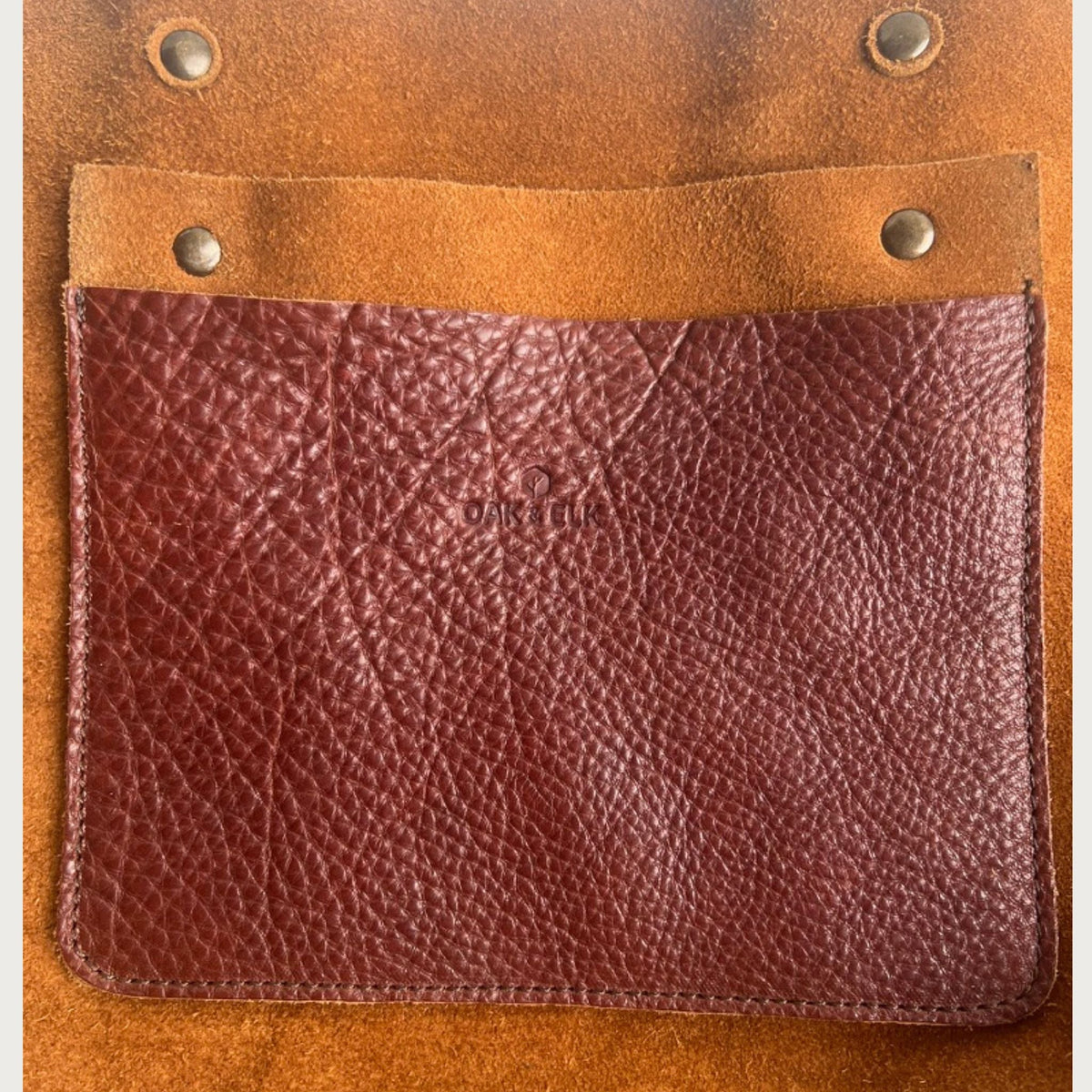
At OAK & ELK, our everyday leather pieces are cut from bovine leather for this reason. The Emily Leather Tote is handcrafted from full-grain bovine leather and left unlined, so you can see and feel the natural suede side of the hide inside the bag. The Eva Leather Cardholder uses the same full-grain bovine leather outside with a cowhide leather lining, a small piece that takes constant pocket friction.
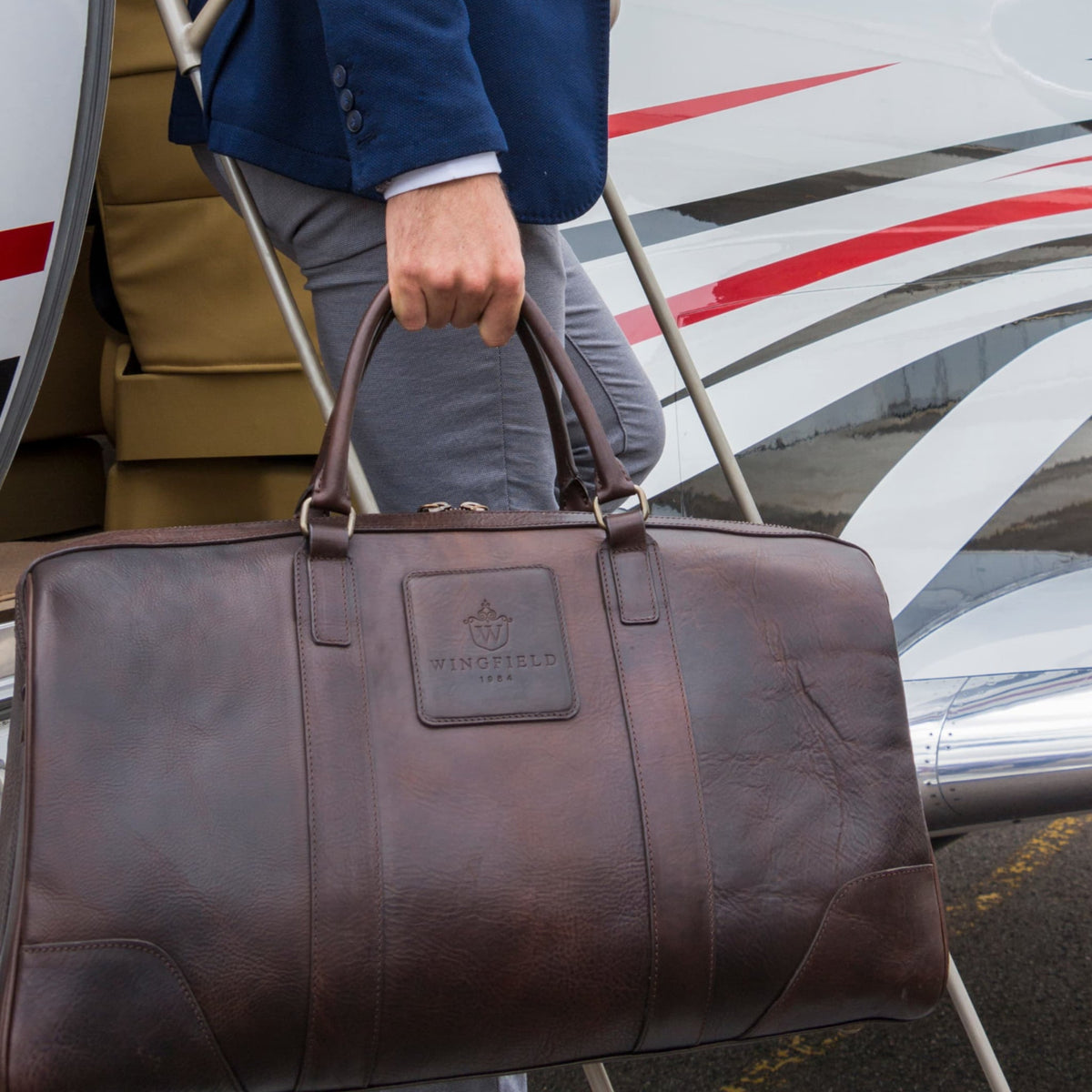
For travel, our Wingfield Large Leather Duffel Bag is made from vegetable-tanned leather with old brass hardware, a cotton lining and 38.5 liters of space, the kind of load where a thin, soft skin would sag and scuff within a season. The matching Wingfield Leather Messenger Bag brings the same vegetable-tanned leather to a daily laptop carry.
Because every hide carries marks from the animal's life, natural variation in grain and color between pieces is expected in full-grain leather, and it is a sign the surface has not been sanded away and covered.
Sourcing, honestly
Choosing cowhide raises a fair question about cattle's environmental footprint. The honest answer is that hides are a by-product: cattle are raised for meat and dairy, and the hide is worth only a small fraction of the animal's value. If hides are not tanned, they become waste. That does not erase the impact of livestock farming, which is why it is worth asking where hides come from and how they were processed. Our guide to leather traceability and hide sourcing explains what questions to ask.
The tanning method matters too. Vegetable tanning and chrome tanning produce very different leathers, each with its own environmental profile, regardless of which animal the hide came from.
How to tell which leather you are buying
- Read the label or product page. Reputable makers name the animal. "Genuine leather" alone tells you nothing about species or quality.
- Look at the grain. Goatskin has a tight natural pebble. Lambskin is very fine and smooth. Cowhide varies, so grain alone is not proof.
- Check the thickness at an edge. Cut edges on cowhide bags are visibly thicker and denser than on lambskin pieces.
- Feel the weight. For the same size, a cowhide bag will be noticeably heavier.
- Ask the seller. If a brand cannot tell you what animal its leather came from, treat that as useful information.
Frequently asked questions
Which is more durable, cowhide or goatskin?
Cowhide is generally more durable because it is thicker and denser. Goatskin is very tough for its weight and more durable than lambskin, but for bags that carry heavy loads, cowhide holds its shape and resists abrasion better.
Is lambskin good for a handbag?
Lambskin makes a beautiful, soft handbag, but it scratches and stretches more easily than cowhide or goatskin. It suits occasional or evening use better than a daily work or travel bag.
Is calfskin the same as cowhide?
Both come from cattle. Calfskin comes from younger animals and is thinner, smoother and more supple; cowhide comes from mature animals and is thicker and more rugged.
What is the best leather for an everyday bag?
For most people, full-grain cowhide is the best choice for an everyday bag. It balances strength, structure and longevity, and it develops a patina instead of wearing out.