


Leather Traceability: Where Your Hides Really Come From
Leather traceability is the ability to follow a hide backwards through the supply chain: from the finished bag on your shoulder to the tannery that processed it, the slaughterhouse that supplied it, and — ideally — the farm where the animal was raised. It is the least glamorous part of the leather conversation and the one that decides whether every other claim a brand makes is worth anything.
Why Traceability Became the Real Sustainability Question
For years, the argument about leather was fought over materials: real hide versus synthetic, vegetable tanning versus chrome. Those debates matter, but they skip a step. A hide can be tanned beautifully in a well-run facility and still have come from a herd nobody can account for. Traceability is what closes that gap.
It is genuinely hard to do. A single hide can pass through several countries and half a dozen intermediaries before it becomes a bag, and cattle themselves frequently move between farms during their lives. Because hides are a by-product of the meat industry rather than its purpose, they enter the supply chain already separated from whatever records followed the animal. Rebuilding that chain after the fact is the central technical problem of the industry.
Three things make leather traceability worth your attention as a buyer: it is the only defence against deforestation-linked hides, it is the precondition for any credible environmental claim, and it is a reliable proxy for how carefully a brand runs everything else.
What the Leather Working Group Certification Actually Measures
The Leather Working Group (LWG) is the most widely referenced certification in the industry, and it is routinely misdescribed. LWG does not certify leather, and it does not certify brands. It audits facilities — leather manufacturers, commissioning manufacturers, traders — against a standard covering environmental management, water and energy use, waste, chemical management, and traceability.
Audited facilities are rated Gold, Silver or Bronze on performance, with Gold requiring the highest scores. Traceability is scored on its own logic: the audit assesses whether a facility can trace its material back to a specific slaughterhouse of origin, typically through physical marking of hides.
That distinction is worth holding onto. An LWG rating tells you the tannery is measured and monitored. It does not, by itself, tell you the animal was raised on land that was never cleared, and LWG has never claimed otherwise. The organisation updated its standards in 2026 following public and expert consultation, with new versions piloted across a range of facility types.
| Claim on a product page | What it actually establishes |
|---|---|
| "LWG Gold tannery" | The tannery scored highly on an environmental and chemical management audit; traceability at least to slaughterhouse level is assessed separately |
| "Genuine leather" | Only that the item is leather — it says nothing about grain, quality or origin |
| "Vegetable tanned" | A tanning chemistry, not an origin or a welfare claim |
| "Traceable to farm" | The strongest claim available, and the rarest — ask for the evidence |
| "Vegan leather" | A synthetic or bio-blended material; under US labelling guidance, imitation leather must be disclosed as such |
The 2026 Regulatory Picture: What Changed and What Did Not
The EU Deforestation Regulation (EUDR) was expected to force leather traceability across the entire European market. In July 2026 the European Commission adopted a delegated act removing cattle hides, skins and leather from Annex I — the list of goods in scope. Cattle as a commodity, and beef, remain fully covered; the hides that come off those same animals no longer are.
The regulation itself begins applying to large EU operators from 30 December 2026, with smaller enterprises following in mid-2027. The recitals note that the review due in 2030 will revisit whether hides and leather should return to scope. The decision was contested — environmental groups argued the exclusion removes leverage precisely where it would have mattered, while industry bodies argued hides are a by-product whose demand does not drive herd expansion.
The practical consequence for shoppers is simple: in 2026, leather traceability is largely voluntary. No regulation is going to do the verification work for you, which puts the burden back on brands to document their chain and on buyers to ask.
Labelling: What "Genuine Leather" Legally Means
In the United States, the FTC's Guides for Select Leather and Imitation Leather Products govern how these products are described. The core principle is that unqualified terms suggesting leather may not be used unless the product is composed in all substantial parts of leather, and that imitation or artificial leather must be adequately disclosed.
What the guides do not do is grade quality. "Genuine leather" is a compliance phrase, not a compliment — it clears a legal bar and stops there. It tells you nothing about whether you are holding a full-grain hide or a heavily corrected split. If you want to understand what those terms mean before you buy, our guide to full-grain versus top-grain leather covers the distinctions in detail.
Six Questions That Test a Brand's Traceability Claims
- Which country does the leather come from? A brand that cannot name the country of the tannery is not tracing anything.
- Which tannery, and is it audited? Named tanneries with a stated audit rating are a meaningfully higher bar than "responsibly sourced".
- How far back does the chain go? Slaughterhouse-level is the common ceiling. Farm-level is exceptional and should be evidenced.
- What is the tanning method, and why that one? A brand that can explain the trade-offs has thought about it. Our breakdown of vegetable versus chrome tanning sets out what each method actually does.
- Who assembles the product? Traceability that stops at the leather ignores half the supply chain.
- Can it be repaired? A brand that will fix a strap or replace hardware has an interest in the product lasting, which changes every calculation upstream.
Why a Longer Life Is the Traceability Argument in Practice
A documented hide used to make something that falls apart in two seasons is a wasted hide. Longevity is where sourcing decisions either pay off or don't, and it is visible in construction rather than in marketing copy: stitch density, edge finishing, hardware weight, whether the interior is lined to hide the flesh side or left open because there is nothing to hide.
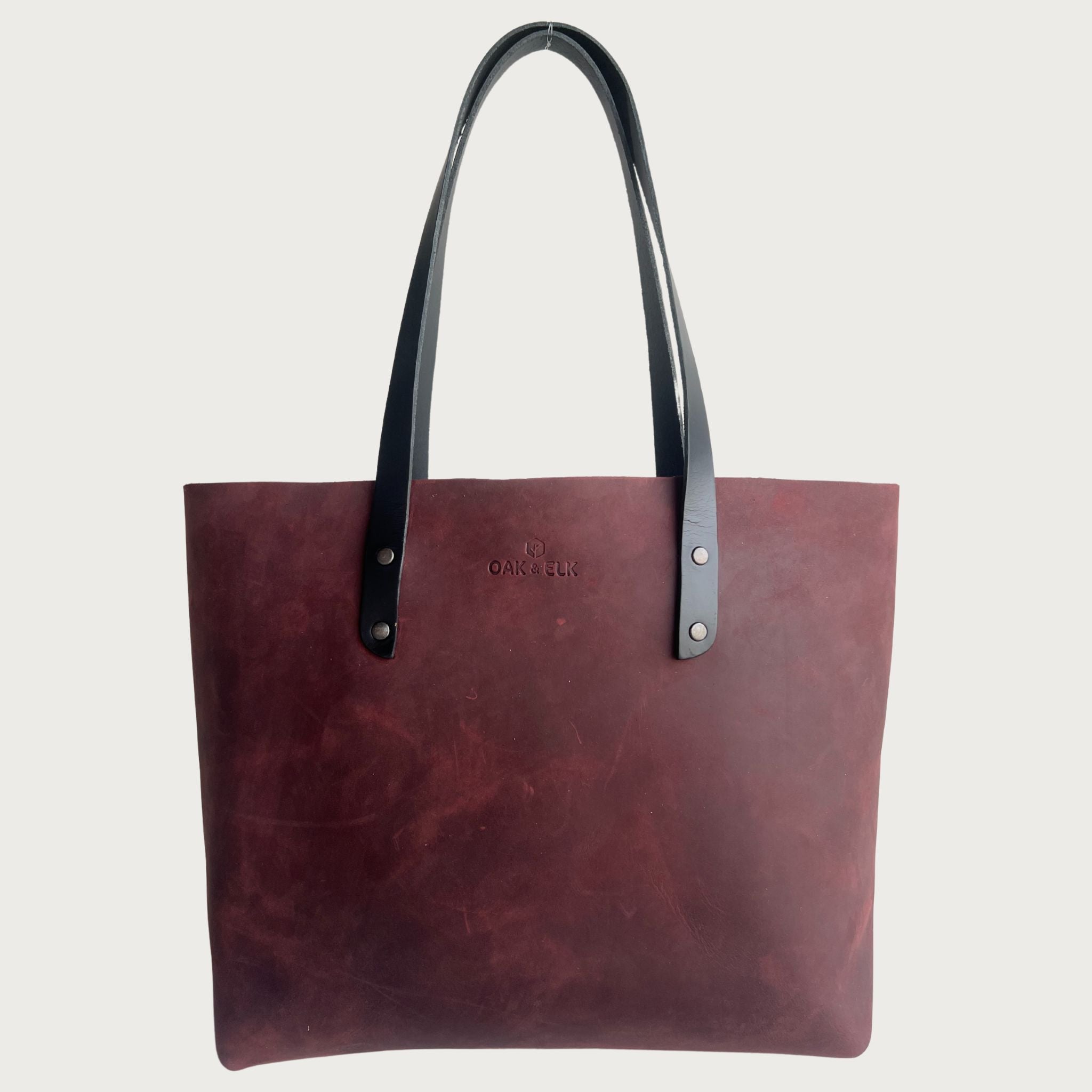
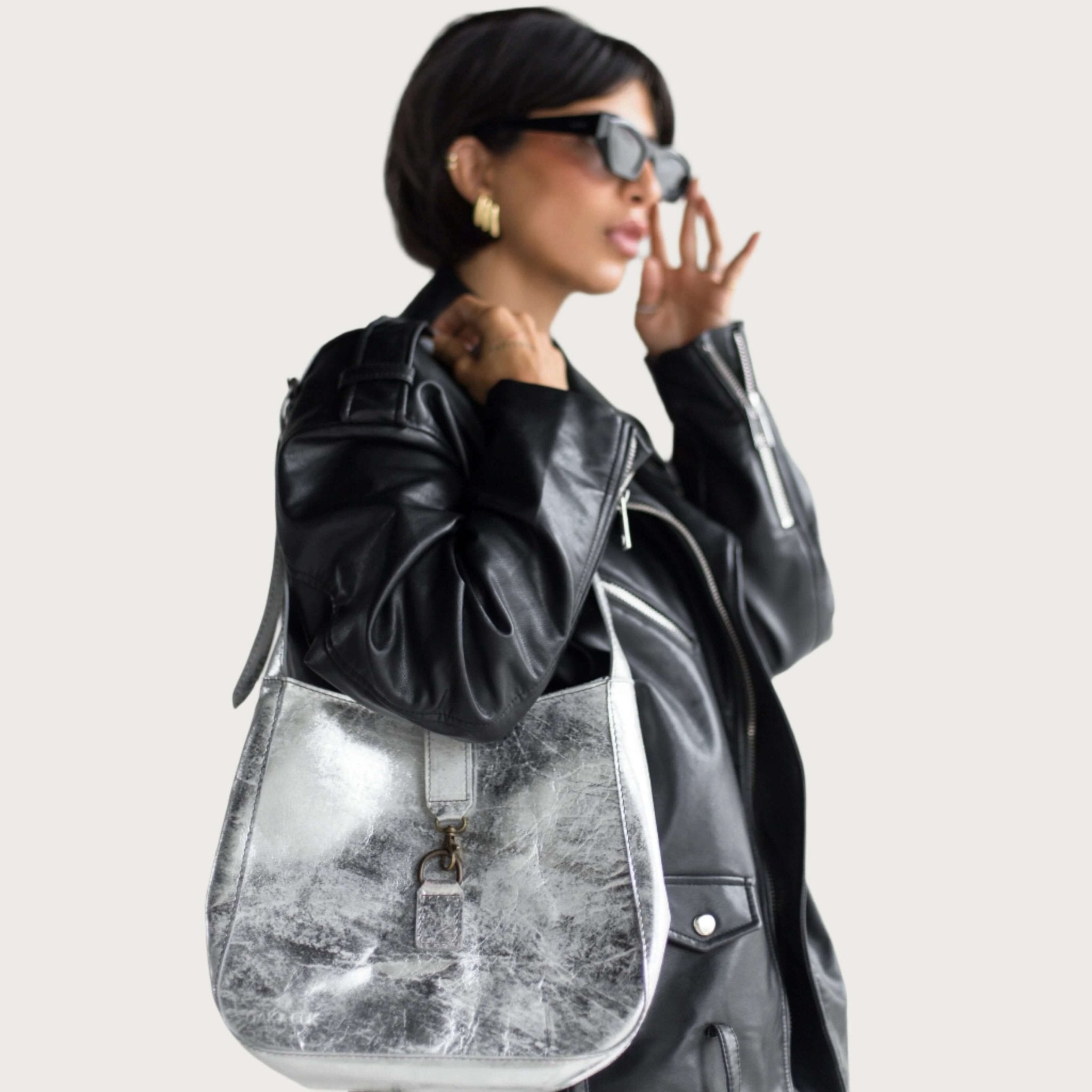
Our Emily Leather Tote is unlined for exactly that reason — you see the natural suede side of the hide, along with the variations and markings that come with full-grain leather and vary slightly from batch to batch. The Emma Leather Backpack is built from the same signature bovine leather with an adjustable strap and gold-colour hardware, and the Paris Leather Shoulder Bag runs across colourways from silver to nutmeg using the same material standard. None of that is a substitute for supply-chain documentation, but it is what documentation is supposed to be protecting.
If you want a practical checklist for judging construction in the hand, our guide to telling whether a leather bag is well made covers the eight signs worth looking for.
Where Traceability Is Heading
The tools are improving faster than the regulation. Satellite monitoring of land use, geospatial farm data, digital chain-of-custody platforms and isotopic origin testing all now exist at commercial scale, and the WWF and other bodies have published practical guidance for brands trying to build deforestation-free leather sourcing without waiting for a mandate.
The constraint is no longer really technical. It is that tracing hides costs money and, with leather outside the EUDR, nothing compels anyone to spend it. That makes the next few years a test of which brands were doing this because it was required and which were doing it because it was the point. In smaller supply chains — regional tanneries, workshops with long-standing supplier relationships, the kind of Mexican leather craftsmanship built around a single city's tanning district — traceability is often less a system than a set of relationships that have existed for generations.
Frequently Asked Questions
Does LWG certification mean leather is sustainable?
No. LWG certification means a facility has been audited against a defined standard for environmental management, chemical handling, water and energy use, and traceability, and rated Gold, Silver or Bronze. It is a measure of manufacturing practice at a specific site, not a blanket sustainability guarantee for the finished product or the farming that preceded it.
Is leather covered by the EU Deforestation Regulation?
Not currently. In July 2026 the European Commission adopted a delegated act removing cattle hides, skins and leather from the EUDR's product scope. Cattle and beef remain covered, and the regulation's 2030 review is expected to reconsider whether hides should return to scope.
What does "traceable to slaughterhouse" mean?
It means the tannery can identify which slaughterhouse a batch of hides came from, usually through physical marking of the hides themselves. It is the level most audited tanneries achieve. Tracing further back to a specific farm is significantly harder because cattle often move between properties during their lives.
How can I check where my leather bag came from?
Ask the brand directly for the country of tanning, the tannery name and its audit status, and how far back the chain is documented. A brand with real traceability can answer within a sentence or two. Vague language about "responsible sourcing" without a named facility usually means the chain has not been mapped.