
Vegetable Tanned vs Chrome Tanned Leather: The Facts
The difference between vegetable tanned vs chrome tanned leather is the most consequential fact about any hide, and it is almost never printed on the label. Tannage decides how leather ages, how it smells, how it handles water, and what it costs the environment. Here is what actually separates the two processes, without the marketing.
Why Tanning Exists at All
A raw hide is perishable. Left alone it decays within days. Tanning is the chemistry that permanently stabilises the collagen fibres in the skin so they stop being food for bacteria and start being a durable material. Every tannage does the same job by a different route: it cross-links those fibres with a tanning agent so the hide can get wet, dry, flex and stretch for decades without breaking down.
The two agents that dominate the world's tanneries are plant tannins and chromium salts. Everything else, from alum to aldehydes to so-called chrome-free tannages, occupies the margins. If you want the longer arc of how humans arrived here, we traced it in the history of leather tanning from hide to heritage.
Vegetable Tanning: Bark, Time and Patience
Vegetable tanning uses tannins extracted from plant matter: quebracho wood, mimosa and chestnut bark, oak, and myrobalan nuts. Hides move slowly through a series of pits or drums with progressively stronger tannin liquors. The tannins bind to the collagen gradually, which is why the process cannot be rushed. Depending on the tannery and the thickness of the hide, it takes anywhere from several weeks to well over a year.
What you get is a firm, dense leather with a warm natural colour that darkens over time. It tools and burnishes beautifully, holds a moulded shape, and develops the patina that leather people talk about. It is also thirstier than chrome leather, less tolerant of prolonged soaking, and more prone to darkening in blotches if it gets rained on unevenly.
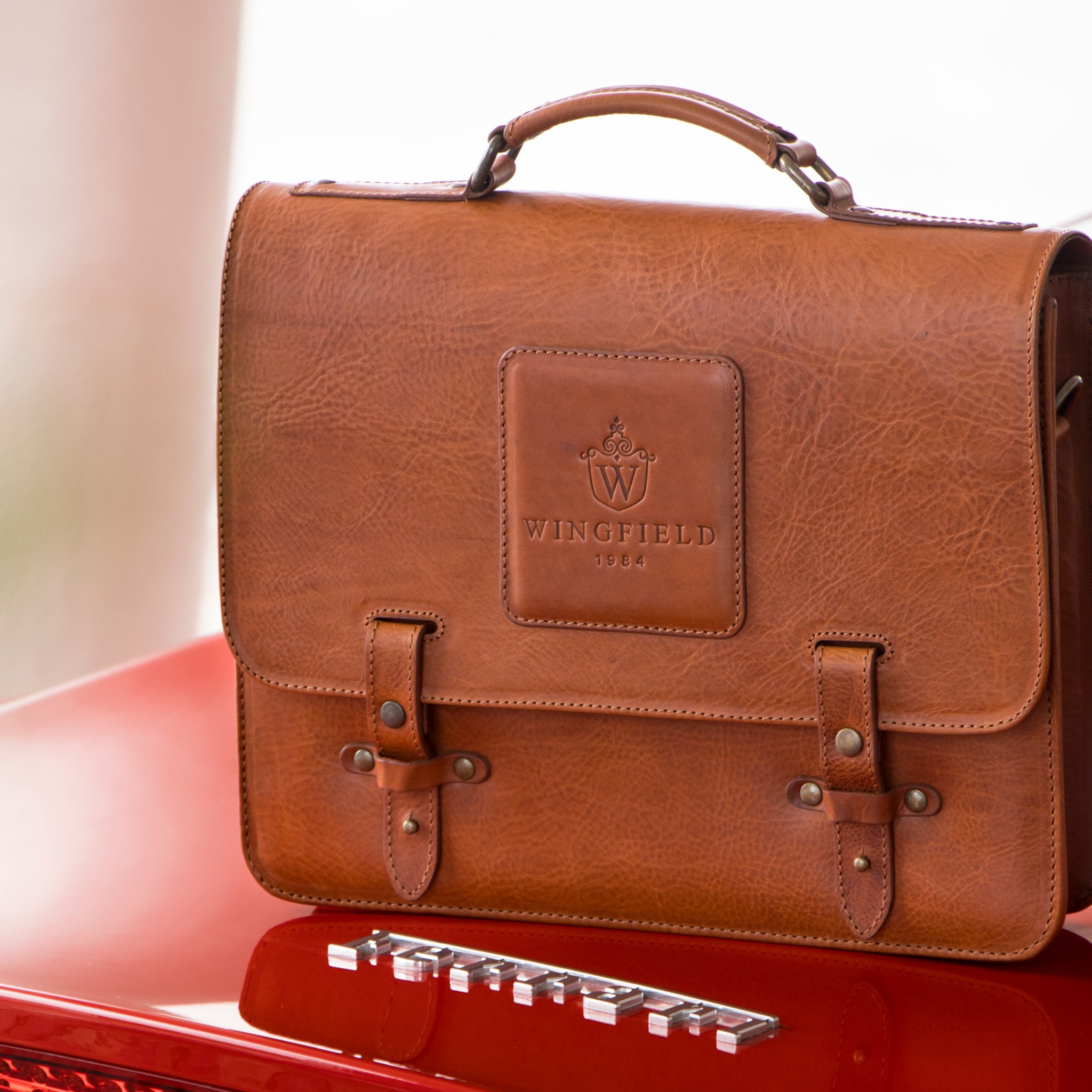
Our Wingfield vegetable tanned messenger bag is a good example of what this tannage is for: a firm-bodied leather with old brass hardware that stiffens into shape, then softens exactly where you carry it.
Chrome Tanning: Speed, Chemistry and Scale
Chrome tanning uses basic chromium(III) sulphate. The concept was described by the German chemist Friedrich Knapp in 1858, but it only became commercially serious after Augustus Schultz filed his two-bath patents in the United States in 1884. Within a generation it had reshaped the entire industry, because it collapses the tanning stage from months into roughly a day or two.
Chrome tanned leather is softer, more supple straight off the drum, more heat-resistant, and far easier to dye into consistent, saturated colours. It is also more water-tolerant and dimensionally stable. Those properties, plus the speed, are why chrome tanning accounts for the overwhelming majority of global leather production. Published estimates cluster in the 80 to 90 percent range depending on the source and the year, so treat any single precise figure with caution.
Side by Side: What Actually Differs
| Attribute | Vegetable tanned | Chrome tanned |
|---|---|---|
| Tanning agent | Plant tannins (quebracho, mimosa, chestnut, oak) | Basic chromium(III) sulphate |
| Time in tannage | Weeks to more than a year | Typically 24 to 48 hours |
| Hand feel | Firm, dense, structured | Soft, supple, pliable |
| Colour | Warm earth tones; darkens with use | Full colour range; stays stable |
| Patina | Pronounced and intentional | Minimal by design |
| Water tolerance | Absorbs readily; can spot | More water-resistant |
| Heat tolerance | Lower shrinkage temperature | Higher shrinkage temperature |
| Share of world output | A small minority | The large majority |
| Typical use | Saddlery, belts, structured bags, tooling | Garments, upholstery, footwear, soft bags |
The Environmental Question, Answered Honestly
The popular shorthand is that vegetable tanning is clean and chrome tanning is dirty. That is too simple in both directions.
- Vegetable tanning is not impact-free. It uses substantially more water and takes far longer, and its spent liquors carry a heavy organic load that still has to be treated. Tannin extraction also depends on managed forestry and plantation crops.
- Chrome tanning is not inherently toxic. The chromium used in tanning is chromium(III), which is not the hazardous form. The genuine risk is chromium(VI), which can form under poor process control, bad storage or unsuitable finishing chemistry.
- The real variable is the tannery, not the tannage. Effluent treatment, chrome recovery and recycling, water reuse, and chemical management separate a responsible facility from a negligent one far more than the choice of tanning agent does.
This is where third-party auditing matters. The Leather Working Group audits leather manufacturers on environmental management, water and energy use, waste, chemical management and traceability, and issues Gold, Silver, Bronze or Audited ratings based on the score achieved. It is a real, verifiable standard, and worth asking a brand about directly rather than accepting a vague claim of eco-friendliness.
Is Chrome Tanned Leather Safe to Wear?
For consumer goods sold in the European Union, this is regulated rather than left to trust. Commission Regulation (EU) No 301/2014 amended Annex XVII of REACH so that, from 1 May 2015, leather articles in contact with the skin cannot be placed on the market if they contain chromium(VI) at 3 mg/kg or more of the total dry weight of the leather. That threshold reflects the detection limit of EN ISO 17075, the recognised test method. The restriction exists because skin exposure to chromium(VI) can cause sensitisation and allergic response.
In practice, well-made chrome tanned leather from a competent tannery is safe to wear, and most of the leather in your wardrobe already is. The caution belongs with unsourced, untested, bargain-basement leather, not with chrome tanning as a category.
How to Tell Which Tannage You Are Holding
- Look at the cut edge. Vegetable tanned leather is a warm tan or beige through its thickness. Chrome tanned leather typically shows a pale blue-grey core, a residue of the wet blue stage.
- Press it with your thumb. Vegetable tanned leather takes a temporary mark and slowly recovers. Chrome tanned leather springs back almost instantly.
- Smell it. Vegetable tannage has a sweet, woody, almost tea-like scent. Chrome tannage smells sharper and more chemical.
- Watch how it ages. If the leather is visibly darkening and burnishing where hands touch it, it is almost certainly vegetable tanned.
None of these tests tell you about grain quality, which is a separate question entirely. A hide can be vegetable tanned and still be split and corrected. We break that down in our guide to full grain versus top grain leather.
Which One Should You Buy?
Choose by what you want the object to do, not by which tannage sounds more virtuous.
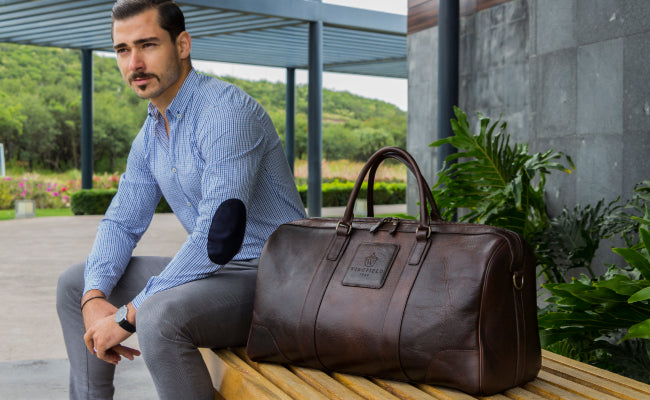
- Vegetable tanned suits pieces that should hold structure and record their use: a vegetable tanned leather duffel that stiffens across the base and softens at the handles, belts, and anything you want to look better in ten years than it does today.
- Chrome tanned suits pieces that should stay soft, colour-stable and unbothered by weather: garment leathers, and small goods that live in a pocket.
- Combination tannage is common and legitimate. Many tanneries chrome tan first and retan with vegetable tannins to get suppleness plus body.
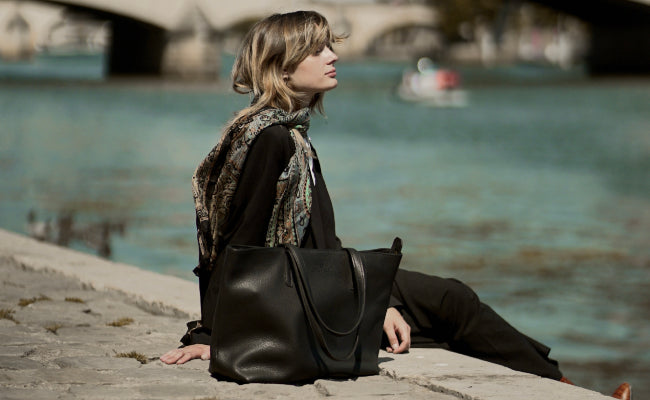
Whichever you choose, longevity is where the real environmental argument sits. A full-grain leather tote carried for fifteen years or an Ivy large leather wallet that outlasts four replacements has done more good than any label on the swing tag. Keeping it in service matters too, so it helps to know how to clean a leather bag at home without stripping the finish.
Frequently Asked Questions
Is vegetable tanned leather better than chrome tanned leather?
Neither is universally better. Vegetable tanned leather is firmer, ages with patina and holds structure. Chrome tanned leather is softer, more colour-stable and more water-tolerant. The quality of the hide and the standards of the tannery matter more than the tannage itself.
How long does vegetable tanning take compared to chrome tanning?
Vegetable tanning generally takes from several weeks to over a year depending on hide thickness and tannery method. Chrome tanning typically completes in about 24 to 48 hours, which is the main reason it dominates global production.
Does chrome tanned leather contain harmful chromium?
Chrome tanning uses chromium(III), which is not the hazardous form. The concern is chromium(VI), which can form under poor process control. EU regulation restricts leather in skin contact to below 3 mg/kg of chromium(VI), tested under EN ISO 17075.
How can I tell if a bag is vegetable tanned?
Check the cut edge for a warm tan colour rather than a blue-grey core, press the surface and see if the mark fades slowly, and smell for a woody rather than chemical scent. Reputable makers will also state the tannage in the product description.