
Corrected-Grain vs. Bonded Leather: What Labels Hide
Walk into any store selling "genuine leather" goods and you're likely looking at one of the lowest grades on the leather ladder. Corrected-grain and bonded leather both trade on the word "leather," yet they're made in almost opposite ways from the full-grain hides prized by traditional leatherworkers. Knowing what separates them is the difference between a bag that lasts decades and one that peels apart in a season.
The Leather Grading Ladder, No One Explains
Leather grades aren't a marketing invention — they describe how much of the original hide survives the tanning and finishing process, and how much of the surface is real animal skin versus reconstituted material or synthetic coating. From best to lowest:
- Full-grain: the entire top layer of the hide, natural grain intact, unsanded.
- Top-grain: the top layer lightly sanded and refinished for a more uniform look.
- Corrected-grain: a lower layer of the hide, heavily sanded to remove scars, then embossed with an artificial grain pattern.
- Bonded leather: leftover scraps and fibers glued together with a polyurethane or latex binder onto a fabric or paper backing.
We've covered the top two grades in detail in our full-grain vs. top-grain leather guide. This article picks up where that one leaves off — the two grades most shoppers never get a clear explanation of.
What Is Corrected-Grain Leather, Really?
Corrected-grain leather starts as real hide, but usually the weaker, looser-fibered layer left over after the best part of the skin has been split away for full- and top-grain use. Because this layer shows more scars, insect bites, and uneven texture, tanneries sand and buff the surface smooth, then press an artificial, uniform grain pattern into it before applying a pigmented finish coat.
The result looks consistent — arguably more "perfect" than natural leather — but that uniformity is the tell. Real hide grain is never perfectly even; corrected-grain leather's texture repeats in a way skin never does. The heavy pigment coating also seals off the surface, so it won't develop the patina that makes full-grain leather age well. It's still genuine leather by definition, just processed to hide its flaws rather than show its character.
What Bonded Leather Is Actually Made Of
Bonded leather is a different category altogether. Tanneries and manufacturers grind up scraps, shavings, and fibers left over from cutting genuine leather, then mix them with a polyurethane binder and extrude the slurry onto a paper or fabric backing, embossing a leather-like texture on top. Depending on the manufacturer, the real-leather content of bonded leather can run anywhere from roughly 10% to 30% of the material — the rest is adhesive and backing.
Because it's held together by glue rather than the hide's own fiber structure, bonded leather doesn't wear like leather. Under normal use it tends to crack, flake, or peel within a few years rather than decades, and once the surface starts to go, there's no repairing it the way you can recondition or restitch a full-grain piece. It's a legitimate, lower-cost material for some applications — book covers, budget furniture, small accessories — but it isn't a long-term investment the way full-grain leather is.
Durability and Lifespan, Side by Side
| Grade | What it's made of | Typical lifespan | Develops patina? | Repairable? |
|---|---|---|---|---|
| Full-grain | Entire top layer of the hide, unaltered | Decades, improves with age | Yes | Yes |
| Top-grain | Top layer, lightly sanded and refinished | Many years | Limited | Yes, mostly |
| Corrected-grain | Lower hide layer, sanded and embossed | Several years | No — sealed finish | Difficult |
| Bonded leather | Scrap fibers bound with polyurethane on backing | Roughly 1–5 years | No | No |
Why "Genuine Leather" Is the Most Misleading Label on the Shelf
Here's the part that catches most shoppers off guard: "genuine leather" is not a mark of quality. It's a legal minimum — it simply means some layer of real animal hide is present somewhere in the product, which technically covers corrected-grain leather too. It sits below full-grain and top-grain on the quality ladder, not above them. We go deeper on how these terms are regulated, and where "vegan leather" fits into the picture, in our guide to leather labeling laws.
How to Spot Corrected-Grain and Bonded Leather Before You Buy
- Look at the grain pattern. Natural full-grain leather has irregular pores, faint scars, and texture that varies across the hide. If the pattern repeats identically across the whole surface, it's embossed.
- Do the bend test. Fold a corner. Full-grain leather creases and softens gracefully. Bonded leather often shows a lighter fiber layer or slight cracking at the fold almost immediately.
- Check the edges. A cut edge on genuine full- or top-grain leather shows fibrous, hide-like layers. Bonded leather's cut edge looks flat and paper-like, since it's largely backing material.
- Smell it. Real hide has a distinct, faintly earthy leather scent. Bonded and heavily corrected leather often smells more like plastic or a chemical coating.
- Compare the price to the category. Full-grain leather is genuinely more expensive to source and work with. A bag priced far below the going rate for full-grain goods in that category is very likely corrected-grain or bonded.
For a longer checklist covering stitching, hardware, and construction quality, see how to tell if a leather bag is well made.
Where Lower Grades Actually Make Sense
None of this makes corrected-grain or bonded leather a scam — they're honest materials when sold honestly. Corrected-grain leather is a reasonable, more affordable choice for items that take heavy daily wear and get replaced on a shorter cycle, like some office chairs or car interiors, where a uniform look matters more than patina. Bonded leather has a place in low-cost book covers, planners, and budget upholstery where the buyer understands the tradeoff going in. The problem isn't the materials — it's when they're marketed as equivalent to full-grain leather without disclosing what's really inside.
What We Use, and Why
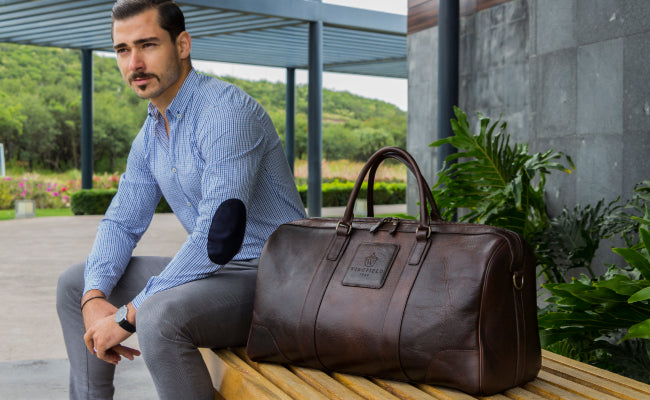
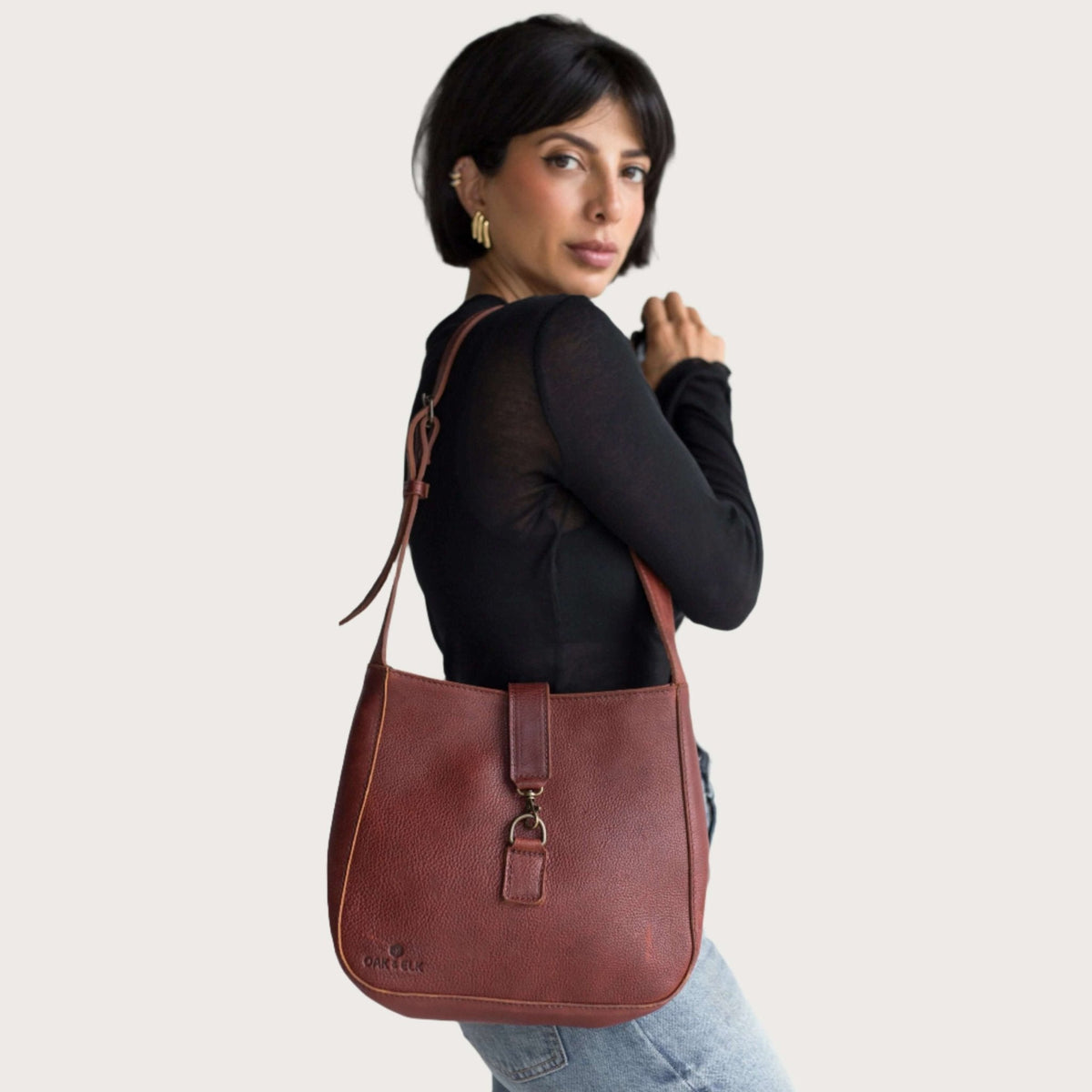
At OAK & ELK, every bag is built from full-grain leather, chosen specifically because it's the only grade that ages into something better rather than something worse. The Classic Leather Tote is cut from full-grain leather that develops a deeper patina with every season of use. The Dakota Leather Duffel Bag uses the same full-grain approach in a weekender built to take real wear on real trips. And the Paris Leather Shoulder Bag is meticulously crafted from premium full-grain leather for everyday carry that's meant to outlast trend cycles.
Certification Worth Looking For
If you want a signal that goes beyond the leather grade itself, look for tanneries certified by the Leather Working Group (LWG). The LWG audit assesses a tannery's environmental management, water and energy use, chemical handling, and traceability across a detailed set of criteria, then rates facilities Gold, Silver, or Bronze. It's not a guarantee of any particular leather grade, but it is a real, independently audited standard — worth far more than a vague "eco-friendly" claim on a product page.
Is corrected-grain leather considered real leather?
Yes. Corrected-grain leather is made from genuine animal hide — it's just a lower layer that's been sanded smooth and embossed with an artificial grain to hide imperfections. It's real leather, but a lower grade than full-grain or top-grain.
Is bonded leather worse than fake leather?
Bonded leather sits in an odd middle ground. It contains some real leather fiber (often 10–30%), unlike fully synthetic "vegan leather," but its polyurethane-bound construction means it typically wears out faster than either full-grain leather or many quality synthetics, often within a few years.
Can you tell corrected-grain leather apart from full-grain just by looking?
Usually, yes, once you know what to check. Full-grain leather shows irregular pores, natural marks, and variation across the hide. Corrected-grain leather has an unnaturally uniform, repeating texture from the embossing process.
Does bonded leather ever improve with age like full-grain leather does?
No. Patina develops when oils and light interact with natural, exposed hide fibers over years of use. Bonded leather's polyurethane coating seals off that process entirely, so instead of aging gracefully it tends to crack and flake as the binder breaks down.