
Bio-Based Leather Alternatives: What They Really Are
Bio-based leather alternatives have moved from press release to product shelf, and the labels have never been more confusing. Mycelium, cactus, pineapple leaf, apple pomace and grape marc all appear on hangtags that suggest a plant-grown replacement for hide. The honest picture is more interesting than the marketing: some of these materials are genuinely new chemistry, and some are conventional plastic with a botanical story attached.
What "bio-based" actually means on a label
Bio-based is not a synonym for plastic-free, biodegradable or low-impact. It describes the share of a material's carbon that comes from renewable biological sources rather than petroleum. A sheet can be 30 percent bio-based and still be, functionally, a coated plastic. That single distinction explains most of the confusion around bio-based leather alternatives.
Three questions cut through nearly every claim:
- What percentage of the finished sheet is biological? Not the fibre layer alone. The whole construction, including binder, backing and topcoat.
- What holds it together and what coats the surface? Most plant materials need a polymer to become flexible, abrasion-resistant sheet goods.
- What happens at end of life? Biodegradable under industrial composting conditions is a very different claim from biodegradable in soil.
Mycelium: the most technically credible category
Mycelium materials are grown from the root structure of fungi rather than assembled from crushed plant waste, which is why they behave most like hide. MycoWorks grows its Reishi material with a process the company calls Fine Mycelium and states the finished material contains less than one percent polymer. It has been vegetable tanned and finished in conventional tanneries, and Hermès used it for a version of its Victoria bag in 2021. MycoWorks opened a production plant in South Carolina in 2023.
The category has also produced its most public failure. Bolt Threads, whose Mylo material was backed by Kering, adidas, lululemon and Stella McCartney, suspended production in 2023 despite having raised more than 300 million dollars. The stated reason was cost and the difficulty of reaching commercial scale. Analysts covering the sector describe current mycelium output in thousands of square metres per year, at prices several times conventional leather.
Cactus, pineapple and fruit waste: read the binder
The plant-fibre materials are where careful reading pays off. Piñatex, made by Ananas Anam from pineapple harvest waste, uses a nonwoven substrate the company describes as roughly 80 percent pineapple leaf fibre and 20 percent PLA, a corn-derived bioplastic. That substrate is then finished with a resin coating, and Ananas Anam is straightforward that the finished material is not fully biodegradable as a result.
Desserto, the Mexican cactus material, blends nopal fibre with polyurethane. Published figures vary by source and by generation of the product, from earlier reporting of roughly 30 percent cactus content against a majority polyurethane matrix, to more recent claims of substantially higher bio-content using partly bio-based PU. The variation itself is the useful signal: when a supplier's own numbers move by 30 points across sources, the material is a hybrid, not a plant sheet.
Natural Fiber Welding takes the opposite approach with MIRUM, which is built from plant fibres, cork, coconut husk, natural rubber and plant oils with no synthetic binder or coating. It is the rare alternative that can fairly claim to be plastic-free. It is also produced in limited volume and has a different hand and drape from hide.
A side-by-side comparison
| Material | What it is | Polymer content | Realistic status in 2026 |
|---|---|---|---|
| Full-grain cowhide | Meat-industry by-product hide, tanned | None in the substrate; surface finishes vary | Widely available, decades of service life |
| Reishi (mycelium) | Grown fungal material, tanned conventionally | Stated at under 1 percent | Luxury volumes, high cost |
| MIRUM | Plant fibres, cork, natural rubber, plant oils | None claimed | Small scale, growing adoption |
| Piñatex | Pineapple leaf fibre with PLA, resin coated | Coating plus 20 percent PLA in substrate | Commercially available, not fully biodegradable |
| Desserto | Cactus fibre in a polyurethane matrix | Significant; reported figures vary widely | Commercially available hybrid |
| Standard PU "vegan leather" | Polyester backing with polyurethane coating | Essentially all polymer | Dominant by volume, shortest lifespan |
Why lifespan still decides the footprint
Any comparison that stops at the factory gate misses the part that matters most. A coated-fabric bag that delaminates in two or three years is replaced repeatedly; a hide bag that is conditioned and repaired is not. That is the strongest environmental argument for well-made leather goods, and it is a durability argument rather than a chemistry one.
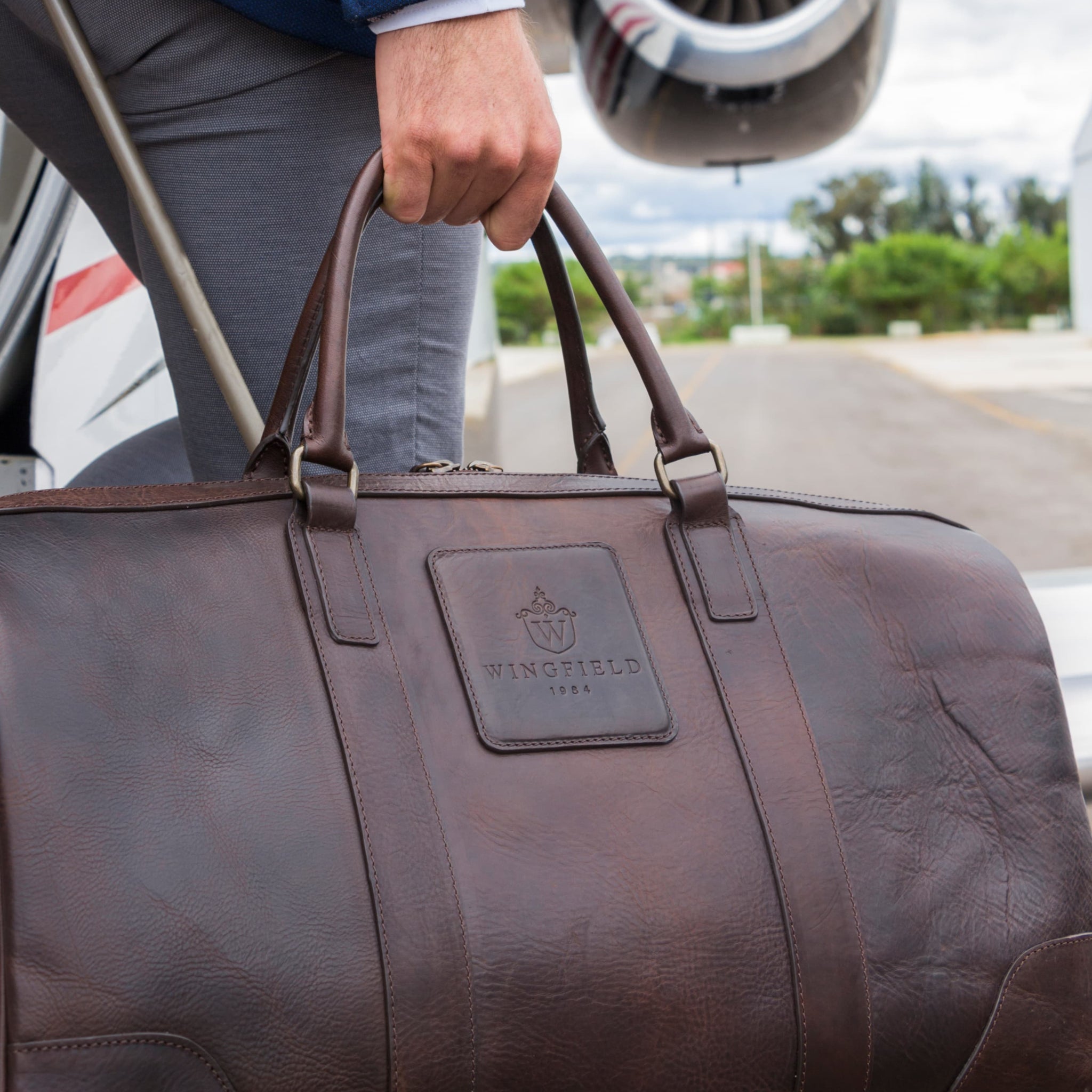
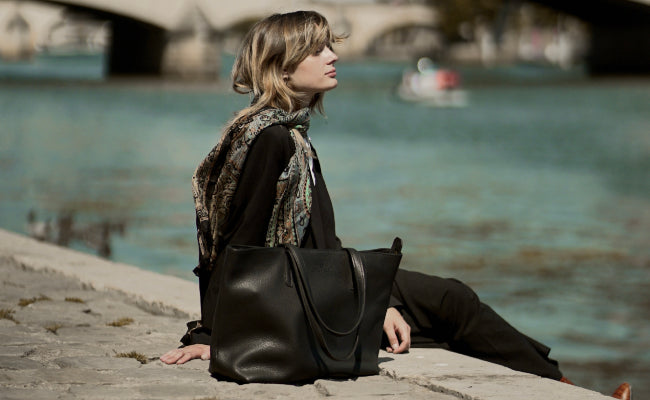
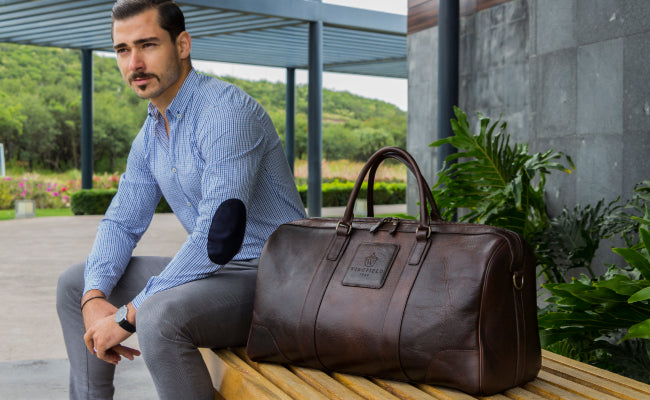
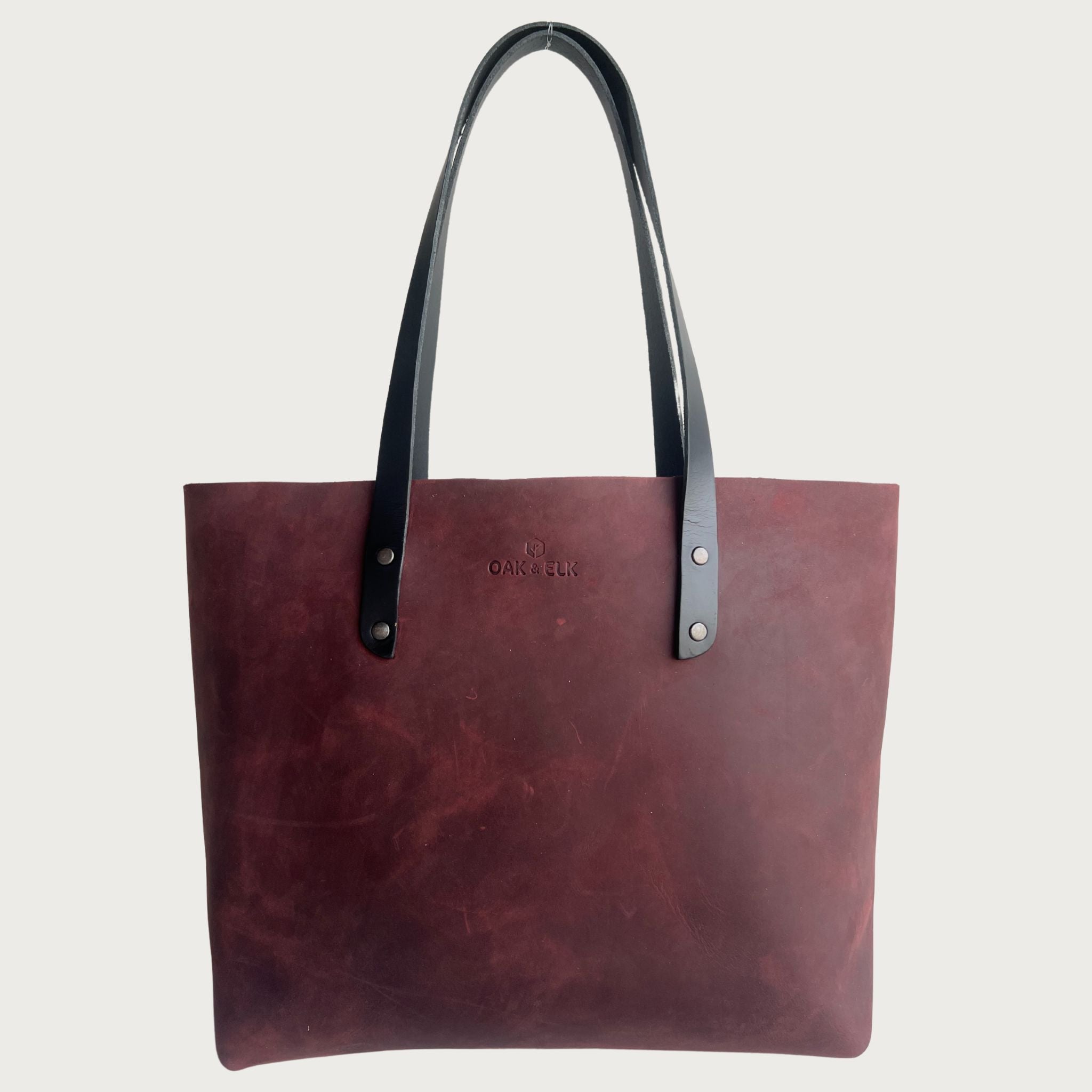
It is also the reason construction details matter more than material romance. Our Classic Leather Tote in full-grain leather with vegetable-tanned handles is built so the highest-wear component is the one most resistant to stretching. The Dakota Large Leather Duffel in full-grain cowhide with cotton lining and antique brass hardware uses reinforced stitching at the stress points that fail first on travel bags. Small goods face the same test daily: the Ivy Large Wallet in full-grain leather is the item in a wardrobe that gets opened and closed most often.
Where the honest criticisms of leather sit
Arguing for leather does not require pretending it has no footprint. Cattle production carries real emissions, and hide is a by-product of that system rather than its driver. Tanning uses chemistry that must be managed properly, which is why the difference between vegetable tanning and chrome tanning is worth understanding rather than sloganeering about. And knowing where a hide came from is a fair thing for a buyer to ask.
What is not honest is presenting a polyurethane-coated polyester sheet as the ecological choice because it contains ground fruit waste. If you are weighing the everyday options rather than the laboratory ones, our guide to real leather versus vegan leather bags covers that ground directly.
How to evaluate a claim in under a minute
- Look for a stated bio-content percentage for the finished material, not the fibre layer.
- Find the binder and the topcoat. If neither is named anywhere, assume polyurethane.
- Check whether biodegradability is claimed in soil or only under industrial conditions.
- Ask whether the brand offers repair. A material nobody can repair is not a circular material.
- Treat named, audited processes as more credible than adjectives.
Frequently asked questions
Are bio-based leather alternatives better for the environment than leather?
It depends entirely on the specific material and how long the finished product lasts. A genuinely plastic-free material like MIRUM or a high-bio-content mycelium sheet has a strong case. A cactus or pineapple material bound in polyurethane is a hybrid whose advantage over conventional coated fabric is smaller than the marketing suggests, particularly if the product wears out in a few years.
Is mushroom leather real leather?
No. It is a grown fungal material, not animal hide, and in most markets it cannot legally be labelled leather. Some versions are finished in tanneries using vegetable tanning, which is why the hand feel can be convincing.
How long do bio-based leather alternatives last?
Independent long-term wear data is still thin, because most of these materials have only been in consumer products for a few years. Suppliers publish abrasion and flex figures, but a decade of real-world service history does not exist yet for any of them. Full-grain hide has that record.
Can I buy bio-based leather alternatives today?
Piñatex, Desserto and MIRUM are commercially available through brand partners. Mycelium materials appear in limited luxury releases rather than open-stock production, and prices reflect that scarcity.
The short version
Bio-based leather alternatives are a real and worthwhile field of materials science, and two or three of them deserve the attention they get. Most of what reaches shelves under that banner is a plant-and-plastic hybrid sold at a premium. Read the binder, ask about lifespan, and choose the thing you will still be carrying in fifteen years.