
Real Leather vs Vegan Leather Bags: An Honest Guide
Choosing between real leather vs vegan leather bags is rarely as simple as the marketing on either side suggests. One camp promises cruelty-free materials, the other promises a bag that outlives the decade it was bought in. The honest answer sits in the details: what the material actually is, how long it holds up, and what happens to it at the end of its life.
What "Vegan Leather" Actually Means
The term describes any leather-look material made without animal hide. In practice, the overwhelming majority of vegan leather sold today is polyurethane, usually labelled PU leather. It is a synthetic polymer coating applied over a woven backing of polyester or cotton, then embossed with a grain pattern to imitate hide.
Older PVC-based versions still exist at the lowest price tiers, though most brands have moved away from them. A much smaller third category — plant-based leather alternatives — uses agricultural material as a base. These are the ones worth knowing:
- Piñatex, made from pineapple leaf fibre, a byproduct of existing harvests. It is finished with a water-based polyurethane resin, so it is not plastic-free.
- Desserto, a Mexican cactus-based material. The company describes it as free of PVC, though it has not fully disclosed the polymer that binds the fibres.
- Mirum, from Natural Fiber Welding, built from natural rubber, plant oils, minerals and pigments. It is the most credible plastic-free option currently in production.
This distinction matters more than the word "vegan" does. A pineapple-fibre bag and a polyester-backed PU bag both qualify for the label, but they behave nothing alike.
Durability: The Numbers That Matter
This is where the comparison stops being philosophical. PU leather has a working life of roughly two to five years under regular daily use. The failure mode is consistent and well documented: the polyurethane coating separates from its fabric backing, first as a fine surface crackle and then as flaking at the corners, the strap anchors, and anywhere the bag folds. On lower-quality goods that delamination can begin inside the first eighteen months. Once it starts, it cannot be repaired — the damage is to the material itself, not to a seam or a fitting.
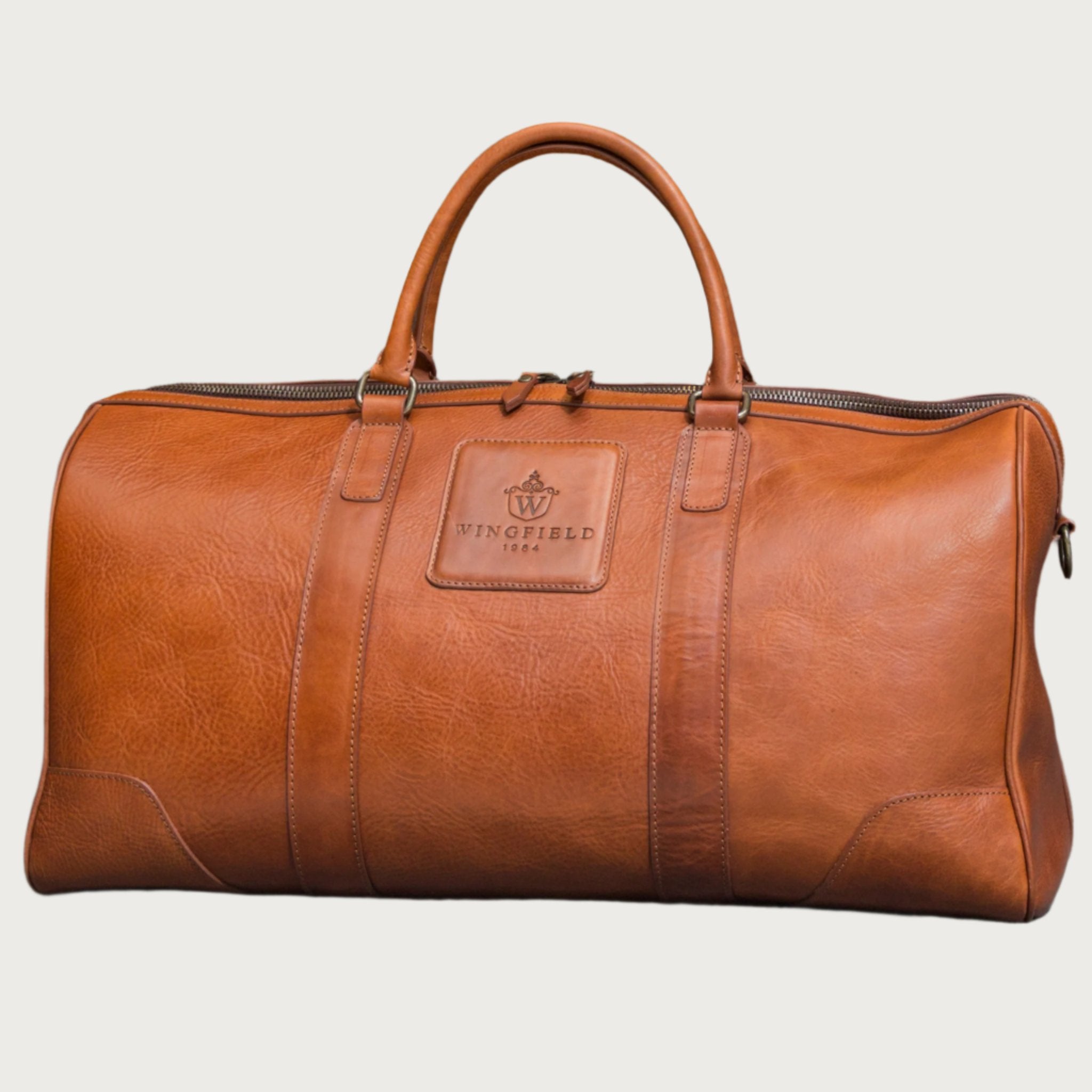
Full-grain hide moves in the opposite direction. It does not have a coating to lose, because the surface is the material. It softens, darkens and develops patina, and a well-made bag routinely stays in service for decades. Structural failures happen at the stitching or the hardware, both of which a leatherworker can replace.
| Full-grain leather | PU (vegan) leather | Plant-based alternatives | |
|---|---|---|---|
| Typical lifespan | 10–30+ years | 2–5 years | 3–7 years (varies widely) |
| Ages by | Developing patina | Cracking and peeling | Surface wear, some cracking |
| Repairable | Yes — stitching, hardware, refinishing | Rarely | Rarely |
| Water behaviour | Absorbs; spots then dries | Fully water-resistant | Water-resistant |
| Upfront cost | High | Low | Medium to high |
| End of life | Biodegrades (chrome-tanned more slowly) | Plastic; centuries to break down | Depends on binder used |
The Sustainability Question Is Genuinely Complicated
Animal agriculture carries a real environmental cost, and tanning is a chemically intensive process. Neither point is in dispute. But the comparison is often framed as a single purchase against a single purchase, which is not how these materials are used.
A bag replaced five or six times over a decade consumes five or six times the manufacturing footprint. When the replacement is a petroleum-derived plastic that takes centuries to break down, the arithmetic gets uncomfortable. A single full-grain bag carried for ten years frequently comes out ahead on total impact, even accounting for the hide.
There is also the question of where the hide originates. Cattle are not raised for handbags; leather is a byproduct of the meat industry, and the hides that are not tanned are landfilled or incinerated. That does not make leather carbon-neutral, but it does change what the comparison is measuring.
Where the vegan side has a clear advantage is animal welfare, which is a values question rather than a technical one — and no lifecycle analysis resolves it.
How to Tell What You Are Actually Buying
Labels are unreliable. "Genuine leather" is a specific, low grade of split hide, not a quality guarantee, and "eco-leather" means nothing in particular. Use the material itself instead:
- Look at the cut edges. Real leather shows a fibrous, slightly uneven cross-section. PU shows a clean, uniform plastic layer sitting on a visible woven backing.
- Check the grain for repetition. Machine-embossed patterns repeat. Hide has irregular pores, faint scars and inconsistent grain.
- Press with your thumb. Full-grain wrinkles and springs back. PU dents flatly or barely moves.
- Smell it. Tanned hide has a distinctive dry, earthy odour. PU smells faintly chemical or of nothing at all.
- Look at the back. Suede-like fuzz on the reverse indicates hide. A flat fabric weave indicates a synthetic coating.
Which One Suits How You Carry
Match the material to the use, not to the trend. Synthetic makes practical sense for a bag you expect to abandon within a couple of seasons: a bright seasonal colour, a gym bag, festival and beach use, anything that will get soaked repeatedly.
Full-grain earns its price on the bags you carry daily for years. That is where the cost-per-wear inverts and where patina becomes an asset rather than wear. Our Paris Leather Shoulder Bag is cut from full-grain hide precisely for that kind of use, and the Classic Leather Tote is built to take the daily commute load that flexes a synthetic bag apart at the handles.
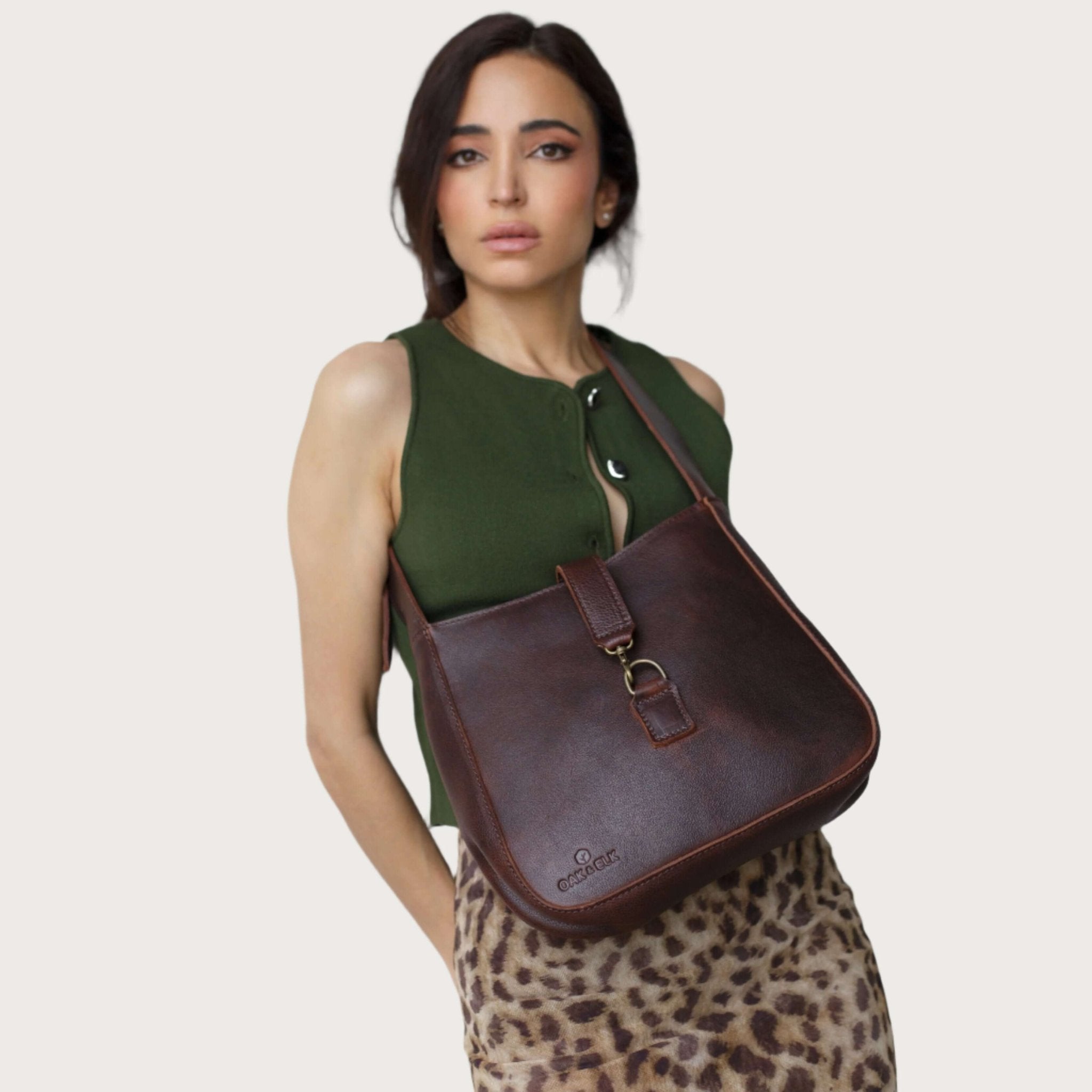
For hands-free carry, the Emily Leather Crossbody puts the leather where the strain is — at the strap junction, the first place a coated material fails. If you carry weight rather than essentials, the Emma Leather Backpack distributes it across seams that can be restitched decades from now.
Getting the Longest Life Out of Either
Real leather rewards maintenance: condition it two to four times a year, blot water rather than heat-drying it, and store it stuffed and away from direct sun. Synthetics need the opposite approach — no conditioner, which cannot penetrate a sealed surface, and above all no sharp folds, since creasing is what initiates delamination. Wipe with a damp cloth and store flat.
Frequently Asked Questions
How long does a vegan leather bag last?
Most PU vegan leather bags last two to five years with regular use. The coating eventually separates from the fabric backing, producing the flaking and peeling that ends the bag's life. Higher-quality synthetics and plant-based materials sit at the upper end of that range.
Is vegan leather better for the environment than real leather?
Not automatically. Most vegan leather is plastic derived from petroleum and takes centuries to decompose. Because it is replaced far more often, several cycles of a synthetic bag can carry a larger total footprint than one leather bag kept for a decade. Plant-based materials such as Mirum narrow that gap considerably.
Does real leather crack like vegan leather does?
Real leather cracks only when it has been allowed to dry out completely, and it can usually be restored with conditioning. Vegan leather cracks because the polyurethane layer is delaminating from its backing, which is permanent.
Is "genuine leather" the same as full-grain leather?
No. Genuine leather is a lower grade made from the split layers left after the top surface is removed, often with an artificial grain applied. Full-grain retains the intact outer surface of the hide, which is the strongest part and the layer that develops patina.