Suede vs Nubuck vs Split Leather: What Sets Them Apart
Suede vs nubuck is one of the most common questions in leather shopping, and the answer starts inside the hide itself. Both have a soft, napped surface, but they come from different layers of the skin, and that difference decides how each one wears, stains and ages. Here is how suede, nubuck and split leather are made, what they are good for, and where they fit in a well-made bag.
A hide is built in layers
A cattle hide is not one uniform sheet. The outer surface, called the grain, is the tight, dense fibre structure that carries the natural pattern of the animal's skin. Beneath it sits the looser, more open corium, which makes up most of the thickness. Tanneries often split a thick hide horizontally into two or three sheets so each layer can be used for what it does best.
Every term in this guide comes down to one question: which layer is on the surface, and what was done to it.
What is split leather?
Split leather is made from the lower layers left after the grain layer has been separated from the hide. Because it lacks the dense grain, it has less strength and a plain, fibrous surface. To make it saleable, producers commonly add an artificial coating and emboss it with a grain pattern so it resembles a finished smooth leather.
That is why split leather often appears under the broad label "genuine leather." The term is accurate in the sense that it is real leather, but it tells you very little about quality. Our guide to leather labeling laws explains why that label is so loosely used.
What is suede?
Suede is leather finished on the flesh side, so the surface is a soft nap of short fibres. Most suede sold today is split suede, made only from the corium after it has been separated from the grain. A single hide can yield two, sometimes three, such pieces.
There is also full reverse suede, made from a hide that keeps its grain layer, with the underside sanded to a fine nap. The surface can look identical to split suede, but the tight grain layer is still there, facing inward, which generally makes it sturdier, less stretchy and better at resisting moisture.
Split suede is soft and light, which suits linings, jackets and shoe uppers. Its looser structure lets moisture through and stretches more easily, so it needs a good lining or reinforcement where a bag takes strain.
What is nubuck?
Nubuck goes the opposite direction. It is made from the outer, grain side of the hide, and the surface is lightly sanded or buffed to create a short, velvety nap. Because it starts from the grain layer, it keeps much of that dense fibre structure and is generally closer to full-grain leather in strength than suede is.
Sanding the surface removes the natural protective top of the grain and opens the pores, which is why nubuck marks and stains easily and needs protection. Since the buffing also hides natural scars and imperfections, nubuck is sometimes made from hides with more visible blemishes, a point we cover in our article on natural marks in leather. Some sources classify nubuck as a corrected-grain leather because the grain surface is altered, although nothing is added on top of it.
Suede vs nubuck vs split leather at a glance
| Type | Layer used | Surface | Typical strength | Care needs |
|---|---|---|---|---|
| Split leather | Lower layer left after the grain is removed | Often coated and embossed | Lower than grain leather | Depends on the coating |
| Split suede | Corium only | Soft, short nap | Softer, stretches more | High: waterproofing spray, brushing |
| Full reverse suede | Whole hide, flesh side sanded | Fine nap | Higher than split suede | High: needs protection |
| Nubuck | Grain side, sanded | Velvety, very short nap | Close to full grain | High: marks and stains easily |
Treat the table as a general guide. Tannery processes, thickness and finishing vary, so two pieces with the same name can behave differently.
Which is more durable for a bag?
For structure and wear, the layer matters more than the name. A bag cut from grain-side leather, smooth or napped, will usually hold its shape better than one cut from split material. Napped surfaces of any kind show water spots, oils and scuffs more readily than smooth finished leather, so they ask more of the owner.
If you carry a bag daily in unpredictable weather, a smooth vegetable-tanned leather is the lower-maintenance choice, and it improves with age. Our explanation of how leather patina develops shows why smooth grain leather gets better looking over time while napped leather mostly gets cleaner or dirtier.
Where suede appears in a well-made bag
A napped surface does not have to be the outside of a bag. Some makers leave the interior unlined, so the inside shows the soft flesh side of the leather. The Emily Leather Tote is built this way: it is made from Signature genuine leather with an embossed grain, and its unlined interior reveals the suede side of the leather. It is also a useful example of how a single piece of leather can show two faces, one smooth and one napped.
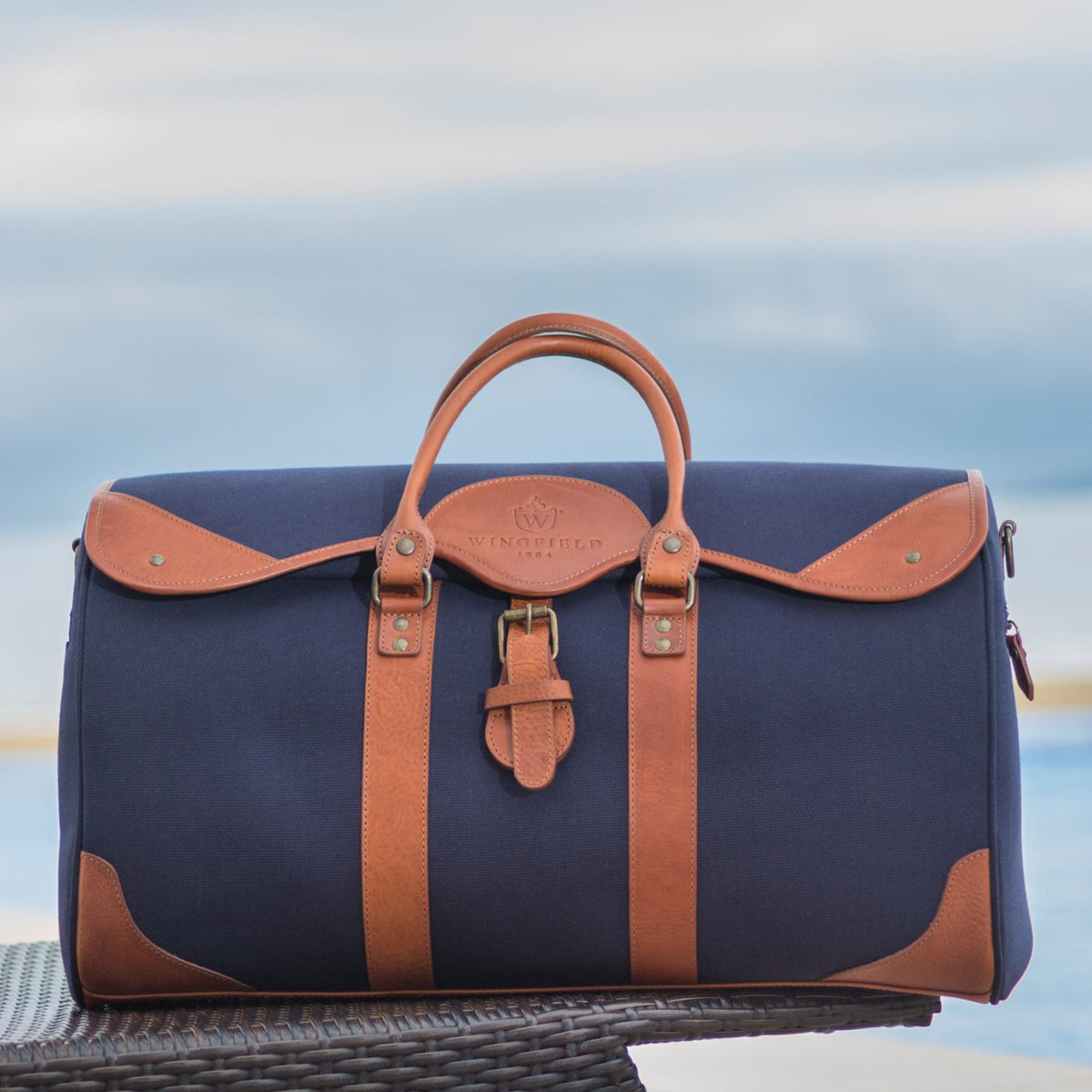
At the other end, bags made from smooth, vegetable-tanned leather, such as the Wingfield Large Leather Duffel Bag, rely on the grain surface itself for strength, with old brass hardware and a cotton-lined interior. Neither approach is wrong. They are different tools for different jobs, and the label should tell you which one you are buying.
How to care for suede and nubuck
- Protect first. Apply a spray made for napped leather before first use. Many suedes are waterproofed at the tannery, but a protective spray is still commonly advised.
- Brush, do not rub. Use a soft suede brush in one direction to lift the nap and remove dry dirt.
- Keep it dry. If it gets wet, let it dry naturally away from direct heat, then brush the nap back up.
- Avoid oils and creams. Conditioners made for smooth leather can darken and flatten the nap.
- Store with air. Use a breathable dust bag, as described in our guide to storing a leather bag.
How to read a label
Look for specific words. "Full-grain nubuck" or "full reverse suede" signals a hide that kept its grain layer. "Split suede" is honest and fine for a lining or a soft garment. "Genuine leather" alone says only that the material is real leather, not which layer it is. If a seller cannot tell you the layer, assume it is the lower one.
Frequently asked questions
Is nubuck the same as suede?
No. Nubuck is made from the outer grain side of the hide, sanded to a short nap. Suede is made from the inner side, and most modern suede is split from the grain layer entirely.
Is nubuck stronger than suede?
Generally yes. Because nubuck keeps much of the dense grain structure, it tends to be tougher than split suede, although it still marks and stains easily.
Is split leather real leather?
Yes, it is real animal hide, but it comes from the layer beneath the grain and is usually weaker. It is often coated and embossed, and frequently sold as "genuine leather."
Can you waterproof suede and nubuck?
You can improve water resistance with a protective spray made for napped leather, but no spray makes them fully waterproof. Reapply it periodically and dry any wet piece naturally.