Leather Dye Transfer: Why It Happens and How to Prevent It
Leather dye transfer is the faint stain a new bag can leave on a light shirt, a pair of pale jeans or a car seat. It is usually harmless to the bag and fixable with a little care, and it is rarely a sign of poor leather on its own. Here is why it happens, how the industry measures it, and what you can do about it.
What Leather Dye Transfer Actually Is
Dye transfer, which tanneries call poor colour fastness to crocking, happens when colour rubs off the leather onto another surface through friction, moisture or both. Most of it is loose dye or pigment sitting at the surface that was not fully fixed during finishing.
It tends to show up in three situations: a new bag worn against light clothing, a bag that has been rained on or carried in humid weather, and dark leather resting against pale fabric such as denim, linen or cream upholstery.
How Leather Gets Its Colour
Colour is added in two broad ways, and most leather uses a mix of both.
- Drum dyeing. Hides tumble in a rotating drum filled with dye solution so the colour soaks into the fibres. This gives depth, and well-done through-dyed leather looks similar on both sides.
- Surface finishing. A pigment or finish layer is sprayed or applied on top and sealed with a protective coat. This evens out the colour and improves resistance to wear and fading.
If you want the finish side of the story, our guide to aniline vs semi-aniline leather finishes covers it in depth. For the bigger picture of where dyeing sits in the process, see how leather is made step by step.
Why Some Leather Transfers More Than Others
No single factor decides it. These are the usual contributors:
- Little or no protective topcoat. Open, natural-feeling leathers are lightly finished, so there is less sealing layer between the colour and your clothes.
- Deep, dark colours. Black, brown and burgundy carry more dye, so any loose colour is more visible on pale fabric.
- Newness. The first weeks of wear are when surface colour is most likely to rub off. It usually settles as the leather is handled.
- Moisture. Wet leather and wet clothing make transfer more likely.
- Friction points. Straps against shoulders and bag bodies against hips see the most rubbing.
How Colour Fastness Is Tested
The industry has a formal test. ISO 20433:2024, titled Leather: Tests for colour fastness: Colour fastness to crocking, measures how much colour rubs off coloured leather onto another surface, using a dry rubbing cloth and a wet rubbing cloth. It applies to all types of coloured leather and can be run before or after finishing treatments, because finishing changes the result.
If a brand or tannery can tell you a leather's crocking results, that is more useful than a vague claim that a bag is colourfast.
Finish Types Compared
| Leather type | How colour is applied | Transfer tendency | Trade-off |
|---|---|---|---|
| Aniline | Dye soaks in, no opaque layer | Higher, especially when new or damp | Most natural look, develops patina |
| Semi-aniline | Dye plus a light protective coat | Moderate | Balance of natural look and protection |
| Pigmented | Opaque coloured finish on top | Lower when properly sealed | Uniform and durable, less natural feel |
Treat this as a general tendency, not a guarantee. Dye quality and finishing skill vary between tanneries.
How to Prevent Dye Transfer
- Test before you trust. Rub a clean, damp white cloth over an out-of-sight area. A little colour is normal on natural leather. Heavy colour is a reason to be careful.
- Break the bag in gently. Avoid pairing a brand-new dark bag with white or pale clothes for the first few weeks.
- Keep it dry. If your bag gets soaked, follow our steps for a wet leather bag and let it dry naturally.
- Condition lightly. A suitable leather conditioner can leave the surface smoother and less prone to shedding dust and loose colour, but test it first because it can darken some leathers.
- Add a barrier. A scarf, jacket layer or strap pad stops friction at the contact points.
What to Do If Colour Has Already Transferred
Act quickly and gently. On washable fabric, treat the mark soon with a laundry stain remover and wash as the care label directs. On delicate or dry-clean-only fabric, a professional cleaner is the safer route, so mention that the stain is leather dye. Avoid hot water or harsh solvents on leather or fabric, since they can set or spread the stain.
Dye Transfer and Natural Leather Bags
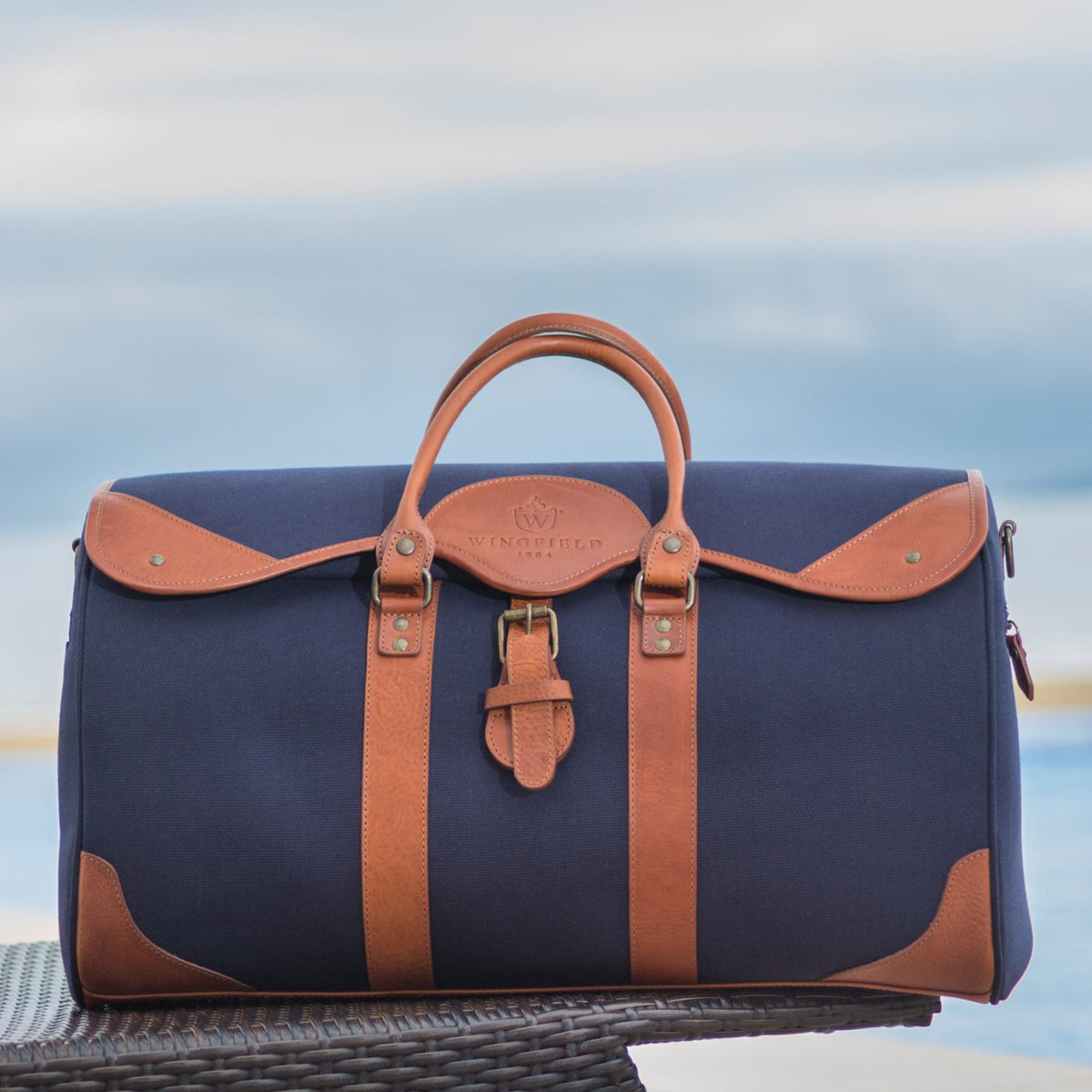
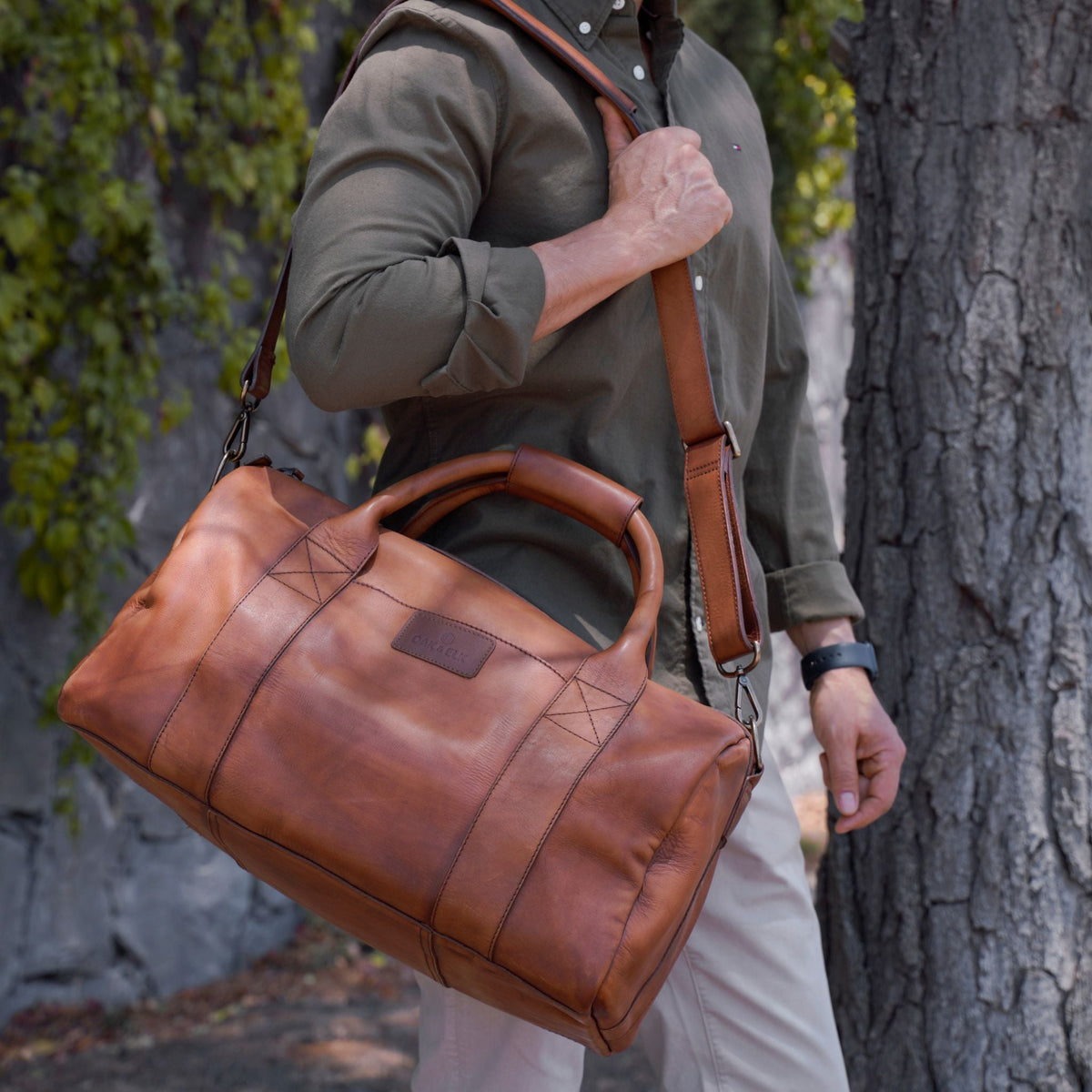
Vegetable-tanned and full-grain leathers are valued for patina, which means the surface is meant to change with use. The Wingfield Leather Messenger Bag is cut from vegetable-tanned leather with old brass hardware, and its listing notes subtle variations in tone and a patina that deepens with use. The Dakota Medium Leather Duffel Bag is made from full-grain cowhide with a natural patina, and the Classic Leather Tote has vegetable-tanned handles. With any natural leather, the sensible habits above apply, and our piece on how leather patina develops explains why colour changes over time are part of the appeal.
Common Situations: Denim, Car Seats and Light Fabrics
Raw or dark denim is the classic partner for leather dye transfer, and the problem runs in both directions. Indigo from new jeans can also rub onto pale leather, which is why light tan and natural leathers can pick up blue marks at the back pocket line. The same logic applies to cream sofas and light car seats, where a dark bag set down for a long drive can leave a faint mark, especially in summer heat when the surface is damp from sweat or humidity.
In each case the fix is the same: reduce friction, keep both surfaces dry, and clean any mark early. A soft cloth and a mild approach beat scrubbing, which pushes colour deeper into fabric weave.
Questions to Ask Before You Buy
You do not need a laboratory to shop sensibly. A few questions help you separate sound leather from careless finishing:
- Is the leather aniline, semi-aniline or pigmented, and is that stated plainly?
- Does the seller describe how the colour is applied, such as drum dyeing, surface finishing or both?
- Can they share crocking or colour fastness test results for the leather?
- Do they explain what to expect in the first weeks of wear?
Honest answers, including "a little colour may rub off new light-sensitive leather", are a better sign than a promise that nothing will ever transfer. Natural leather is a natural material, and brands that say so are usually the ones that make bags to be used for years.
Frequently Asked Questions
Is leather dye transfer a sign of fake or low-quality leather?
Not necessarily. Lightly finished natural leather can transfer a little colour when new, while heavily coated leather can still transfer if it was poorly finished. Judge the bag by its construction and finish, not by one rub test alone.
Will my leather bag stop leaving colour on clothes?
Often, yes. Loose surface colour tends to settle after the first weeks of regular use, though damp conditions can bring it back.
Does dye transfer mean my bag is losing its colour?
Usually not in any visible way. The amount of dye that rubs off is small, and natural wear shapes the look of the leather far more than transfer does.
Can I remove leather dye from light clothing?
Often, if you treat it quickly. Use a stain remover on washable fabrics and avoid heat until the mark is gone. For delicate fabrics, see a professional cleaner.