Article: Leather Patina: How It Develops and How to Guide It

Leather Patina: How It Develops and How to Guide It
Leather patina is the soft change in color, sheen and texture that full-grain leather develops as it is carried, touched and exposed to light. It is not damage and it is not a defect: it is the material responding to use. Here is what causes it, which leathers show it, and how to guide it without overdoing the care.
What Is Leather Patina?
Patina is a surface change that builds up over months and years of ordinary use. Leather that has a natural, open surface absorbs oils, moisture and light, and the surface slowly darkens, warms and takes on a gentle glow. Corners and handles, the parts you touch most, change first. No two bags end up the same, because no two owners carry a bag the same way.
It helps to separate patina from wear. Patina is an even, gradual deepening of tone and a smoother hand feel. Wear is structural: cracking, peeling, torn stitching. Good leather can show a lot of the first with very little of the second.
What Causes Patina to Develop
Several everyday factors act together, which is why the process is hard to predict to the week.
- Skin oils and handling: the natural oils from your hands darken and polish handles, straps and edges.
- Light: UV exposure tends to shift lighter leathers toward a deeper, golden-tan tone.
- Moisture: light rain or humidity can leave marks that blend in over time, though a heavy soaking can stain or stiffen leather.
- Heat and air: warmth and general exposure contribute to a gradual change in color.
- Friction and contact: scuffs, rubbing against clothing and even dye transfer from dark denim leave their mark.
Several leathercraft publications describe signs appearing within weeks for some leathers and taking a year or more for others. Treat any exact timeline as a rough guide.
Which Leathers Develop Patina Best
The leather's grade, tanning and finish decide how much patina you will see. Full-grain leather keeps the dense outer surface of the hide, so it can absorb oils and respond to light. Top-grain is sanded and buffed, which seals the pores and reduces the effect. Heavily coated or pigmented leather has a finish that sits on top of the surface, so it changes much less.
| Leather type | Surface | Patina potential |
|---|---|---|
| Full-grain, vegetable-tanned | Natural, open, minimal coating | Highest: visible, rich change |
| Full-grain, lightly finished | Natural surface with a thin finish | Moderate to high |
| Top-grain | Sanded and buffed, sealed | Low to moderate |
| Corrected-grain / heavily pigmented | Embossed or coated surface | Very little |
Tanning matters too. Vegetable tanning uses plant-derived tannins and tends to leave leather receptive to oils and light, while chrome-tanned leather is usually dyed and finished in ways that resist change. For the full comparison, read our guide to vegetable tanned vs chrome tanned leather, and for the grain question see full grain vs top grain leather.
What Patina Looks Like on a Real Bag
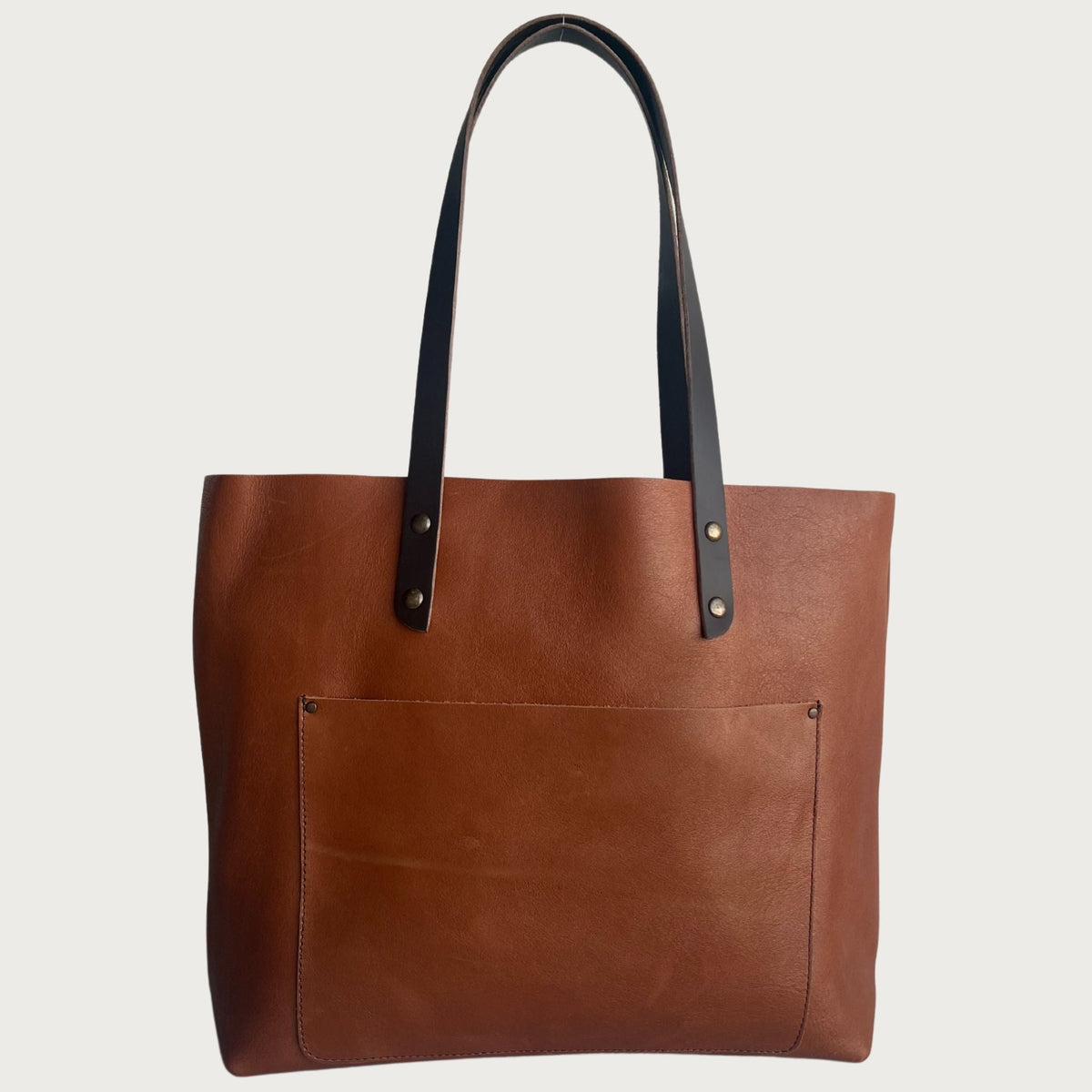
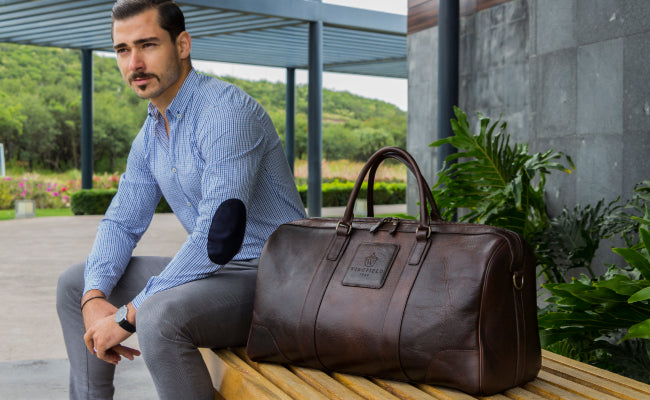
Product details give the clearest picture. The Classic Leather Tote pairs a full-grain leather body with handles made from vegetable-tanned leather. Expect those handles, the part you grip every day, to darken and polish first, while the body changes more slowly. The Wingfield Large Leather Duffel Bag is made from vegetable-tanned leather with old brass hardware, a pairing that tends to look better as both age. The Wingfield Leather Messenger Bag, carried against the body daily, will show the change at the strap and flap edge.
How to Encourage Patina
- Use the bag. Frequent handling is the single biggest driver.
- Allow normal light exposure. Carrying it outdoors does more than keeping it in a closet.
- Keep care light. Over-conditioning can darken leather unevenly and make it soft and greasy.
- Clean gently when dirty. Dirt can hide the natural shift, so follow a gentle home cleaning routine instead of harsh products.
How to Slow Patina Down
If you prefer the leather to stay close to its original color, you can slow the change, though not stop it. Limit long exposure to direct sun, wipe up spills quickly, and condition sparingly with a product made for leather. A water-protecting treatment made for your leather type can help prevent water marks, but test it on a hidden spot first because any treatment can alter color. Stored in a dust bag away from sun, a bag will change more slowly.
Patina Versus Damage: What to Watch For
Darkening, a soft sheen and small surface scratches that blend in are normal. Deep cracking, dry stiff patches, mold or peeling are not, and they call for proper care or repair rather than waiting. Patina also won't repair a faulty product; it appears on well-made leather that was good to begin with.
Common Patina Myths
"Patina means the bag is old or worn out."
A bag with a developed patina is usually in its best-looking years. The surface has settled, the color has deepened, and the leather has softened at the folds and handles. Worn-out leather looks dry, cracked and thin; patinated leather looks lived in and supple.
"You need special products to create it."
You do not. Time, handling and ordinary exposure do the work. Some brands sell conditioners and oils, and a small amount of a suitable conditioner can help dry leather, but nothing replaces simply carrying the bag. Rushing the process with heavy oils, hair dryers or direct heat tends to produce uneven color and can weaken the fibers.
"All brown leather ages the same way."
Color, dye and finish change the result. A deeper brown may show change as a glossy polish at the edges, while a lighter tan shows it as a warm darkening across the whole surface. Black leather changes least visibly. That is why it is worth looking at how a leather is finished before you buy, not just the color name.
Why Patina Is Part of the Case for Long-Lived Leather
A bag that looks better with use gives you a reason to keep it, repair it and carry it for years rather than replace it. That is the practical link between patina and durability: the same dense, natural surface that ages well is usually the one built to last. It does not make leather an automatically low-impact material, and we are careful not to claim that, but a bag you keep for a long time spreads its footprint over many more uses than one you replace every season. If you want to take the next step on that, see how to store a leather bag between uses so it ages evenly.
Frequently Asked Questions
How long does leather patina take to develop?
It varies with the leather, how often you carry the bag and the light it sees. Some changes show up within weeks of regular use, while a fully even patina can take a year or more.
Does all real leather develop a patina?
No. Full-grain leather with a natural surface develops it most clearly. Sanded, buffed or heavily coated leather changes far less, because the finish blocks the surface from absorbing oils and light.
Can you speed up leather patina?
Only to a degree. Regular use, handling and normal light exposure move it along. Soaking leather in water or heavy oils to force the look can damage it.
Is patina a sign of damage?
No. Patina is a surface change in tone and sheen. Cracking, peeling or stiffness is damage and should be treated, not left to age.