Article: Leather Thickness for Bags: Ounces, mm and What to Choose
Leather Thickness for Bags: Ounces, mm and What to Choose
Leather thickness for bags is one of the quietest decisions in a design, and one of the most important. It decides how a bag holds its shape, how it carries a load, and how it feels in the hand. Here is how leather weight is measured, which thickness suits which kind of bag, and how to judge it yourself.
How leather thickness is measured: ounces and millimeters
Leatherworkers in the United States describe thickness in ounces. The convention is simple: one ounce equals roughly 1/64 of an inch, or about 0.4 mm. So a leather sold as 4 oz is about 4/64 of an inch, close to 1.6 mm.
The word "ounce" is misleading, because it began as a way to describe the weight of a square foot of leather. Today it works as a thickness shorthand, usually given as a range, such as 3-4 oz. The range exists because a hide is a natural material. Thickness varies across the animal, and a tannery or workshop can only split and shave it to within a tolerance.
| Ounces | Approx. inches | Approx. millimeters |
|---|---|---|
| 2 oz | 2/64 in | 0.8 mm |
| 3 oz | 3/64 in | 1.2 mm |
| 4 oz | 4/64 in (1/16) | 1.6 mm |
| 6 oz | 6/64 in | 2.4 mm |
| 8 oz | 8/64 in (1/8) | 3.2 mm |
Typical thickness by use
Craft suppliers publish fairly consistent guidance. Tandy Leather, for example, lists 1-2 oz for linings, 2-3 oz for wallet interiors, 3-4 oz for wallet exteriors and small bags, and 5-6 oz for medium bags and medium-weight belts. Belts that need to be sturdy or heavy duty climb to 6-8 oz. Treat these as starting points rather than rules, since the right figure also depends on the leather's temper and the bag's design.
- Linings: 1-2 oz, thin enough to stay flexible and light.
- Wallet interiors: 2-3 oz, so card slots do not add bulk.
- Small bags and wallet exteriors: 3-4 oz.
- Medium bags: 5-6 oz.
- Belts: 5-8 oz, depending on how rigid you want them.
Thicker is not automatically better
It is easy to assume that heavier leather means a better bag. In practice, thickness is a trade-off, and a good maker chooses it per component.
What thick leather gives you
Heavier leather resists sagging, holds a structured silhouette and tolerates abrasion at corners and strap anchors. It suits briefcase-style shapes and anything that needs to stand on its own.
What it costs you
A thick hide is stiffer and heavier before you put anything inside. A bag that weighs several pounds empty is tiring to carry, and a stiff leather can crack at sharp folds if it is not properly conditioned. Thick leather also needs more effort to stitch, so poorly set seams and uneven stitch lines show up faster.
What thin leather gives you
Thinner leather drapes, folds neatly and keeps weight down. It is the right choice for slouchy totes, linings, pockets and small goods. The risk is the opposite one: with too little thickness and no reinforcement, edges can wear through and handles can stretch.
Thickness is not the same as quality
Two bags with identical thickness can differ enormously in quality, because thickness measures only one dimension of the hide. The grain layer, the tanning method and the finish matter just as much. Our guide to full-grain versus top-grain leather explains why the surface layer is what carries a bag's strength, and why sanding or splitting it away weakens the material. Likewise, vegetable-tanned and chrome-tanned leather behave differently at the same thickness: vegetable-tanned leather tends to be firmer and more form-holding, while chrome-tanned leather is generally softer and more pliable.
Animal and cut matter too. A thick piece from one animal may feel very different from the same thickness on another, which is part of the story in our comparison of cowhide, goatskin and lambskin.
Matching thickness to the bag you are buying
Different bag types ask different things of the leather. Using the guidance above as a frame, here is how it tends to play out.
| Bag type | What the leather needs to do | Thickness direction |
|---|---|---|
| Open tote | Carry a load through the handles while staying soft enough to open and close | Medium body, with firmer leather at the handles |
| Messenger | Hold a flap and a laptop-sized shape against the body | Medium, with some structure |
| Duffel | Support weight and survive travel scuffs and strap stress | Medium to firm, reinforced at the base and strap points |
| Wallet or organizer | Stay slim through many layers | Thin interiors, slightly firmer exteriors |
Examples from our own bags
We do not publish an ounce rating for every bag, because leather varies from hide to hide. What we can point to is how the material choice shapes the result.
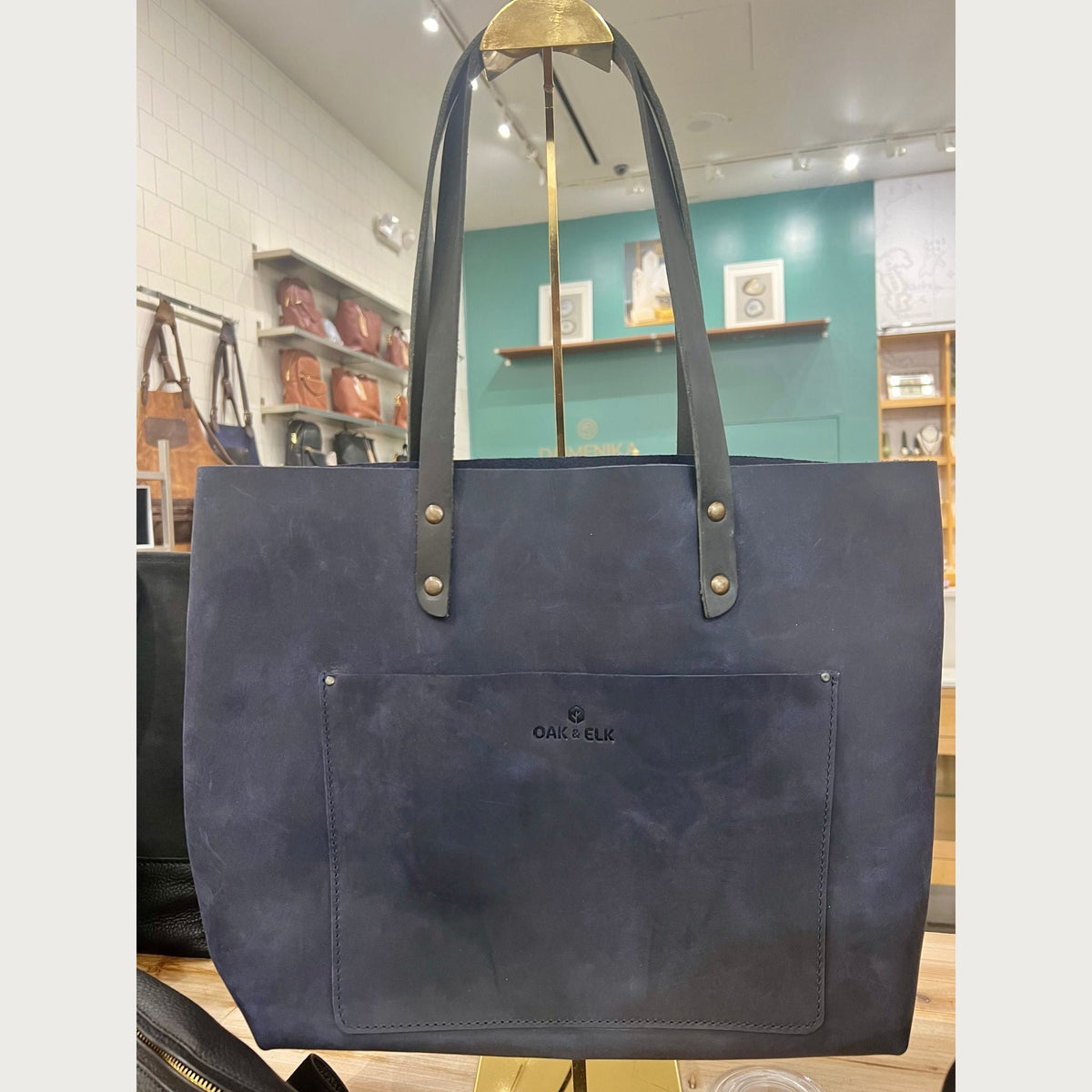
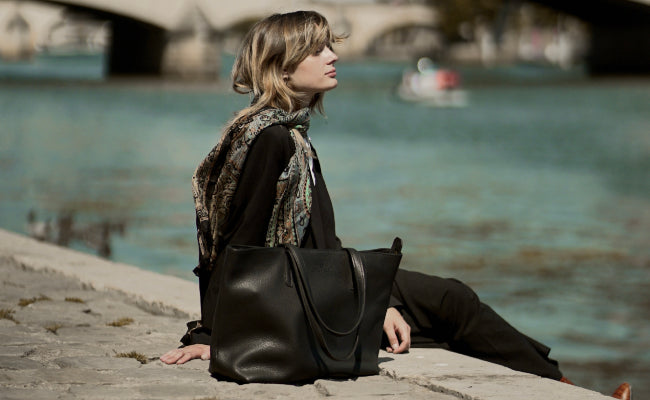
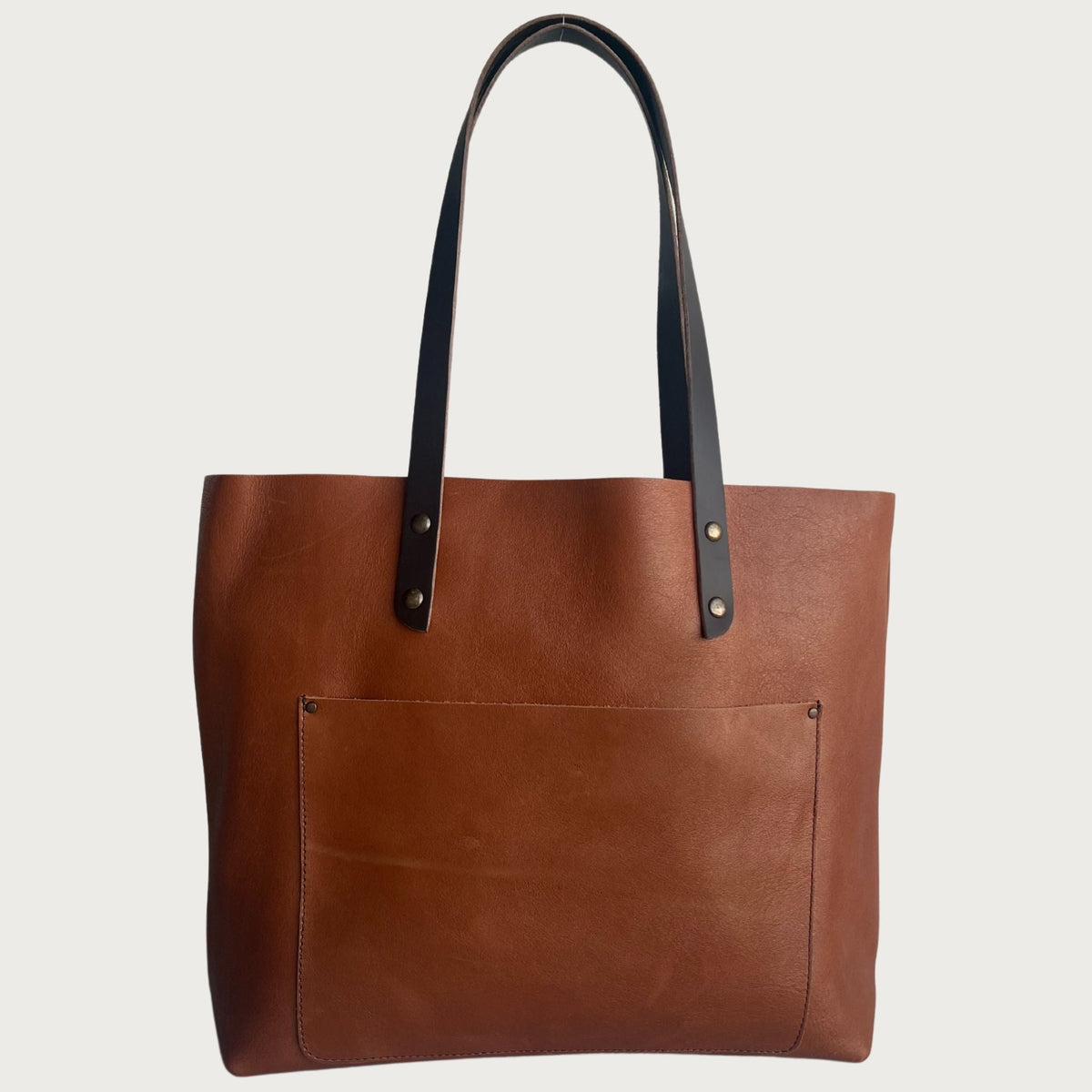
- The Classic Leather Tote is made from full-grain leather with vegetable-tanned handles. The open-top, zipper-free design relies on leather that can flex at the opening yet still carry daily loads.
- The Wingfield Leather Messenger Bag is built from vegetable-tanned leather with old brass-colored hardware. The firmness of that tanning is part of why it keeps its 14 x 13 x 4 inch shape while carrying a laptop.
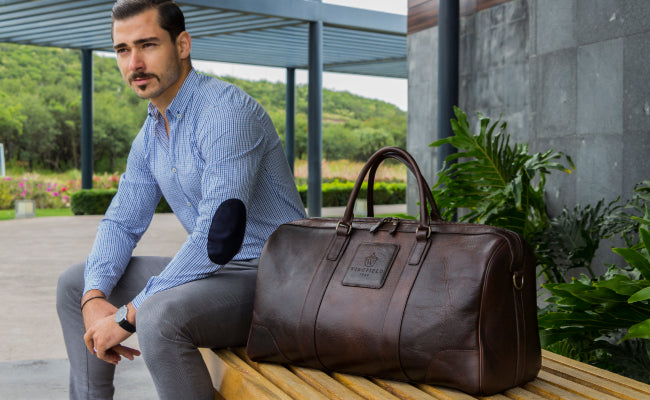
- The Wingfield Small Leather Duffel Bag pairs vegetable-tanned leather with an inner cotton lining. A lining lets the outer leather do the structural work without the interior feeling rough on your belongings.
How to judge thickness before you buy
You rarely get a spec sheet, so use your hands and eyes. Our broader checklist on how to tell if a leather bag is well made covers stitching and hardware as well, but for thickness specifically:
- Check a cut edge. At a strap end or seam you can see the leather in cross-section. A solid, even edge suggests consistent material.
- Feel the fold. Squeeze a corner. Good leather bends smoothly without rippling or showing a white crease line.
- Look at the strap anchors. This is where thickness matters most. Handles and strap attachments should be visibly firmer and well stitched.
- Compare empty weight. Lift the bag. If it feels heavy before you load it, the leather or the structure may be heavier than your daily carry needs.
- Check consistency. Small differences from panel to panel are normal for natural leather. Large, abrupt changes can signal poor sorting.
Frequently asked questions
What is a good leather thickness for a handbag?
Craft suppliers generally suggest about 3-4 oz for small bags and 5-6 oz for medium bags, with 1-2 oz for linings. Soft, slouchy designs often sit toward the thinner end, structured designs toward the thicker end.
How many millimeters is 1 oz of leather?
One ounce of leather is about 1/64 of an inch, or roughly 0.4 mm. A 4 oz leather is therefore about 1.6 mm thick.
Is thicker leather more durable?
Not always. Thicker leather resists abrasion and holds shape, but durability also depends on the grain layer, the tanning, the stitching and the hardware. A well-made medium-weight bag can outlast a poorly made thick one.
Can leather be too thick for a bag?
Yes. Very thick leather is stiff, heavy and harder to stitch cleanly, and it can crack at tight folds if it is not conditioned. Most everyday bags use medium weights for exactly this reason.