
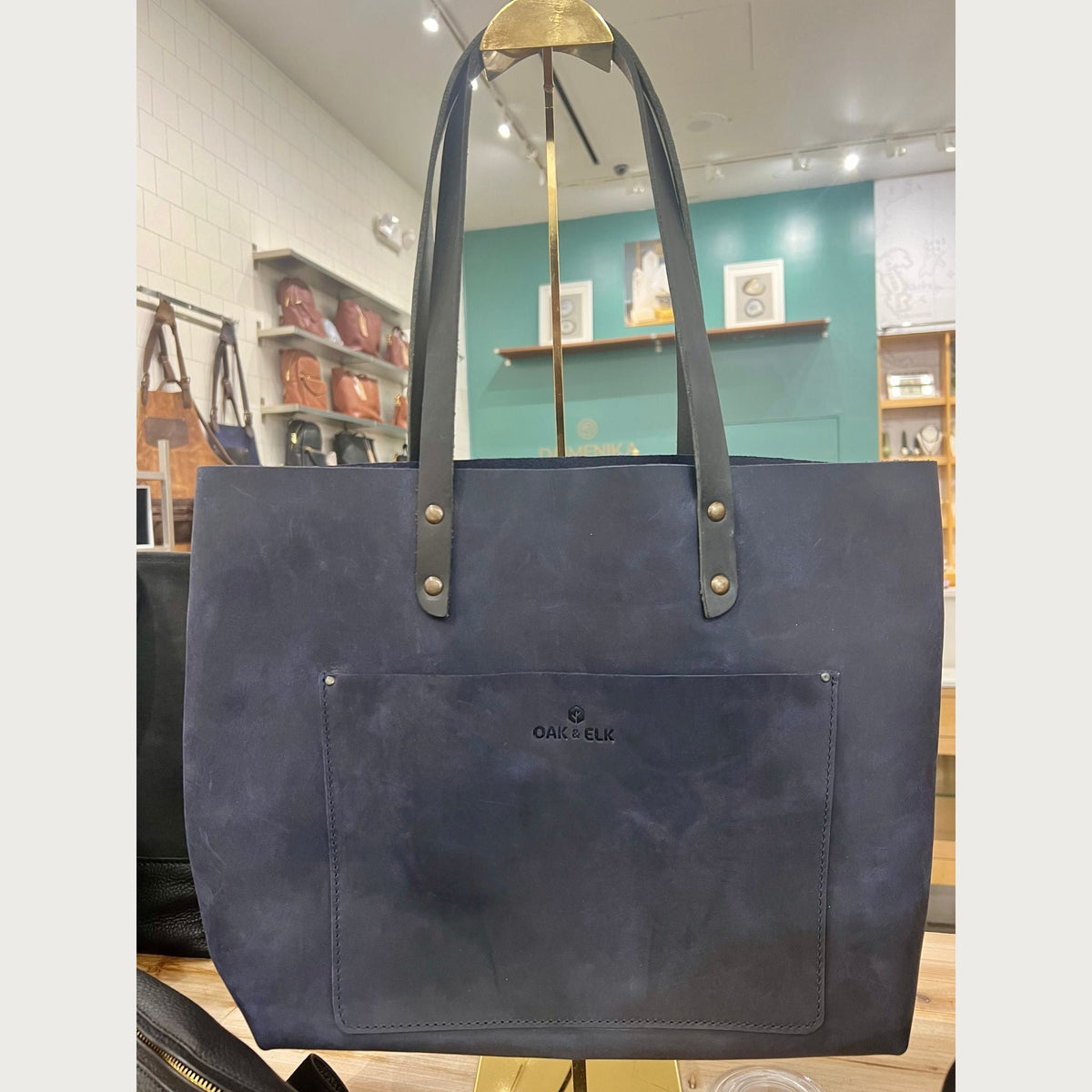
Leather Offcuts: How Bag Makers Reduce Cutting Waste
Every leather bag begins as a hide that is larger than the bag, and that gap is where leather offcuts come from. A hide is an irregular, natural shape; a pattern piece is a clean geometric one, and what is left between them is the cutting waste every maker has to manage. Here is what that waste really amounts to, what happens to it, and what you can do as a buyer.
Why Leather Offcuts Exist in the First Place
Unlike woven fabric, which comes on a roll, a hide has a ragged outline, tapered edges, healed scars, brand marks, insect bites and thinner flank areas. A maker cuts the strongest, most uniform zones for the pieces that carry load, such as bag bodies and straps, and avoids flaws in visible places. Whatever cannot be nested into the pattern becomes offcuts.
The leather-industry reference Leather Dictionary gives rough ranges: about 20 percent of the surface for small articles, generally 30 to 45 percent in the furniture and vehicle sector, and as much as 80 percent for large furniture sets. It adds that larger, more perfect skins lower the waste. Treat these as industry orders of magnitude, not precise figures for any one workshop.
Cutting Waste Is Not the Same as Hide Waste
There are two separate losses in the chain, and they are often mixed up. The first happens before tanning: some hides never become leather. Industry reporting by Leather Biz, citing the Leather and Hide Council of America, put the US figure for 2020 at 4.8 million of 33 million processed cattle hides not entering leather production, about 14.5 percent. The second loss is the cutting waste described above, which happens after tanning in the workshop or factory.
Both matter for the ecological case for leather. Leather is a co-product of the meat industry, so a hide that is discarded is a wasted by-product, and a hide cut inefficiently wastes a processed one. Our guide to how leather is made from raw hide to bag shows how much work has already gone into the material by the time it reaches the cutting table.
What Happens to Leather Offcuts
There is no single destination. Depending on size, quality and the maker, offcuts follow one of several routes:
- Used in-house for small goods. Pieces too small for a bag panel can still become card holders, key fobs, tags, straps, keepers, loops and edge reinforcements.
- Sold or donated to hobbyists and craft schools. Bags of scrap are a common supply for beginners learning stitching and edge finishing.
- Turned into bonded or recycled leather. Scraps and fibers are shredded and combined with a binder.
- Sent to landfill or incineration. This is the least desirable route, and tanned leather does not break down quickly, as we explain in our end-of-life guide to leather.
What Recycled and Bonded Leather Really Is
Recycling offcuts into new material sounds like a perfect circular answer, so it is worth being precise. According to Wikipedia's entry on bonded leather, it is made by shredding leather scraps and leather fiber, mixing them with natural rubber or a polyurethane binder, extruding the mix onto a cloth or paper backing, and usually embossing a grain on top. The European standard EN 15987:2011 requires a minimum of 50 percent dry-leather weight for the bonded leather designation, while in the US the Federal Trade Commission expects disclosure of leather or fiber content where a product could otherwise mislead.
The trade-off is performance. The result is a different material from a solid hide, and composition varies by manufacturer. For a closer comparison, read corrected-grain vs. bonded leather.
Offcut Routes Compared
| Route | What it makes | Main benefit | Main limit |
|---|---|---|---|
| In-house small goods | Card holders, tags, straps, keepers | Keeps solid, full-thickness leather in use | Only suits pieces large enough to cut |
| Craft and hobby reuse | Practice projects, small accessories | Extends life of good material | Depends on a local buyer or school |
| Bonded or fiber leather | Sheet material with embossed grain | Uses fragments that cannot be cut | Binder content; shorter proven lifespan |
| Disposal | Nothing | None | Wastes a processed material |
How Better Design Reduces Leather Offcuts
The best waste reduction happens before any cutting. Makers can lower waste by nesting pattern pieces tightly across the hide, matching piece size to the right part of the skin, choosing designs with a few simple panels, and keeping a library of small components so that every fragment has a destination. Structure also helps: a design built from straight panels and gussets nests more efficiently than one with many curves.
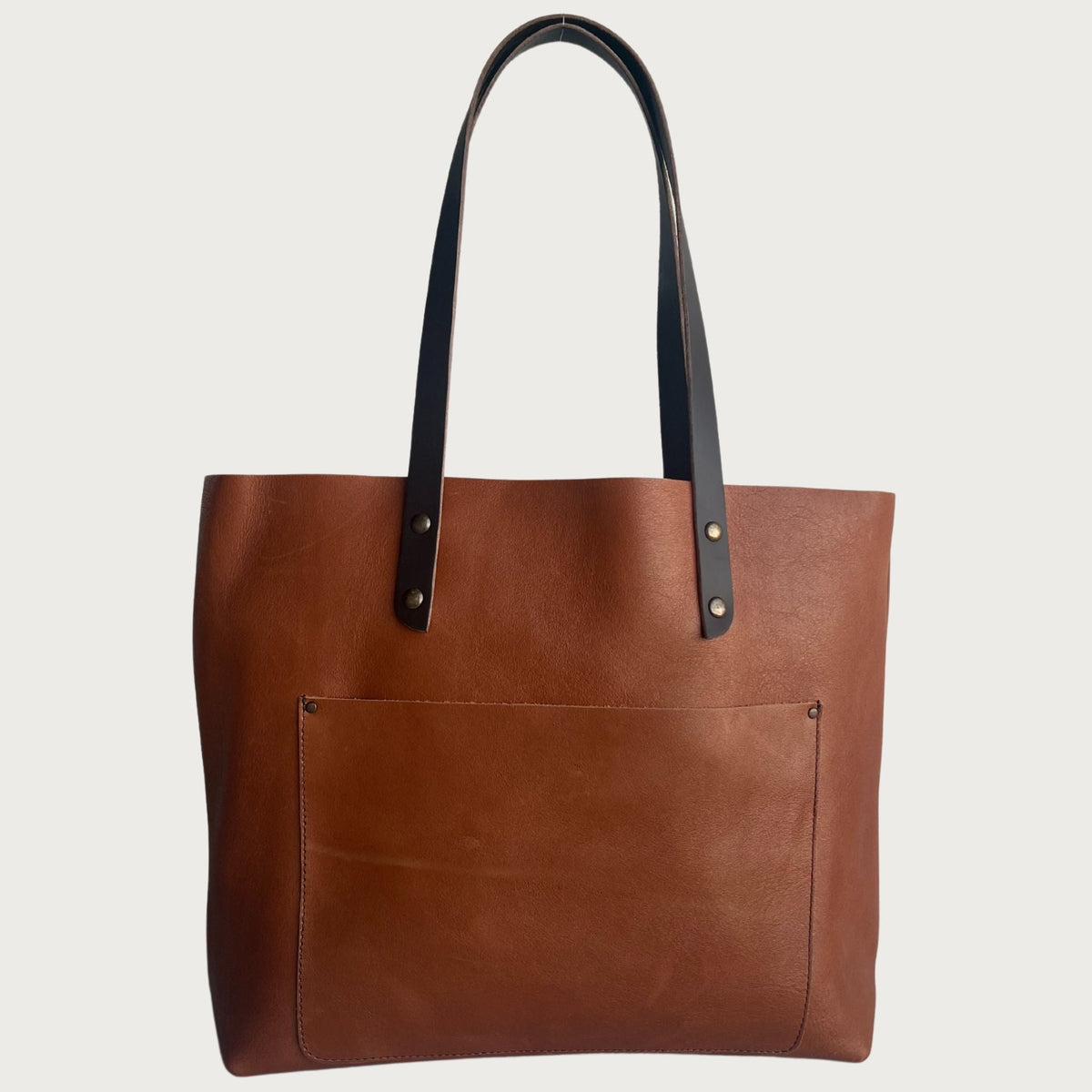
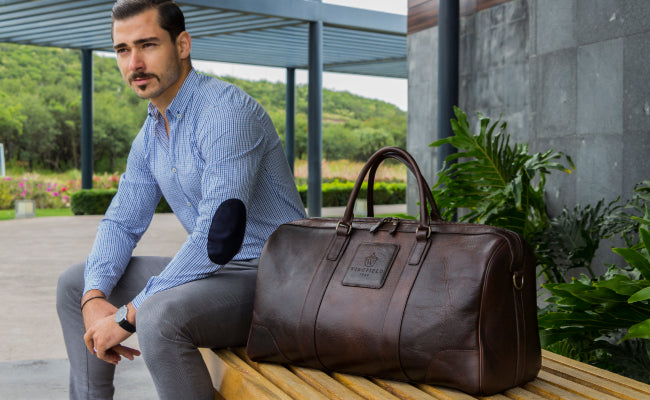
This is a design principle we find worth noting in everyday bags. A simple full-grain piece such as the Classic Leather Tote, crafted from premium full-grain leather, relies on a handful of large, honest panels. For travel, the Wingfield Small Leather Duffel Bag is made from vegetable tanned leather with old brass hardware. We are not claiming either bag is a zero-waste product; the point is that restrained design and durable material go together.
Small leather goods are where smaller pieces can find a second life, as a general practice across the trade. Compact items like the Amy Leather Pocket Organizer suit this kind of leather well.
Why Hide Quality Changes the Waste
Cleaner hides cost more, and they yield more usable pieces. A hide with few scars lets a cutter place panels almost anywhere, while a heavily marked one forces them to cut around defects. This is one reason well-made leather goods are priced the way they are: part of the cost is the unused leather that never reaches the customer. It is also why the "genuine leather" label tells you little. Our guide to leather labeling terms explains which words carry meaning and which are marketing.
Grade affects the look as well. Full-grain leather keeps natural marks, so a maker who accepts small, honest imperfections in non-critical areas wastes less than one who rejects every hide with a visible scar. For a buyer, a faint healed mark is a sign of a natural material used with care, not a defect.
What Buyers Can Do
- Choose solid leather in a durable design, because the longest-lived product wastes the least over time.
- Repair rather than replace; our guide to repairing a leather bag covers what you can fix yourself.
- Ask a maker what they do with scraps. A clear answer is a good sign; vague claims are not.
- Read material labels carefully, and be wary of terms that do not say how much real leather is present.
- Pass on bags you no longer use so the material stays in circulation.
Frequently Asked Questions
How much leather is wasted when making a bag?
It depends on the design, the hide and the maker. An industry reference puts cutting waste at about 20 percent of the surface for small articles and 30 to 45 percent for furniture and vehicles, with a wide range overall. No single figure applies to every bag.
What can be made from leather offcuts?
Small goods such as card holders, key fobs, tags, straps and keepers, plus craft projects. Fragments too small to cut can be shredded into bonded or fiber leather.
Is bonded leather made from real leather scraps?
Yes, partly. It combines shredded leather and fiber with a binder such as polyurethane or natural rubber, usually on a backing. Under the European standard EN 15987:2011 it must contain at least 50 percent dry-leather weight.
Are leather scraps biodegradable?
Tanned leather breaks down slowly, and the speed depends on the tanning method and conditions. Keeping offcuts in use is better than disposal.