Article: Wet Leather Bag: What to Do If Your Bag Gets Rained On
Wet Leather Bag: What to Do If Your Bag Gets Rained On
A wet leather bag is almost never a lost cause, but what you do in the first hour decides whether it dries soft and even or stiff and spotted. Rain, a spilled drink and a damp train seat are ordinary hazards for a bag you actually use, and leather has handled them for centuries. Here is how to dry it, what to avoid, and how to bring it back.
What Water Does to Leather
Leather stays supple because of the oils and fats worked into the fibers during tanning and finishing. Water that soaks in and then evaporates can carry some of that lubrication out with it. Without it, the fibers rub against each other as they dry, which is why a soaked bag can turn stiff, dull or even crack if it is dried badly.
Water can also move dye around, leaving darker rings, streaks or uneven color where moisture sat. And leather left wet for a long time, packed in a bag or a damp closet, can grow mold. None of this is inevitable. Most of the damage comes from the drying, not the wetting.
How Different Leathers React
How much a bag suffers depends on the leather and its finish. A smooth, vegetable-tanned leather with little surface coating absorbs water readily and shows marks easily. A grained or embossed leather with a pigmented finish resists water better because the surface layers keep moisture from soaking straight in. Suede and the unlined suede side inside some bags behave differently again: they absorb quickly and stiffen if they dry hard.
| Leather type | How it reacts to water | What to do |
|---|---|---|
| Smooth vegetable-tanned | Absorbs water quickly, spots and darkens, often recovers with even drying | Blot, air-dry, condition when damp |
| Embossed or pebbled, finished | Surface resists light rain, drops bead up | Blot, air-dry, condition after |
| Suede or unlined suede interior | Absorbs fast, can stiffen as it dries | Dab, brush the nap gently once dry |
If you want the background on why tanning changes this behavior, our comparison of vegetable-tanned vs chrome-tanned leather explains it.
First Steps for a Wet Leather Bag
- Empty it. Remove everything, open the pockets and take out any lining you can.
- Wash and dry your hands first. Oils from skin can mark wet leather.
- Blot the surface with a clean, dry microfiber or cotton cloth. Press, do not rub. Rubbing pushes moisture deeper and can scuff a wet surface.
- Stuff the bag with plain paper or a clean towel so it keeps its shape. Replace the paper once it feels damp.
- Move it somewhere cool and airy, out of direct sun.
How to Dry It Without Making Things Worse
Patience is the whole technique. Let the bag air-dry slowly at room temperature, standing upright or laid flat so it does not sag. Depending on the bag and the humidity, this can take a day or longer.
Heat is the usual culprit. A hairdryer, radiator, heated rack or sunny windowsill dries the surface faster than the interior, pulls out more of the oils and can leave leather shrunken, stiff or cracked. Keep the bag away from all of them. If the bottom is soaked, raise the bag on a clean rack so air can reach it.
- Do not rub, scrape or wipe repeatedly.
- Do not use a hairdryer on smooth leather.
- Do not seal a damp bag in a plastic bag or dust bag.
Condition It While It Is Still Damp
Once the leather is damp rather than wet, a thin, even coat of leather conditioner helps replace oils lost to the water. Apply it to the whole panel, not just the wet patch, or you may create a visible edge. Test first on a hidden spot, since some conditioners and waxes darken certain leathers. Then let it dry again, gently, for several hours before using the bag.
Suede needs a different approach. Dab away water, let it dry, then brush the nap lightly. Do not use wax or heavy conditioner on suede.
Water Spots and Stiffness
A dried ring or spot is usually surface dye or dirt that moved with the water. Damp the whole panel evenly with a lightly moistened cloth, from seam to seam, and dry it slowly. This blends the mark into the surrounding leather. A bag that feels stiff after drying often softens with a light conditioner and a few days of handling. Deep cracking or a bag that has mildewed is a job for a leather specialist, and our guide to repairing a leather bag covers when to call one. Ordinary dirt that surfaced is dealt with in how to clean a leather bag at home.
Which Bags Cope Best
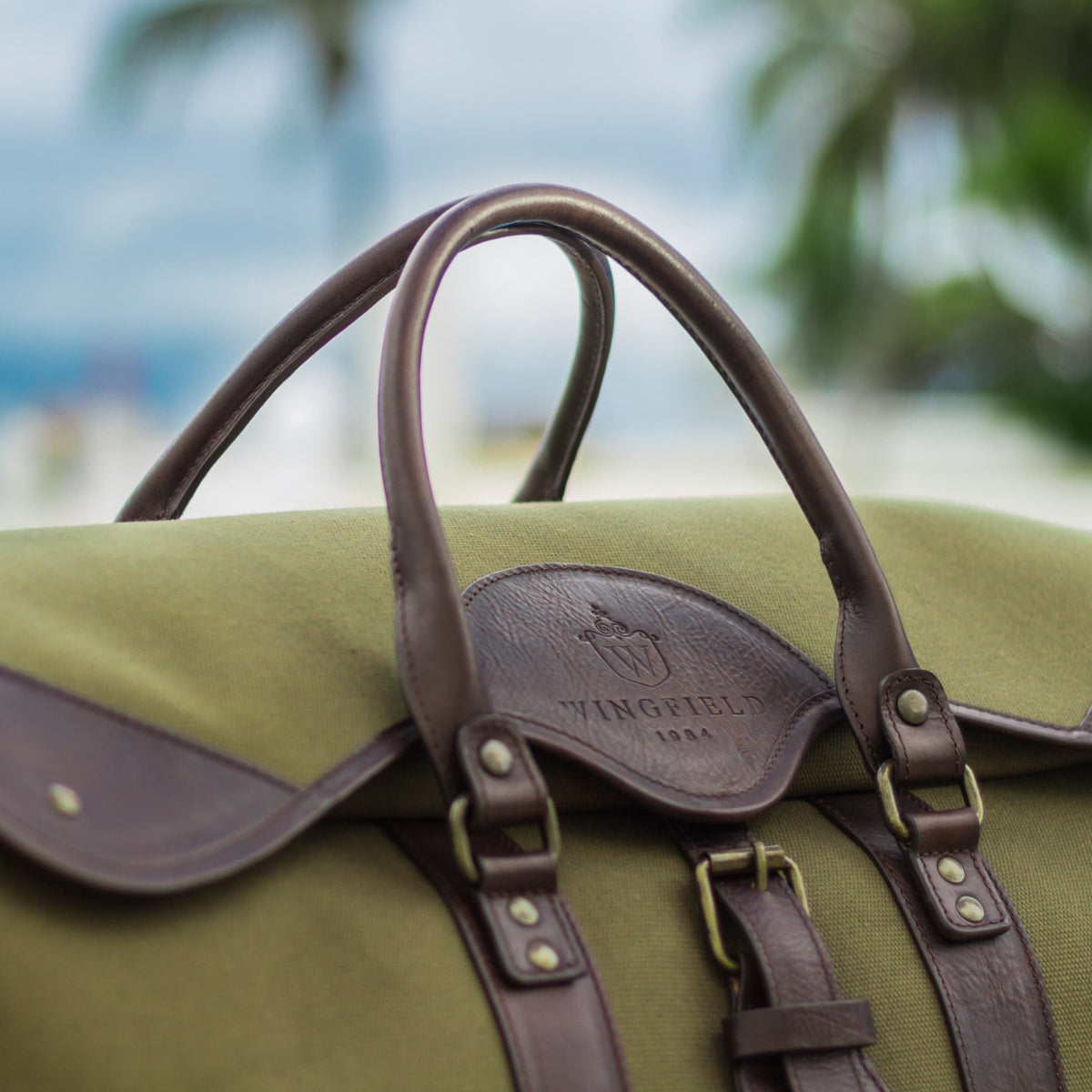
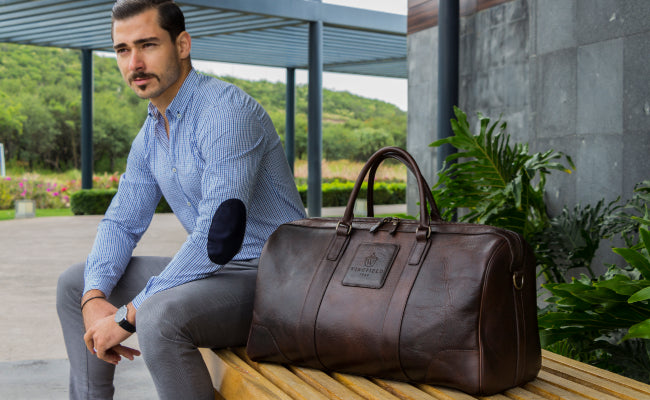
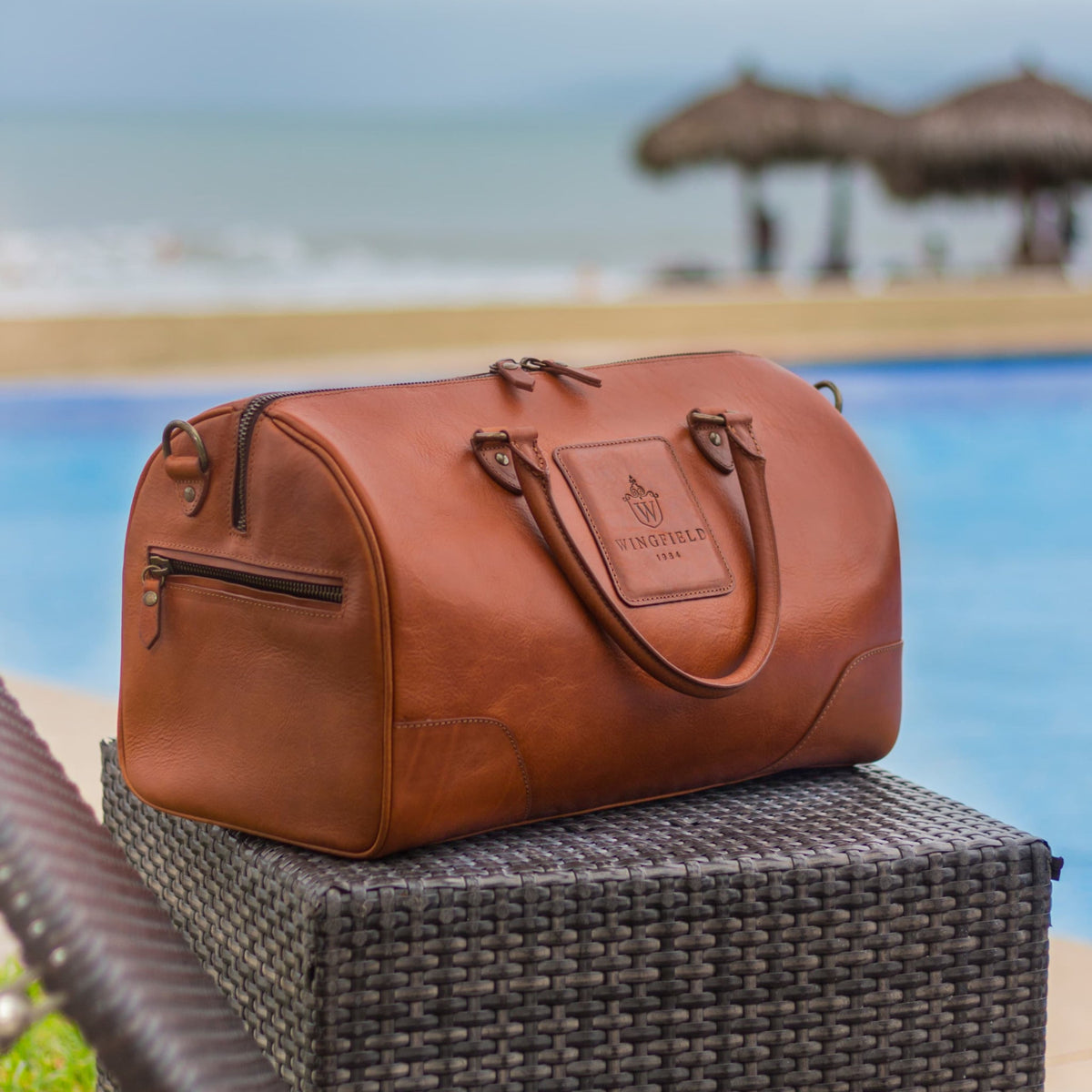
Every leather bag will tell the story of the weather it has seen, and some of that is a feature. The Wingfield Small Leather Duffel and the Wingfield Leather Messenger are cut from vegetable-tanned leather, a natural material that develops subtle variations and a deepening patina with use. The Emily Leather Tote is made from genuine leather with an embossed grain and has an unlined interior that shows the suede side of the hide, so dry that interior gently and keep it open to air. How patina forms over time is explained in our guide to leather patina.
Frequently Asked Questions
Can a leather bag get wet?
Yes. Light rain or a splash will not ruin a well-made leather bag if you blot it and let it dry slowly. Long soaking and fast, hot drying do the real damage.
Should I use a hairdryer on a wet leather bag?
No. Heat can pull oils out of the leather and cause shrinking, stiffness and cracking. Air-dry at room temperature instead.
How long does a wet leather bag take to dry?
It depends on size, thickness and humidity, but expect at least a day. Do not rush it, and wait until the leather feels dry through, not just on the surface, before conditioning or packing it away.
Do I need to condition leather after it gets wet?
Usually yes, lightly. Apply a thin coat of conditioner once the leather is damp, then let it dry, since water can carry some of the leather's oils out as it evaporates. Skip conditioner on suede.