Tuscan Vegetable Tanned Leather: What the Mark Means
Tuscan vegetable tanned leather is one of the few leathers in the world with its own consortium, its own trademark and a short list of rules about how it must be made. If you have seen the words "Pelle Conciata al Vegetale in Toscana" on a hide or a hangtag, this guide explains what they promise, what they do not, and why a river valley between Florence and Pisa became a tanning district.
Where Tuscan Vegetable Tanning Happens
The center of Tuscan tanning is the area around Santa Croce sull'Arno, along the Arno between Florence and Pisa, with neighboring towns such as Ponte a Egola and San Miniato. According to a 2026 Forbes Italia profile, the Santa Croce district counts roughly 600 companies, mostly tanneries and contract processors, and accounts for about 35% of Italy's leather output and nearly all of its sole leather. Its roots go back to the mid-1800s, when access to river water and a local agricultural workforce supported the first workshops. The big expansion came after World War II.
You will also read that Tuscan tanning dates to medieval Florence and its leather guild. Those claims circulate widely, but much of what is published about them is promotional and uncited, so treat specific dates as folklore until you see an archival source. What is documented is the modern district and the consortium that now protects the method.
Why Tanning Districts Form Where They Do
Tanning needs three things in quantity: clean water, a steady supply of raw hides from nearby meat production, and skilled labor that knows how to handle them. Once a few workshops succeed, suppliers, machinery makers and wastewater services gather around them, and the cluster reinforces itself. That is the same logic that built the tanning quarter in Fez and the León tradition in Mexico, which we cover in Mexican leather craftsmanship in León. Santa Croce simply added a modern layer: shared infrastructure and a collective trademark, so a small family tannery can compete under a recognizable name.
What the "Pelle Conciata al Vegetale in Toscana" Mark Means
The mark belongs to a consortium based in San Miniato. Its own materials describe a quality trademark that guarantees the raw materials and processes behind the leather. In practice that means three things:
- Natural tannins only. Member tanneries tan exclusively with plant extracts. The consortium names mimosa, chestnut and quebracho as the main sources.
- Made in Tuscany. Production must take place entirely within the region and meet set chemical and physical standards.
- No prohibited substances. The leather must not contain anything banned by law.
The consortium's materials cite a European directive and an Italian ministerial decree that limit surface coatings or glued-on finishes to 0.15 mm. Those rules are about what may legally be called leather, so the mark sits on top of a baseline, not in place of it. The consortium lists around two dozen member tanneries, all in the Tuscan leather district.
Slow by Design: How the Tanning Works
Vegetable tanning is slow because tannins are large molecules that must travel into the fiber structure of the hide a little at a time. Tanneries typically move hides through pits or drums with progressively stronger tannin solutions. Estimates for how long this takes vary by tannery and thickness, and the consortium itself says only that the process takes "all the time necessary." Expect weeks, not hours. For the broader process, see our guide to how leather is made step by step.
Tuscan tanneries work mainly with bovine hides, and they sell them as sides, shoulders, bellies and double butts rather than whole skins. Finished thickness runs from about 0.7 mm to 4.0 mm. That range is why the same tradition supplies belts, soles, wallets and bags.
Tuscan Vegetable-Tanned vs Other Leathers
| Feature | Tuscan vegetable-tanned | Chrome-tanned |
|---|---|---|
| Tanning agent | Mimosa, chestnut, quebracho extracts | Chromium salts |
| Speed | Slow, measured in weeks | Fast, measured in days |
| Feel | Firm, fuller body that softens with use | Soft and flexible from day one |
| Aging | Pronounced patina | Little color change |
| Water resistance | Lower until conditioned | Generally higher |
| Cost | Higher | Lower |
Neither system is villainous. Our article on vegetable tanned vs chrome tanned leather covers the trade-offs in full.
The Environmental Question
Natural tannins are renewable and generally easier on wastewater chemistry than chromium, but vegetable tanning is not automatically green. It uses plenty of water, and tannin liquors are strongly colored and high in organic load. The Santa Croce district tackled this through shared treatment: regulatory pressure from the 1970s and 1980s led tanneries to build consortium-run wastewater and by-product systems, including Aquarno and Consorzio Cuoio-Depur, which also recover energy and make fertilizers from waste. We explain how that works in tannery wastewater treatment explained. Note that the consortium mark itself makes no environmental claims; it certifies method and origin.
A Sector Under Pressure
The district is not immune to the market. According to Unic, the Italian tanners' association, Italian tanning production fell 3.6% in 2025, turnover fell 5% and exports fell 6%, continuing a contraction that began in 2024. Luxury groups including LVMH, Kering and Chanel have taken stakes in local tanneries, which tells you how highly the output is valued. It also means the mark is worth checking rather than assuming.
For a buyer, the practical lesson is to read a leather claim the way you would read a food label. A protected name tells you where and how something was made. It does not tell you how a particular bag is cut, stitched or finished, and it says nothing about how long the bag will last in your hands. Construction and care still decide that.
Seeing Vegetable-Tanned Leather in a Bag
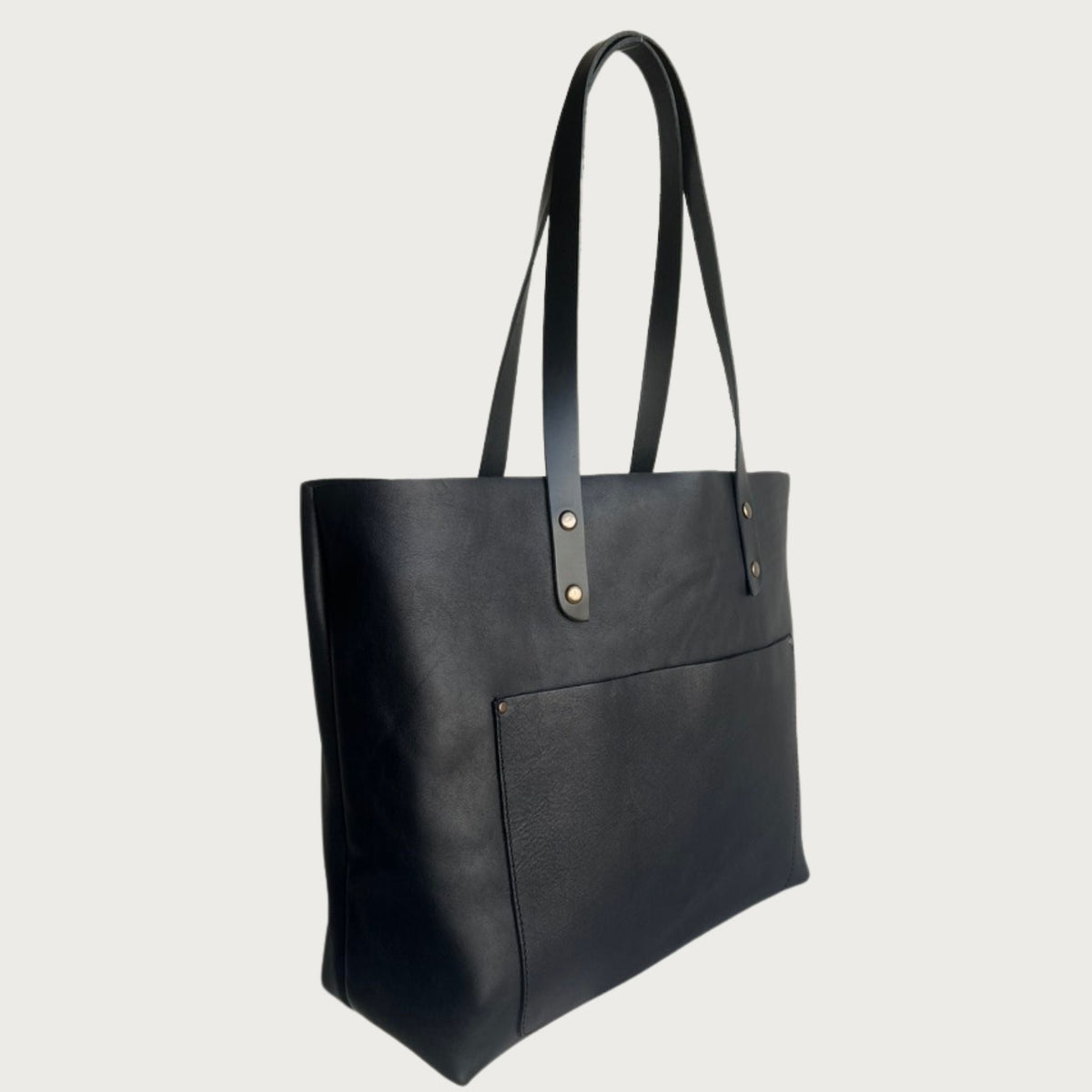
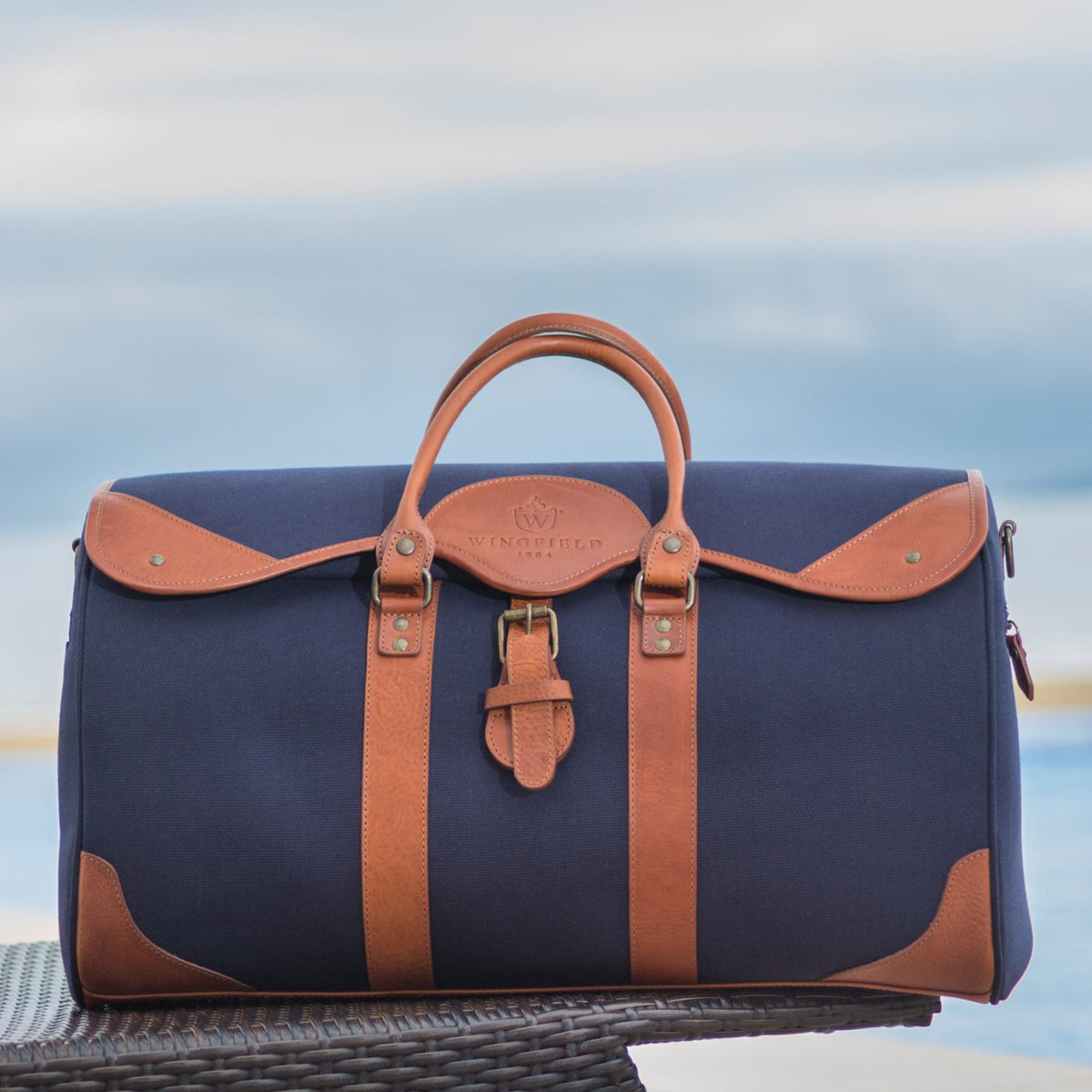
Vegetable-tanned leather is the reason bags age the way they do. At OAK & ELK, the Wingfield Leather Messenger Bag and the Wingfield Small Leather Duffel Bag are both cut from vegetable-tanned leather with old brass hardware, and the product pages say plainly to expect tonal variation and a deepening patina. The Classic Leather Tote uses vegetable-tanned leather handles. We do not claim these hides carry the Tuscan consortium mark; the tanning method is what the product listings specify.
How to Verify a Tuscan Claim
- Look for the exact trademark wording, not just "Italian leather," which only describes where a product was finished.
- Ask the maker which tannery supplied the hide and whether it is a consortium member.
- Check that the label says vegetable-tanned, not "vegetable-based" or "tanned with natural extracts" alongside a chrome pre-treatment.
- Expect a firm hand, an earthy smell and uneven early color, all normal for the method.
FAQ
What is Tuscan vegetable tanned leather?
It is leather tanned in Tuscany with natural plant tannins such as mimosa, chestnut and quebracho, and sold under the consortium's "Pelle Conciata al Vegetale in Toscana" trademark when the maker is a member.
Is "Italian leather" the same as Tuscan vegetable-tanned leather?
No. Italian leather describes origin only. The Tuscan mark specifies natural tannins and production entirely in Tuscany.
Is vegetable-tanned leather better than chrome-tanned?
It is different. It ages with a richer patina and has a firmer feel, while chrome-tanned leather is softer, faster to make and more water resistant.
Does vegetable-tanned leather last longer?
Well-made examples can last for decades with care, but lifespan depends on the hide, thickness, construction and upkeep as much as on the tanning method.