
Article: Saddle Stitch vs Machine Stitch: Leather Bags Compared
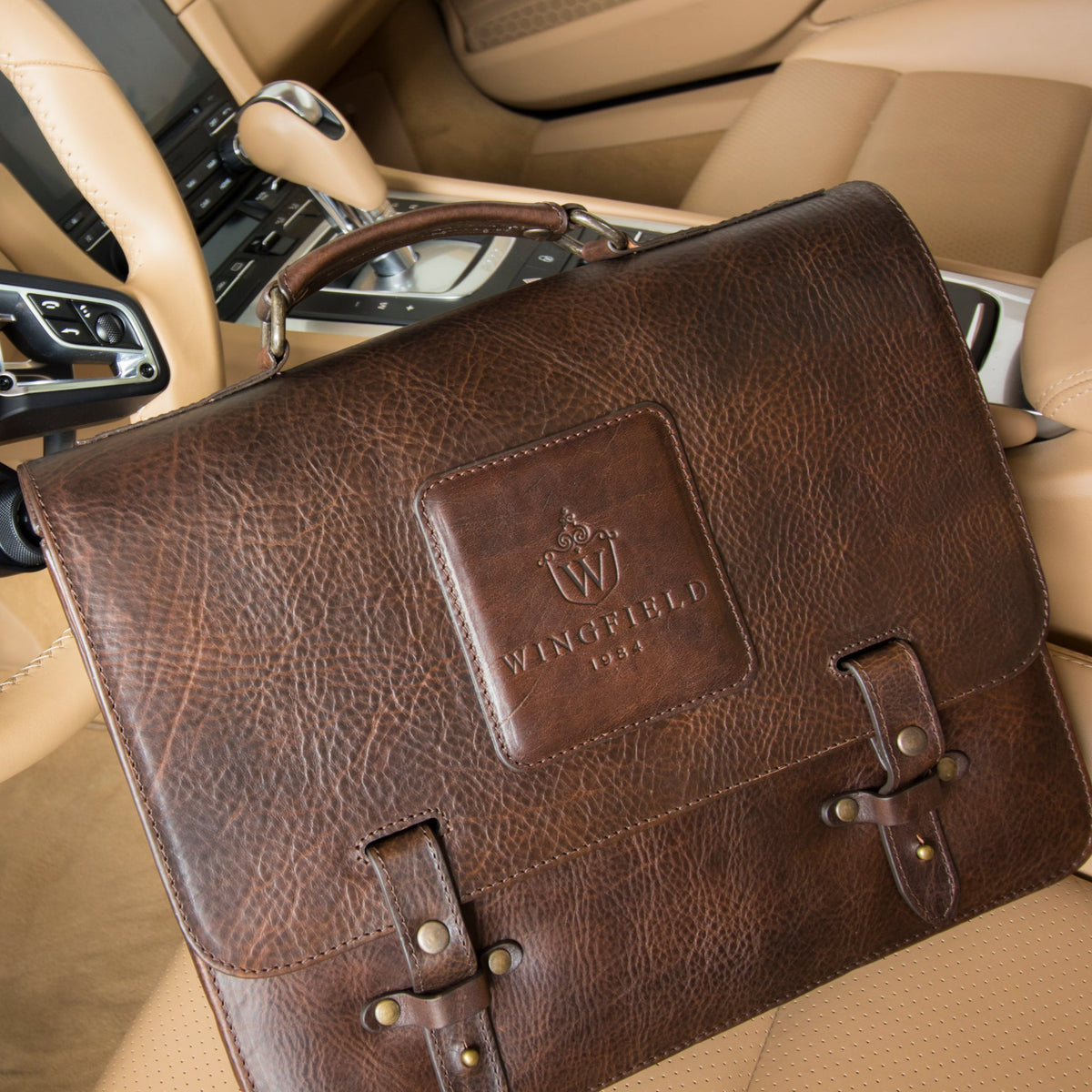
Saddle Stitch vs Machine Stitch: Leather Bags Compared
The saddle stitch vs machine stitch question comes down to how a seam fails, not how it looks. Both can hold a leather bag together for years, but they break down in very different ways, and knowing the difference tells you what to check before you buy and what to ask when something needs repair.
How a Saddle Stitch Is Made
A saddle stitch is sewn by hand with two needles, one on each end of a single length of waxed thread. The maker first marks the stitch line and pierces each hole through every layer with an awl or a pricking iron, because leather is too dense for a needle to punch cleanly. Then the two needles pass through the same hole from opposite sides, one after another, building a row of running stitches that alternate direction.
Sources on leathercraft describe typical hand-stitched seams as sitting around 3 mm from the edge, with holes roughly 4 mm apart, sewn with waxed thread of 0.6 to 0.8 mm. A variant in which the threads run parallel instead of crossing is classified as stitch 201 under ISO 4915. The technique has long been used in saddlery, bridle making, shoemaking and bookbinding, which is where the name comes from.
How a Machine Lockstitch Is Made
An industrial leather machine usually sews a lockstitch. One thread comes from a needle above the work and a second thread comes from a bobbin below it, and the two interlock inside the material at every stitch. The mechanism was patented in the mid-19th century and made repeatable, fast sewing possible. Heavy-duty machines handle leather by using stronger needles, thicker thread and a presser mechanism that feeds layers through together.
The result is a seam that is faster to produce, very even, and perfectly adequate for many leather goods, particularly thinner leathers.
Why Seams Fail Differently
This is the part that matters for a bag you intend to keep. In a saddle stitch each stitch is held by the thread passing through it twice, and when one stitch is cut or worn through, the damage tends to stay local: the loose section loosens, but neighbouring stitches usually hold. Some makers go further and say a well-executed saddle stitch will not unravel at all, though that is a claim about ideal execution rather than a guarantee.
A lockstitch links each stitch to the next through the interlocking threads. If the thread is cut at a stress point, such as a handle anchor or a corner, the break can let several stitches on either side relax, and a seam can open along its length if the loose end is not secured. Good machine work reduces this with back-stitching at the ends and with thread chosen for abrasion resistance, so the weakness is real but manageable.
Side-by-side comparison
| Factor | Saddle stitch (hand) | Machine lockstitch |
|---|---|---|
| Thread path | One thread, two needles, passes through each hole twice | Two threads (needle and bobbin) interlock in the material |
| If one stitch breaks | Damage tends to stay local | Adjacent stitches can loosen if the thread is not secured |
| Speed | Slow, one seam at a time | Fast and repeatable |
| Appearance | Slightly angled stitches, small natural variation | Very uniform, straight stitches |
| Best suited to | Thick leather, high-stress joins, heirloom pieces | Thinner leather, linings, high-volume production |
| Repair | Can be re-sewn by hand along the original holes | Re-sewn by machine or by hand, usually along the same holes |
Hand-Stitched Is Not Always What It Sounds Like
"Hand-stitched" is a marketing phrase as often as a technical one. Some bags have hand-finished details on an otherwise machine-sewn body, and some products described as saddle-stitched use a machine imitation that mimics the look of the hand stitch without its construction. The imitation can be hard to spot at a glance. When a brand says a seam is hand-sewn, a fair question is which seams, and why those.
It is also worth being honest that most everyday leather goods are machine-sewn, and nothing is wrong with that. The method matters most where load is highest and the leather is thickest.
What to Look For in a Finished Bag
You can judge stitch quality in the hand without knowing the method. These are the checks worth making:
- Even spacing. Stitches should be consistent in length and sit the same distance from the edge along the whole seam.
- Tight, flush thread. The thread should sit snugly in the leather without cutting into it or leaving gaps.
- Secured ends. Look at handle anchors and corners for back-stitching or a reinforced pattern, because that is where seams are tested most.
- Stitch count per inch. Very long stitches can perforate leather like a tear-off line, while very short ones can weaken it. Mid-range is generally safer for heavier leather.
- Thread suited to the leather. Heavy leather needs thread with enough thickness and abrasion resistance to match it.
Our guide to telling whether a leather bag is well made covers the rest of the construction checklist beyond stitching.
Leather Thickness Changes the Answer
Stitch method and leather weight are linked. Thin, supple leather is easy to machine-sew and rarely needs the advantage of a hand stitch. Heavy leather is harder to feed through a machine and puts more strain on every stitch, which is why saddlers historically sewed thick work by hand. If you are comparing bags, our leather thickness guide explains ounces and millimetres so you can match the material to the construction.
Where Our Own Bags Fit
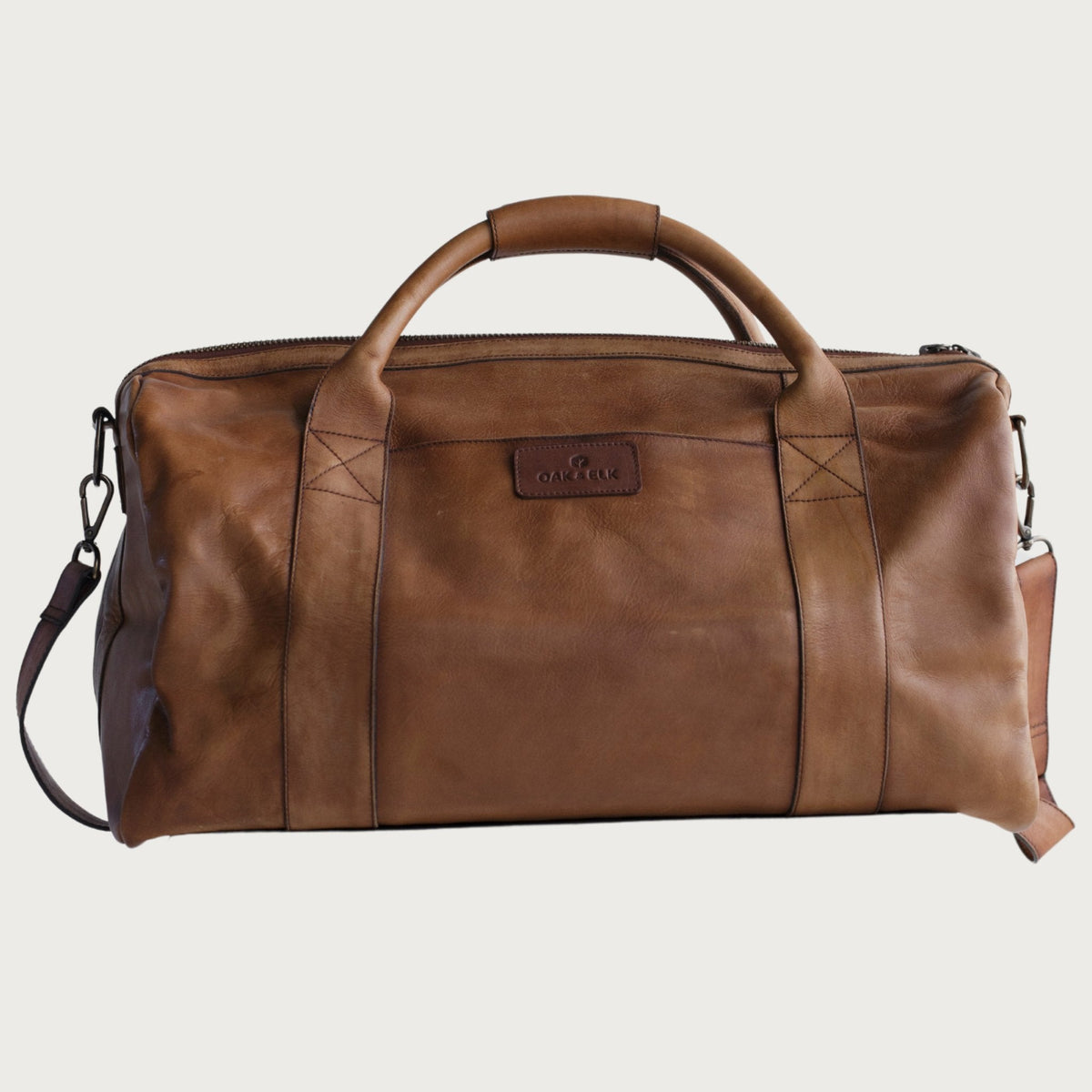
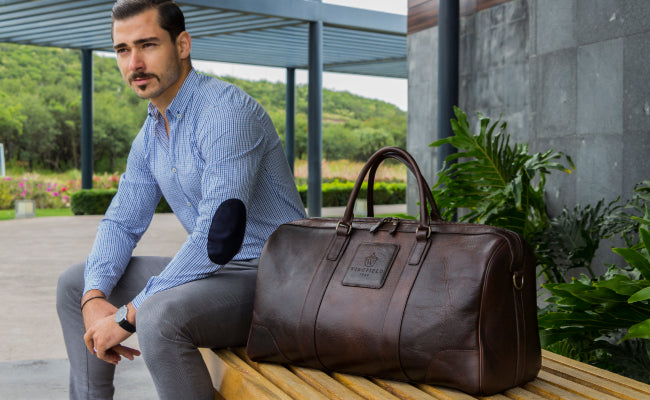
We will not claim a stitching method we have not documented in a product listing. What we can point to are the materials. The Wingfield Leather Messenger Bag is made from vegetable-tanned leather with old brass-colour hardware and an adjustable leather and textile strap, and the Wingfield Large Leather Duffel Bag pairs vegetable-tanned leather with an inner cotton lining. The Classic Leather Tote is built from full-grain leather with vegetable-tanned handles. Whatever the bag, inspect the seams at the strap anchors first, because that is where stitching earns its keep.
Repairing Each Type of Seam
A seam that has begun to open is rarely a reason to retire a bag. A hand-sewn seam can usually be re-stitched along the existing holes, and a machine-sewn seam can often be re-sewn the same way if the leather is not torn. Catching a loose stitch early matters far more than the original method. For the practical steps, see our guide to repairing a leather bag, from DIY fixes to professional help.
Frequently Asked Questions
Is saddle stitch stronger than machine stitch?
Usually in how it fails, not in raw strength. Because each stitch is held independently, a break in a saddle stitch tends to stay local, while a broken lockstitch can loosen neighbouring stitches. A well-made machine seam with secured ends and strong thread can still last for years.
Does hand stitching mean a leather bag is better quality?
Not automatically. Hand stitching is a sign of time and skill, but a poorly executed hand seam can be worse than clean machine work. Judge the evenness, tension and reinforcement at stress points rather than the method alone.
Why is saddle stitch used on thick leather?
Thick leather is hard to feed through a sewing machine and demands strong, controlled stitching. Pre-piercing each hole and sewing by hand gives the maker full control over tension through heavy material, which is why saddlers and harness makers adopted it.
Can a machine-stitched leather bag be repaired?
Yes. A repairer can usually re-sew an opened seam, often along the original holes. The sooner a loose or broken stitch is addressed, the less of the seam is affected.