
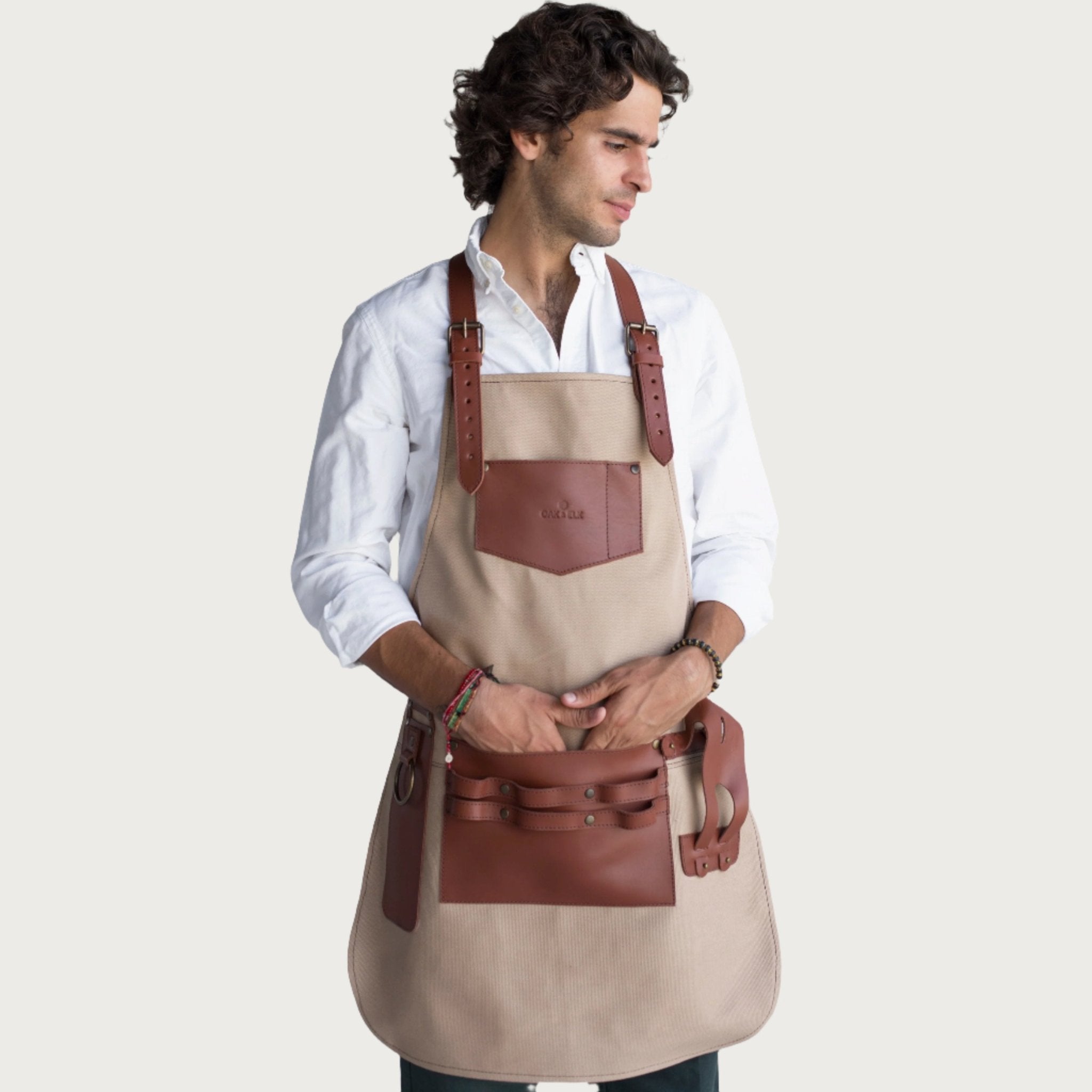
Leather Apron vs Canvas Apron: Which Should You Buy
Choosing between a leather apron and a canvas apron comes down to what you actually do all day: how hot your workspace runs, what lands on your chest, and how long you want the apron to last. Both materials earn their place in a working shop, but they fail in different ways and protect against different things. This guide walks through the practical differences so you can pick once and stop thinking about it.
The short answer
Leather suits work involving sparks, heat, splashing oil, sharp tools and heavy abrasion. Canvas suits work that is lighter, warmer, longer in the shift, or messier in a way that calls for regular washing. Many makers end up owning both and reaching for whichever matches the task.
- Choose leather for grilling, forging-adjacent work, woodturning, butchery, and anything with flying debris.
- Choose canvas for kitchens, cafés, gardening, assembly work, ceramics, and hot rooms where breathability matters.
- Choose canvas with leather trim if you want the breathability of cloth with reinforcement where straps and pockets take strain.
Leather apron vs canvas apron at a glance
| Factor | Leather | Canvas |
|---|---|---|
| Weight on the shoulders | Heavier; noticeable over long shifts | Lighter; easier for all-day wear |
| Heat and stray sparks | Resists scorching and small embers | Can singe or burn through |
| Liquid and oil | Beads and repels; oil may darken the hide | Absorbs unless waxed or coated |
| Breathability | Low | High |
| Cleaning | Wipe down, condition; never machine wash | Often machine washable |
| Typical lifespan | Many years with conditioning | Shorter; wears at stress points |
| Ageing | Develops patina and softens | Fades and thins |
Protection: what each material actually stops
Leather is dense and non-fibrous, so a spark that would smoulder into a cloth apron tends to sit on the surface and die. It also blunts glancing contact from chisels, blades and hot splatter. That is why grill cooks, woodturners and metal finishers reach for hide.
What leather does not do is replace certified protective equipment. A leather apron is workwear, not rated PPE. For heavy welding, molten metal handling or anything covered by a workplace safety standard, use gear that carries the relevant certification for that hazard and treat an apron as a layer over it, never a substitute.
Canvas handles dust, sawdust, soil, flour and water well. Waxed canvas adds meaningful water resistance and stiffens over time into a shape that stands away from the body. Untreated canvas soaks through faster but washes clean, which matters when the mess is organic rather than hot.
Comfort over a long shift
Weight is the deciding factor for most people. A full-hide bib apron carries real mass, and where that mass sits changes everything. A single neck strap loads the cervical spine; cross-back straps spread the load across the shoulders and upper back, which is why they dominate professional kitchens.
Heat is the second factor. Leather traps warmth against the torso, an advantage in a cold workshop and a liability next to a grill in August. Canvas breathes, so it is the better call for long hours in a hot room.
If you are between sizes or unsure how an apron should sit, our guide to finding the right leather apron fit covers strap adjustment and coverage in detail.
Cleaning and upkeep
This is where the two materials diverge most sharply, and it is worth being honest about the trade-off.
- Canvas: shake out the dust, spot-treat stains, and wash on a cold cycle if the maker allows it. Air dry. Waxed canvas should not go in the machine; wipe it and re-wax the worn panels once a year.
- Leather: wipe with a barely damp cloth, let it dry away from heat, and condition once or twice a year. Water and heat are the enemies. Grease marks often blend into the patina rather than lifting out, which some owners consider a feature.
Our step-by-step notes on keeping a leather apron in good condition cover conditioning intervals and what to do about oil stains.
Cost per year, not cost per apron
Leather costs more upfront. The question worth asking is how many seasons you get from it. A conditioned hide apron stays serviceable for years and the hardware usually gives out before the leather does. Canvas costs less and washes easily, but the stress points around straps and pocket corners wear through sooner under daily use.
If your apron sees occasional weekend use, canvas is the sensible spend. If you wear one four or five days a week, leather usually works out cheaper over time and looks better as it ages.
What we make, and who each one is for
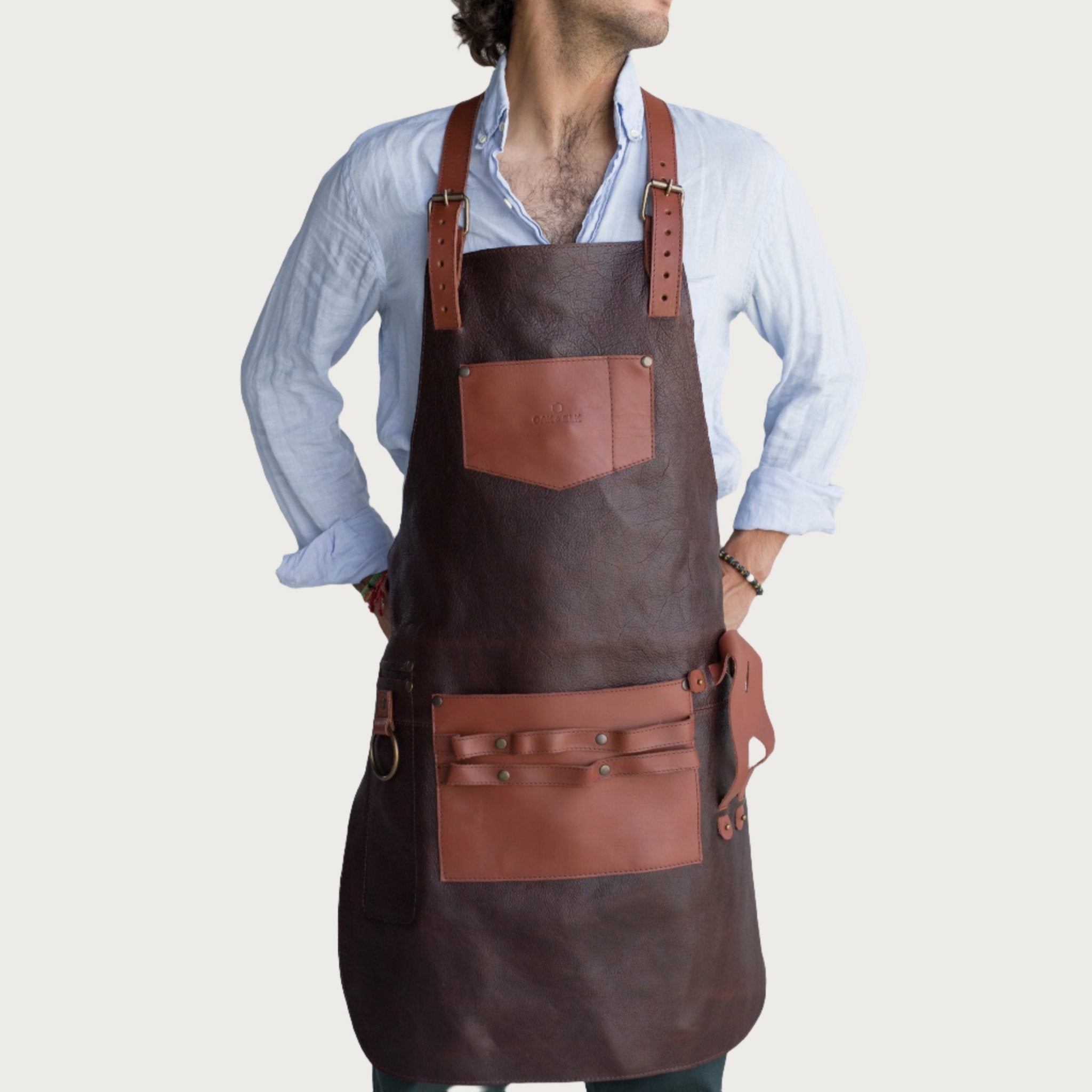
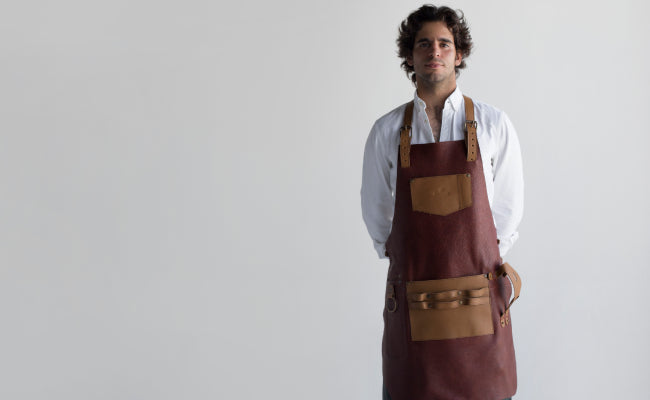
The Max Leather Apron is our full leather option at $280, cut from pebbled hide with multiple tool pockets, dedicated tool spaces, a beverage handle and adjustable straps that fit a wide range of body types. It comes in Pebbled Nutmeg, Pebbled Coldbrew, Pebbled Black, Tan and Copper Brown. Pebbled grain is forgiving: scuffs and shop marks disappear into the texture instead of announcing themselves.
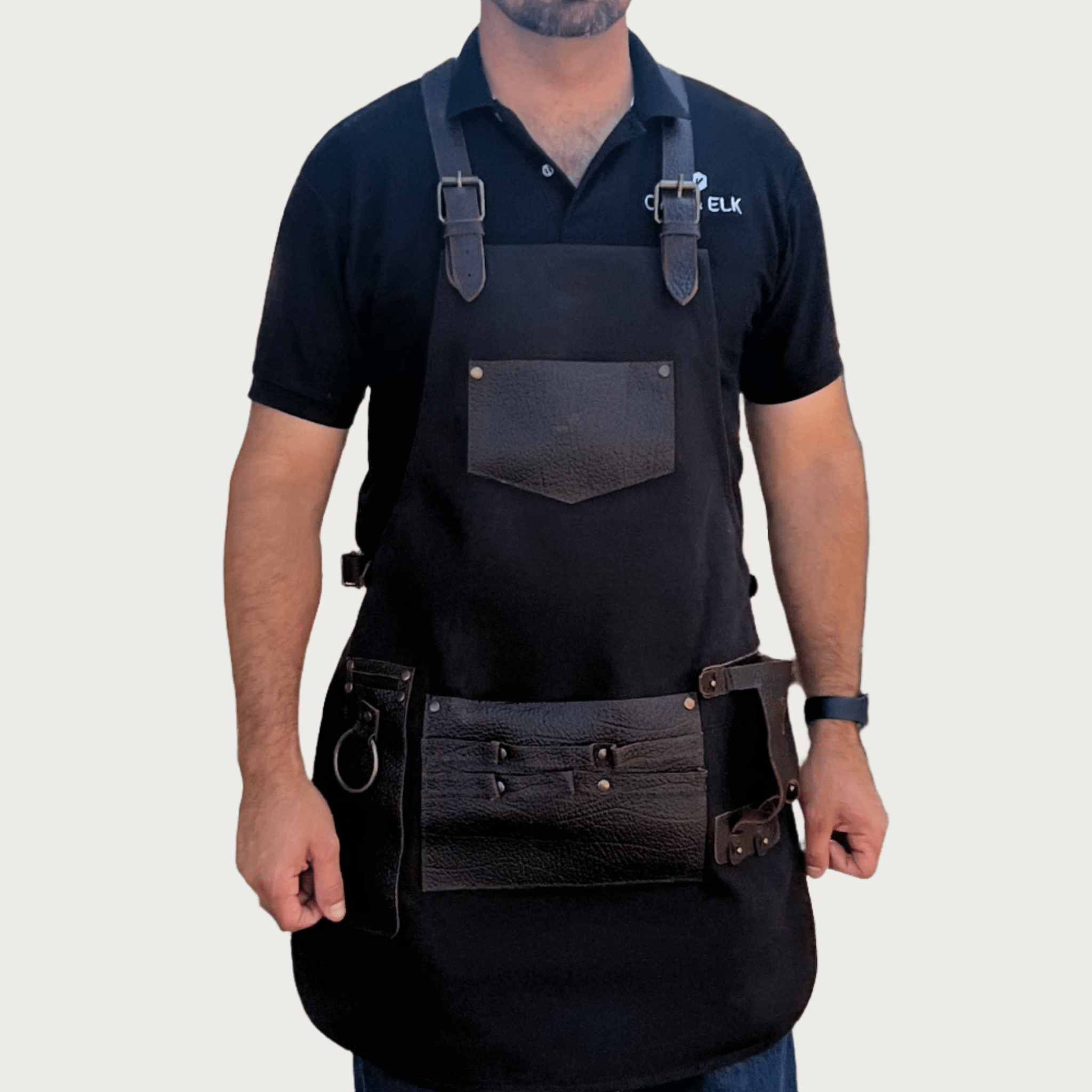
The Vic Canvas & Leather Apron at $250 takes the hybrid route, pairing a canvas body with leather where the apron takes strain. Same pocket layout, same adjustable straps, noticeably lighter on the shoulders. Available in Beige, Black, Blue, Gray and Olive.
For front-of-house and food service, our Server Aprons at $75 use durable fabric with an adjustable neck strap and pockets sized for a pad, pen and card reader — built for spills and long service, not for sparks.
Matching the apron to the trade
- Grilling and BBQ: leather, for splatter and radiant heat. See our notes on choosing a grilling apron.
- Woodworking: leather for turning and rough stock, canvas for joinery and finishing.
- Professional kitchens: canvas or a hybrid, cross-back, washable.
- Barbering and salons: leather sheds cut hair and resists product splashes.
- Ceramics and gardening: canvas, because clay and soil come out in the wash.
- Bartending and coffee: canvas or hybrid, for breathability behind a busy bar.
Frequently asked questions
Is a leather apron worth it over canvas?
If your work involves heat, sparks, sharp tools or heavy abrasion, yes — leather lasts longer under those conditions and resists damage that would ruin cloth. For light, hot or messy work where washing matters more than shielding, canvas is the better value.
Can you wash a leather apron?
No. Machine washing strips the oils from the hide and can shrink and crack it. Wipe with a damp cloth, dry away from direct heat, and condition it periodically.
Are leather aprons too hot to wear?
They hold heat more than canvas does, which is welcome in a cold workshop and less so in a hot kitchen. If you work in high ambient heat for long stretches, a canvas or hybrid apron will be more comfortable.
What is a hybrid canvas and leather apron best for?
It suits makers who want a lighter apron that still resists wear where straps and pockets pull. The canvas body breathes and the leather reinforcement takes the strain, which is a sensible middle ground for mixed workshop and kitchen use.
Deciding
Write down the three things most likely to hit your apron this week. If any of them are hot, sharp or greasy, buy leather. If they are dusty, wet or organic, buy canvas. If they are a mix, the hybrid earns its keep — and either way, pick cross-back straps if you will be wearing it for more than an hour at a stretch.