

Leather Apron for Woodworking: What Actually Works
A leather apron for woodworking earns its place in the shop the same way a good chisel does: it does one job well for decades. Between sawdust, glue squeeze-out, oil finishes and the occasional chisel edge resting against your thigh, the bench is hard on clothing. This guide covers what to look for, what leather genuinely protects against, and where a shop apron has real limits.
Why woodworkers reach for leather instead of cotton
Cotton duck aprons are light and cheap, but they absorb. Danish oil, shellac, wiping varnish and yellow glue soak into cotton and stay there. Vegetable-tanned and pebbled leathers, by contrast, shed most of that on the surface — a wipe with a dry cloth while the finish is still wet takes off the bulk of it, and what remains darkens into patina rather than becoming a stiff, crusted patch.
The second reason is weight and drape. A leather apron hangs close to the body under its own weight instead of billowing, which matters more than most people expect around a bench full of moving tools. The third is abrasion: dragging a rough board across your torso to reposition it on the bench is a daily occurrence, and leather takes that scuffing without pilling or tearing.
Coverage: how much apron do you actually need
Woodworking is a standing, leaning trade. You bend over the bench, brace stock against your hip, and kneel to check a case for square. That argues for a full bib apron rather than a waist apron:
- Chest and sternum coverage — protects against glue drips and finish splatter when you are working over a piece.
- Mid-thigh length — long enough to cover the lap when seated at a lathe or sharpening station, short enough not to catch on your own knees when you kneel.
- Split or generous cut at the hem — so the apron moves with your stride instead of pinning your legs together on the walk to the planer.
A waist apron still has a place for hand-tool-only work, joinery classes, or a quick session at the sharpening stones. For general shop use, the bib wins. If you want a more detailed walkthrough of measuring and sizing before you order, our guide to finding the perfect leather apron fit goes through it step by step.
Pocket layout matters more than pocket count
The temptation is to buy the apron with the most pockets. In practice, a woodworker carries a small, stable kit: a pencil or marking knife, a 6" rule, a small square, a tape, and often a chisel or block plane moving between the bench and the assembly table.
What to look for:
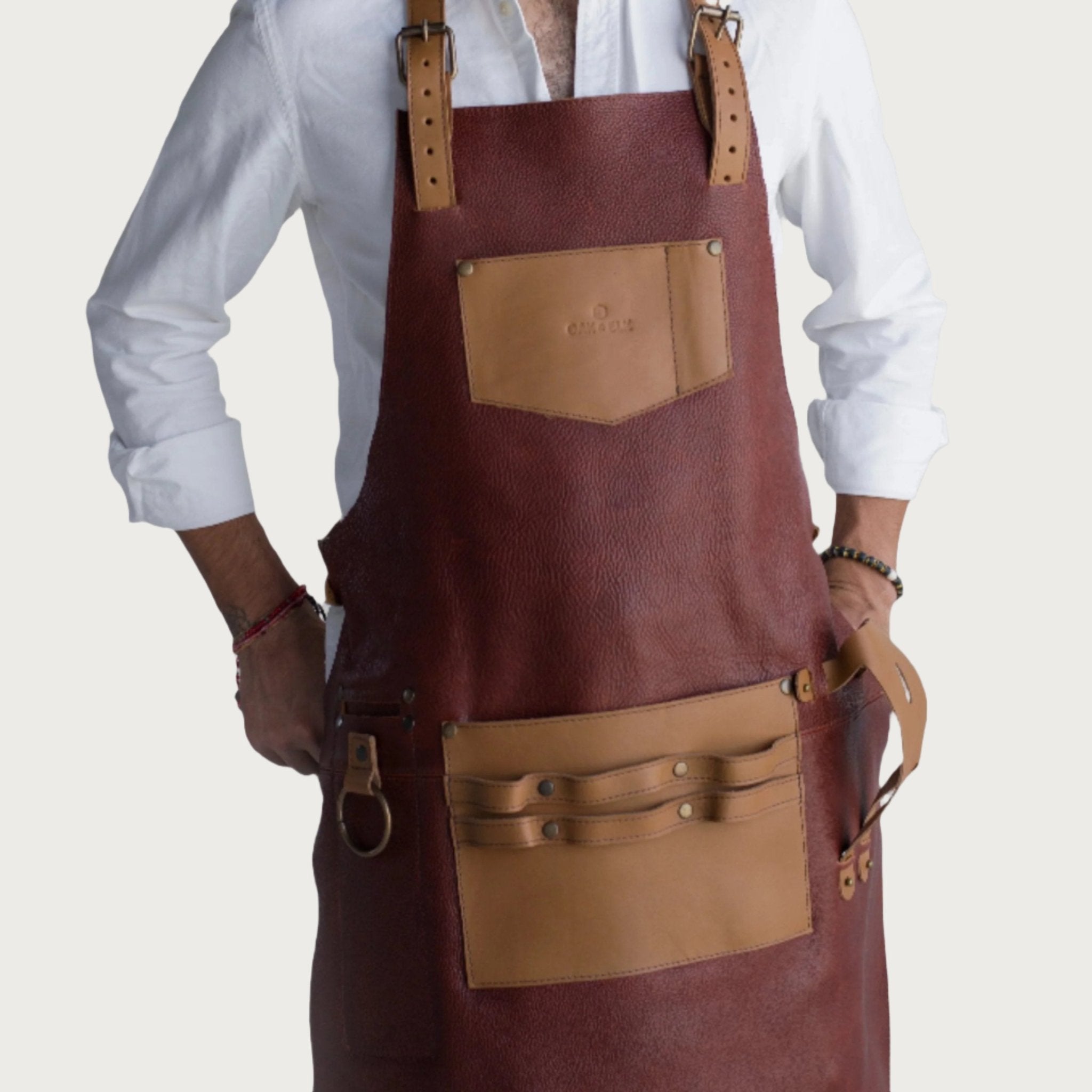
- Chest pockets sized for pencils and rules, not phones — a phone in the chest pocket falls out every time you lean over the bench.
- Deep lower pockets that hold a chisel handle-up without the edge sitting near your body.
- Reinforced pocket mouths, since that is the first place a tool-heavy apron fails.
- A hanging loop or hook for a tape or a rag.
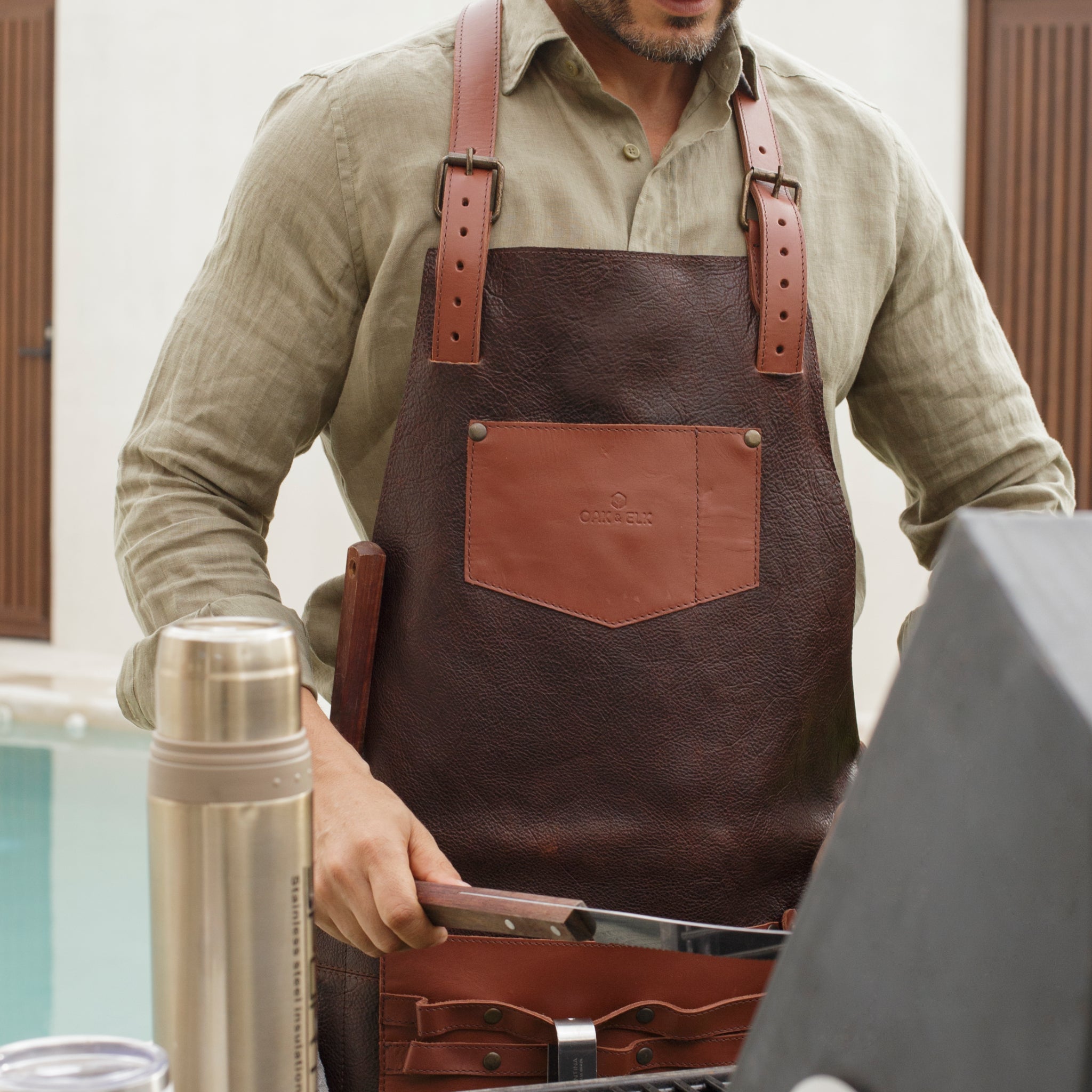
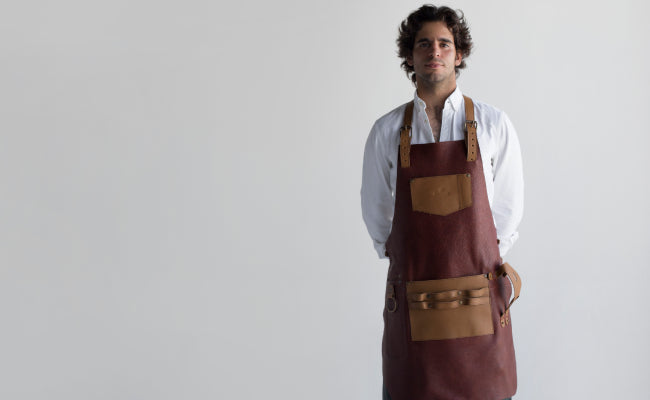
The Max Leather Apron is built around this idea: multiple pockets and dedicated tool spaces in pebbled leather, with adjustable straps, offered in Nutmeg, Coldbrew, Black, Tan and Copper Brown. It was designed for grilling, carpentry and general shop work, and the same pocket geometry that holds tongs holds a marking gauge.
Cross-back straps versus a neck strap
This is the single biggest comfort variable over a four-hour shop session. A neck strap concentrates the apron's weight — plus whatever you load into the pockets — on the back of your neck. Cross-back straps spread it across the shoulders and upper back.
| Feature | Neck strap | Cross-back straps |
|---|---|---|
| Weight distribution | Concentrated at the neck | Spread across both shoulders |
| Best for | Short sessions, light loads | Long sessions, loaded pockets |
| Adjustability | Usually one buckle or slide | Multiple adjustment points |
| On and off speed | Fast | Slightly slower |
| Snag profile | Loop sits away from body | Straps lie flat against the back |
If you are in the shop for whole afternoons, cross-back is worth the extra few seconds it takes to put on. Whatever the style, adjust it so the apron sits close to the torso with no slack — a loose apron is both less comfortable and less safe.
Leather versus canvas versus a hybrid
The honest answer is that each material wins a different category, and plenty of woodworkers own two aprons.
| Full leather | Canvas and leather | Cotton duck | |
|---|---|---|---|
| Weight on the shoulders | Heaviest | Moderate | Lightest |
| Finish and glue resistance | Excellent | Good at leather panels | Poor, absorbs |
| Abrasion resistance | Excellent | Good | Fair |
| Warmth in a hot shop | Warm | Cooler | Coolest |
| Ages into patina | Yes | At leather panels | No |
A hybrid like the Vic Canvas & Leather Apron puts canvas across the body panel and leather where the wear happens, which keeps things breathable through a summer in an un-air-conditioned garage shop. It comes in Beige, Black, Blue, Gray and Olive. If your shop runs cool or you value maximum abrasion resistance, go full leather.
What leather protects against — and what it does not
Being specific here matters more than marketing copy usually allows.
Leather handles well: sawdust and shavings, glue drips, oil and wiping-varnish splatter, general abrasion from board edges, incidental contact with a resting tool edge, and stray sparks from a grinder during sharpening.
Leather is not a substitute for: eye protection, hearing protection, a respirator or dust mask, or push sticks and blade guards. It is also not certified personal protective equipment. Do not treat a shop apron as cut-resistant armor, and do not assume any general-purpose leather apron is rated for welding — that requires purpose-built, flame-resistant gear.
One more point that woodworkers raise often and that machine-safety guidance consistently supports: around rotating machinery — lathes above all — loose clothing is a hazard. Standard lathe safety practice is to avoid anything that can catch on a spinning workpiece or chuck, which includes loose sleeves, jewelry and lanyards. Cinch your apron straps snug, keep the hem away from the ways, and never let a strap hang free while the machine is running.
Living with a leather apron in a working shop
A new apron is stiff. Two or three weeks of regular wear and it starts to take the shape of your torso, with a soft break at the waist where you bend over the bench. Speed this along by simply wearing it — not by soaking it.
- Knock the dust off after each session. A stiff brush or a dry rag is enough; fine dust settling into the grain is what dulls the surface over time.
- Blot spills instead of rubbing them. Wet glue and fresh oil finish lift off with a dry cloth. Rubbing drives them in.
- Hang it, do not fold it. A hook near the shop door keeps creases from setting into permanent cracks.
- Condition sparingly, once or twice a year. Over-conditioning softens leather past the point where it holds its shape.
- Let it dry away from heat. Never in front of a heater or in direct sun.
For the full routine, including how to handle oil stains and dried glue, see our tips for maintaining leather aprons in top condition.
Choosing yours
Match the apron to the work. Full leather for heavy bench work, machine work and anyone who finishes projects in the same space they mill them. Canvas and leather for hot shops and for makers who move between the bench and the front of house. And if you run a shop that also does demos, classes or markets, a lighter server apron is a practical second layer for the days you are talking more than cutting.
Leather aprons have been shop uniform for a very long time, and for reasons that have not changed. If you are curious how the garment got here, the legacy of leather aprons from ancient craftsmen to modern makers is a good place to start.
Frequently asked questions
Is a leather apron good for woodworking?
Yes. Leather resists sawdust, glue and oil finishes better than cotton, stands up to abrasion from board edges, and hangs close to the body. It is best used as workwear, not as certified protective equipment — eye, ear and respiratory protection still apply.
How thick should a woodworking leather apron be?
Most shop aprons fall in a mid-weight range that balances protection against fatigue. Lighter leather is more comfortable for long sessions and breaks in faster; heavier leather takes more abuse but is warm and slow to soften. Check the specific product listing rather than assuming, and factor in how long you typically wear it.
Can I wear a leather apron at a lathe?
You can, provided it is fitted snugly with no loose straps or dangling ties, and provided you follow standard lathe safety practice: no gloves, no jewelry, sleeves rolled or short, and long hair tied back. Anything loose around a spinning workpiece is a hazard.
How do I get glue and finish off a leather apron?
Blot fresh spills with a dry cloth immediately — most wet glue and oil finish lifts off before it cures. Dried yellow glue can usually be flexed and picked off once the leather is worked. Avoid solvents, which strip the finish from the leather itself.