
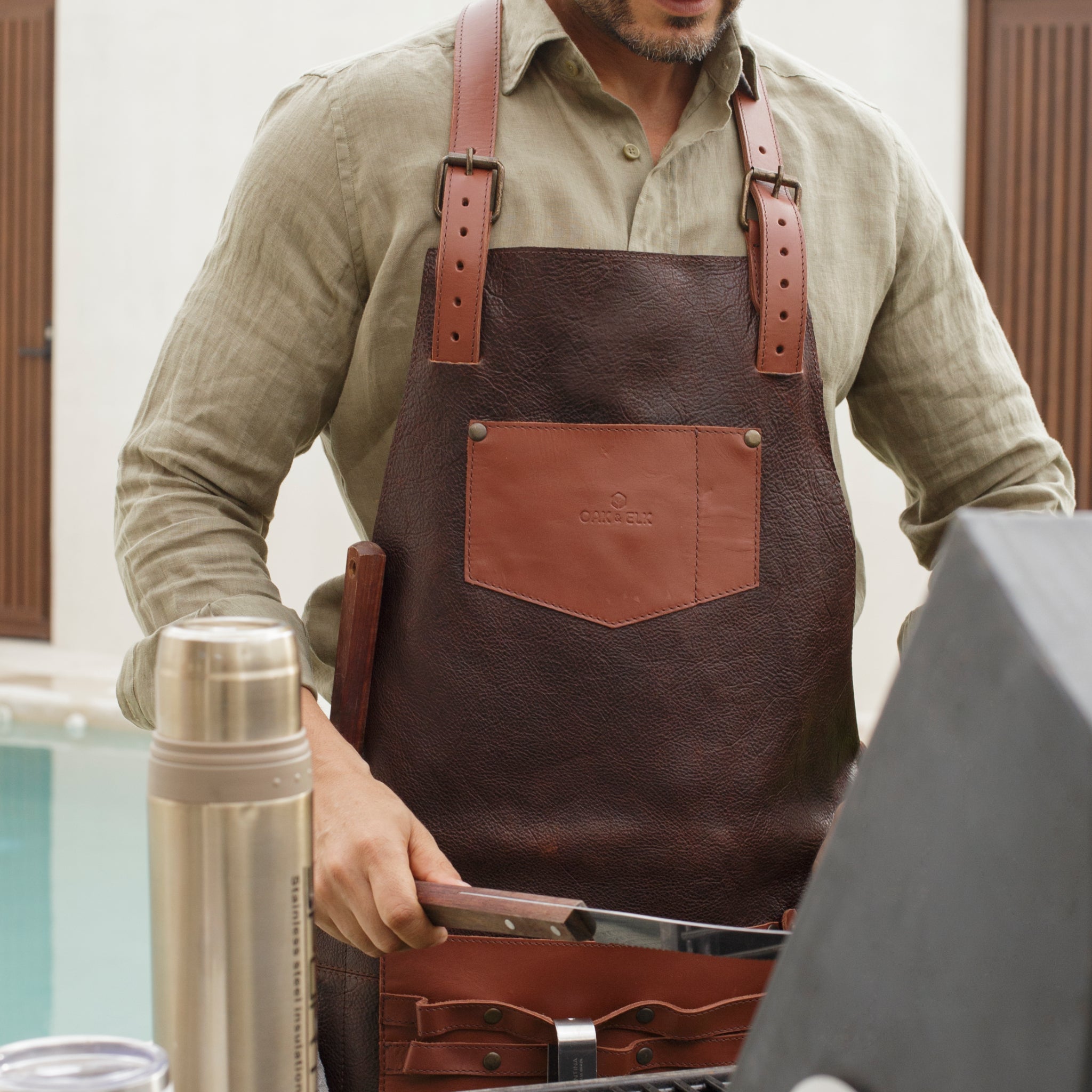
Leather Apron for Grilling: Heat, Grease and Real Fit
A leather apron for grilling earns its place at the fire for one reason: it deals with grease and radiant heat in a way cotton never will. Spend a summer working a kettle grill or an offset smoker and the difference shows up fast — one apron wipes clean, the other carries every drip from June onward. This guide covers what to look for, how leather actually behaves near a fire, and where its protection stops.
Why Grilling Is Harder on an Apron Than Cooking Indoors
A home kitchen throws splashes at you. A grill throws fat. Rendered fat leaves the meat at cooking temperature, lands on fabric, and soaks in before you notice. Cotton absorbs it and holds the stain permanently; repeated hot washing then thins the weave. Add the mechanics of outdoor cooking — leaning over a hot lid, reaching across a firebox, carrying tongs and a thermometer for three hours — and the demands look less like an apron and more like workwear.
- Grease, not water. The primary threat is oil-based and hot.
- Radiant heat. Opening a lid puts a wall of heat against your torso and forearms.
- Sparks and embers. Charcoal and wood fires pop. Synthetics melt; natural materials char.
- Load-bearing. Tools, a towel, a phone, a drink — weight that pulls on straps and seams.
How Leather Actually Behaves Near a Fire
Leather resists surface moisture, abrasion and short bursts of heat better than woven cotton, and grease usually wipes off rather than wicking in. It also chars instead of melting, which matters when an ember lands: polyester and nylon can soften and fuse to skin, while a hide takes a scorch mark and moves on.
Be clear about the limit. A grilling apron is splash and ember protection, not certified personal protective equipment. It is not flame-resistant gear, and it is not rated for welding, forge work or any sustained contact with molten material. If your work involves heavy spatter or structural welding, buy dedicated FR equipment sized for that job — trade guides typically point to hides in the 8 to 10 ounce range for high-spatter welding, well beyond what a cooking apron is built to be.
Leather vs Canvas vs Cotton for the Grill
| Material | Grease handling | Ember behaviour | Weight and feel | Best for |
|---|---|---|---|---|
| Full-hide leather | Wipes off; darkens rather than stains | Chars, does not melt | Heaviest; softens with use | Charcoal, wood fire, long cooks |
| Canvas with leather trim | Good; spot-clean, some marking | Chars; lighter barrier | Cooler and more breathable | Hot weather, gas grilling, prep work |
| Cotton or cotton blend | Absorbs; stains set permanently | Chars but thin protection | Lightest | Indoor cooking, plating, service |
| Polyester and synthetics | Wipes clean | Can melt — avoid near open flame | Light, low breathability | Not recommended for live fire |
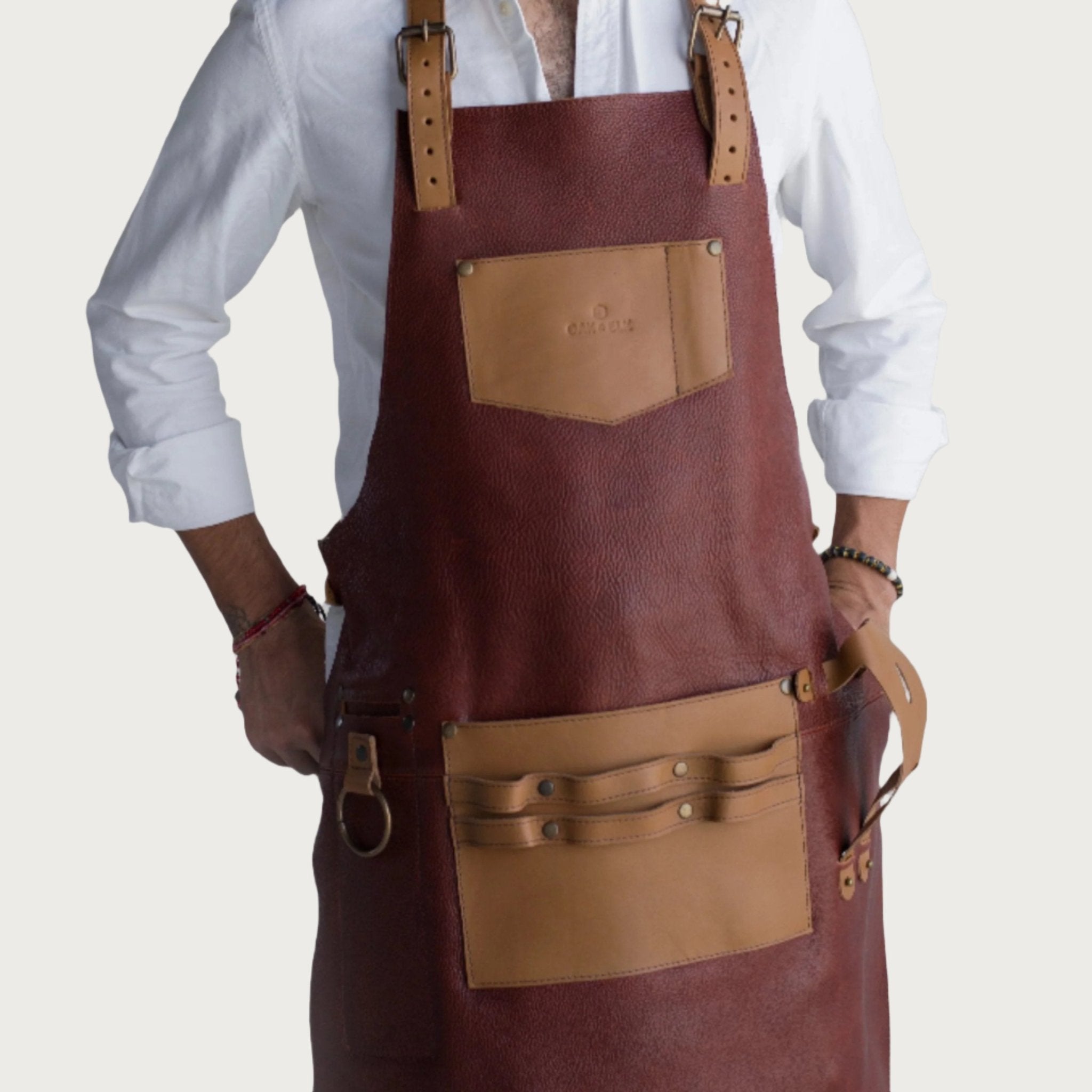
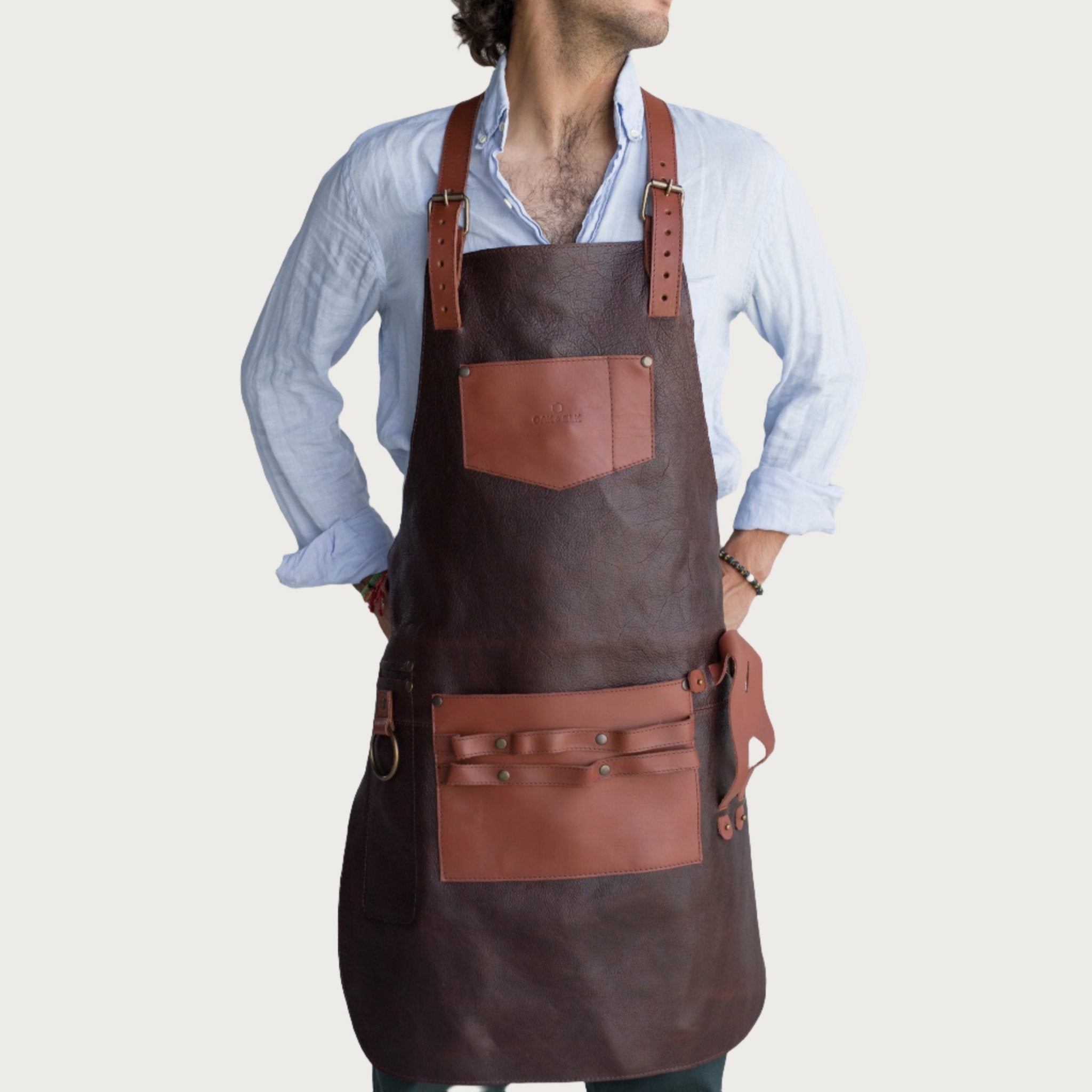
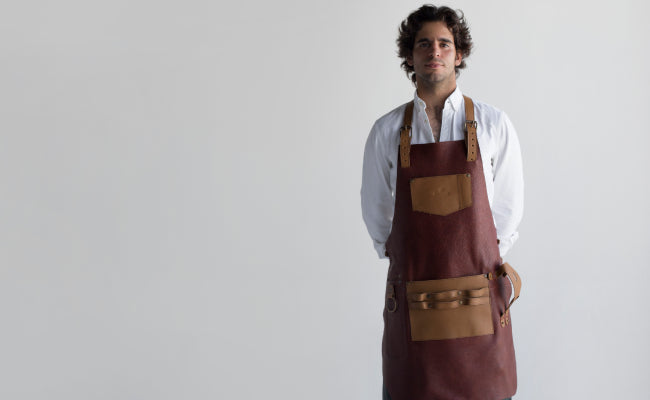
In practice, most people who cook over fire regularly end up with one heavy apron for cold-weather and wood-fire cooking and something lighter for August. Our Max Leather Apron in pebbled leather is the first of those — a full bib in Nutmeg, Coldbrew, Black, Tan or Copper Brown at $280. The Vic Canvas & Leather Apron is the second, pairing canvas panels with leather reinforcement at $250 in Beige, Black, Blue, Gray or Olive.
Features Worth Paying For
- Real chest coverage. The bib should reach your collarbone area, not stop mid-sternum. Most grill splatter arrives high.
- Adjustable straps. Fixed webbing forces your body to the apron. Adjustable hardware lets you set strap length once and forget it.
- Pockets that hold tools upright. Deep, structured pockets keep tongs and a thermometer where you can find them; shallow patch pockets dump everything when you bend over the coals.
- Length past the knee. Fat drips down. A short apron protects a shirt and ruins a pair of trousers.
- Stitched, not glued, stress points. Look for bar-tacked or reinforced strap anchors — that is where a loaded apron fails first.
Both OAK & ELK aprons carry multiple tool pockets, adjustable straps and a dedicated beverage handle, which sounds like a novelty until the first time you need both hands for a rack of ribs.
Fit: Get the Straps Right Before You Blame the Apron
An apron that fits badly gets left on the hook. Two adjustments do most of the work. Set the neck or shoulder straps so the bib sits flat against your chest with no gap at the top — a gap is a channel for hot fat. Then set the waist ties so they sit at your natural waist rather than your hips, which stops the apron swinging as you move around the grill. If you are between sizes or unsure how to measure, our guide to finding the right leather apron fit walks through the measurements in order.
Living With Grease: Care That Takes Two Minutes
The habit that keeps a grilling apron looking good is boring: wipe it down while it is still warm. Fresh grease sits on the surface and lifts with a dry cloth. Old grease has migrated into the grain and needs a gentle leather cleaner and patience.
- Wipe with a dry or barely damp cloth after every cook.
- Never dry a wet apron near the grill, a radiator or in direct sun — heat is what makes leather stiff and brittle.
- Hang it flat on a broad hook rather than folding it over a chair; creases in a loaded panel become permanent.
- Condition a few times a year, less often than you think, and only when the leather feels dry.
Expect the surface to darken unevenly where you lean against the grill and wipe your hands. That is patina, not damage. For a fuller routine, see our tips for keeping leather aprons in top condition.
Choosing by How You Cook
- Charcoal and wood, year round: heavy leather bib, knee length, deep pockets.
- Gas grill, mostly summer: canvas and leather, for breathability without giving up the grease resistance where it matters.
- Catering, pop-ups and service: lighter, washable and cheap to replace across a team — our Server Aprons at $75 are built for food service, with pockets and an adjustable neck strap.
- Grilling plus shop projects: one heavy leather apron covers both; the requirements overlap more than they differ, as our look at leather aprons for woodworking explains.
Frequently Asked Questions
Is a leather apron safe to wear around an open flame?
Leather chars rather than melts, so it is a better choice near a charcoal or wood fire than a synthetic apron. It is not flame-resistant certified gear, and it will scorch. Treat it as splash and ember protection, keep it clear of sustained direct flame, and use rated PPE for welding or forge work.
How do I get grease out of a leather grilling apron?
Blot with a dry cloth immediately — do not rub it in. For set-in spots, use a leather-safe cleaner sparingly, work from the outside of the mark inward, and let the apron dry at room temperature away from heat. Some darkening usually stays, and on a working apron that reads as character.
Leather or canvas for a hot climate?
Canvas with leather reinforcement. You keep grease resistance at the front panel and hem where the mess lands, but the body of the apron breathes. In cooler months, or over a wood fire, the heavier leather is the more comfortable choice.
Does a grilling apron need to be waxed or oiled often?
Rarely. Cooking oils and hand contact do a lot of the conditioning for you. Add a leather conditioner only when the hide feels dry or looks chalky, typically two or three times a year with regular use.
The Short Version
A leather apron for grilling is the right tool when your cooking involves fat, fire and tools you need to carry. Buy for coverage, adjustable straps and pockets that work when you bend; skip anything synthetic near live fire; and wipe it down while it is warm. Do that and the apron will outlast several grills.