Article: How to Store a Leather Bag: Humidity, Shape, Dust Bags
How to Store a Leather Bag: Humidity, Shape, Dust Bags
Knowing how to store a leather bag properly is the quiet half of owning one. Most damage to a good bag happens in a closet, not on the street: a damp basement, a sealed plastic bin, a strap folded into a crease for six months. The good news is that the rules are simple, and conservators who look after leather in museums have published them.
Why Storage Matters More Than Most People Think
Leather is a fibrous, organic material. It absorbs moisture from the air and gives it back, which is part of why it ages so well in daily use. It is also why a bag left in the wrong conditions can stiffen, crack, or grow mold.
The Canadian Conservation Institute, which advises on the care of heritage collections, recommends a stable relative humidity of 45% to 55% and a temperature of 18 to 20 degrees Celsius (roughly 64 to 68 degrees Fahrenheit) for leather. It notes that very dry conditions below about 30% relative humidity can embrittle leather, while mold needs a relative humidity above 65% to grow. You do not need a museum, but those numbers explain every tip below: avoid extremes, and avoid swings.
Choose the Right Place in Your Home
Look for the most boring room in the house. A bedroom closet or a shelf in a climate-controlled living space usually stays closer to the ideal range than a garage, attic, or basement.
- Avoid exterior walls and basements. Both tend to run cool and damp, the conditions mold prefers.
- Avoid radiators, heating vents, and sunny windowsills. Heat and dry air pull moisture out of leather, and direct sun fades dyed finishes.
- Keep it off the floor. A shelf allows air to move around the bag and keeps it out of any water that finds its way under a door.
- Leave space between bags. Crowding presses straps and corners into permanent creases.
Prepare the Bag Before You Put It Away
Ten minutes of preparation prevents most storage problems.
- Empty it completely. Receipts, coins, and old lip balm leave marks and dents, and food crumbs invite pests.
- Wipe it down. A dry or barely damp soft cloth removes surface dust and skin oils. For a deeper clean, follow our guide to cleaning a leather bag at home.
- Let it dry in open air. If the bag got wet, let it dry slowly at room temperature, away from heaters. Putting away a bag that is even slightly damp is the most common route to mold.
- Fix small problems first. A loose thread or a slipping buckle gets worse in storage. See how to repair a leather bag for what is safe to do yourself.
Keep the Shape: Stuffing, Straps, and Hardware
A bag that collapses on itself develops creases that can turn into cracks. Loosely fill the body with acid-free tissue paper, a clean cotton towel, or a soft cloth bundle so the walls stand naturally. Avoid newspaper, since ink can transfer onto light interiors and the paper itself is acidic.
Straps should hang straight or lie flat rather than being tightly wound. Tuck them inside the bag or loop them gently. Keep metal hardware from pressing into the leather by placing a small fold of tissue between buckles, clasps, and the body.
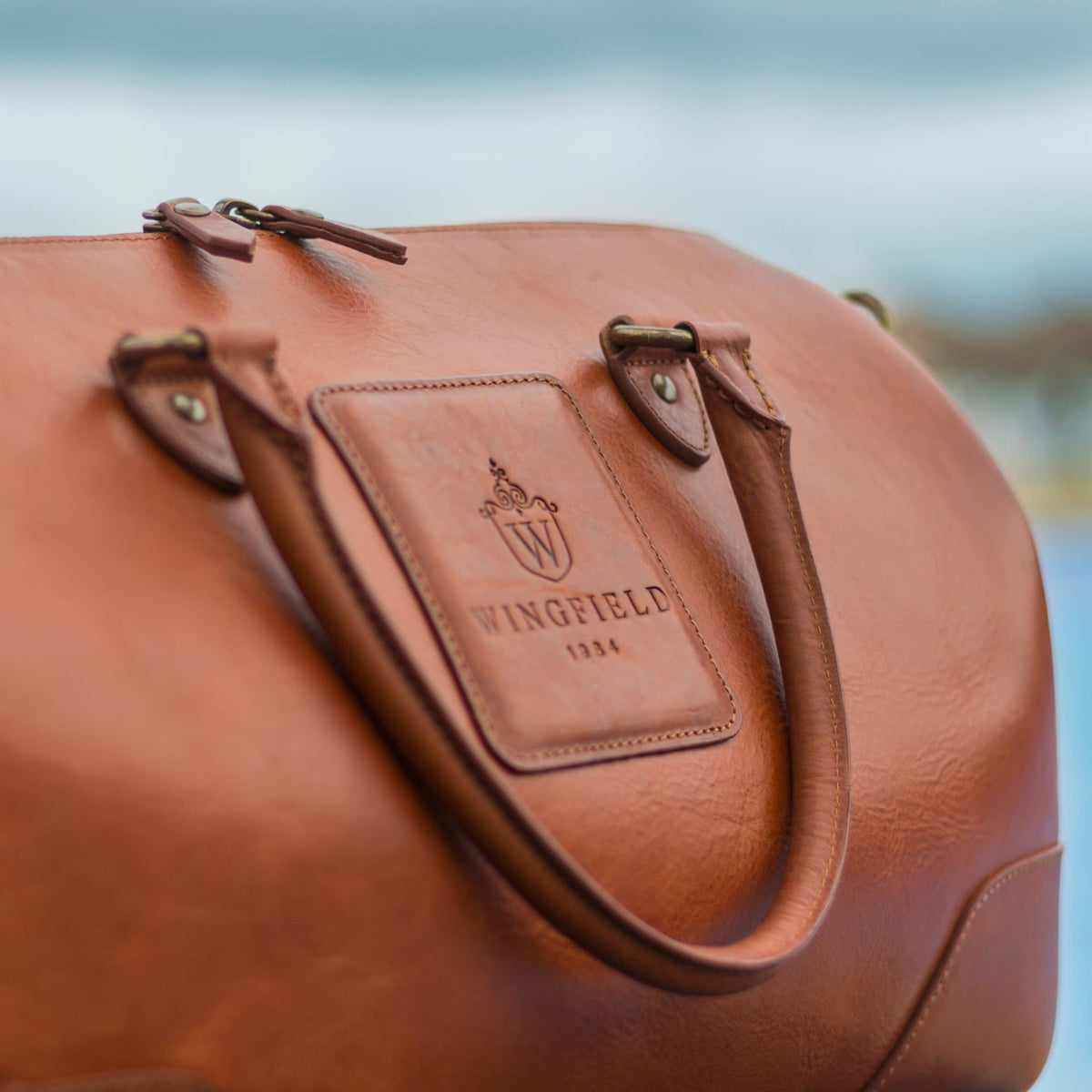
A structured, open-top design like the Classic Leather Tote, made from full-grain leather with vegetable-tanned handles, holds its form well when lightly stuffed. A softer shoulder bag such as the Paris Leather Shoulder Bag benefits from a little more filling, because it has less structure of its own.
Dust Bags, Tissue, and What to Avoid
Leather needs to breathe. The conservation guidance recommends wrapping leather in acid-free tissue or cotton fabric and storing it in acid-free boxes, with unbuffered materials, because buffered (alkaline) papers can harm leather. In practice, a breathable cotton dust bag or a clean pillowcase works well for everyday storage.
Avoid sealing a bag in a plastic bag or airtight container for long periods. Trapped moisture cannot escape, which is the opposite of what you want in a humid season.
| Storage choice | Verdict | Why |
|---|---|---|
| Cotton dust bag or pillowcase | Good | Breathable, keeps dust and light off |
| Acid-free tissue stuffing | Good | Holds shape without staining |
| Newspaper stuffing | Avoid | Acidic, and the ink can transfer |
| Sealed plastic bag or bin | Avoid | Traps moisture, which supports mold |
| Hanging by the strap for months | Avoid | Stretches and distorts the strap and body |
| Basement, attic, or garage | Avoid | Large humidity and temperature swings |
Long-Term Storage and Seasonal Checks
If a bag will rest for a season or more, store it stuffed, wrapped in cotton, and on a shelf. Check on it. The Canadian Conservation Institute suggests inspecting stored leather objects about every three months for signs of mold or insects, and that rhythm suits a bag too: take it out, look, smell, and let it breathe for an hour.
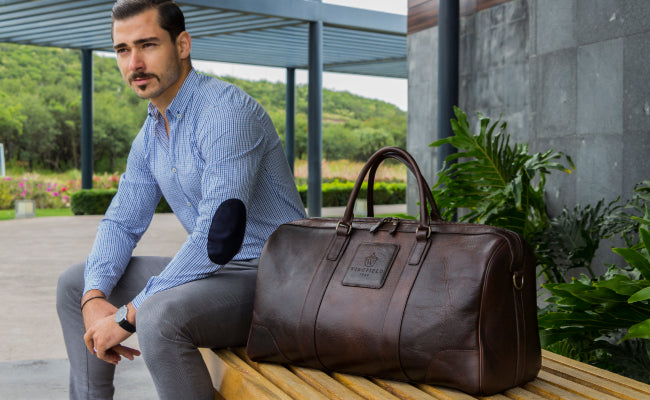
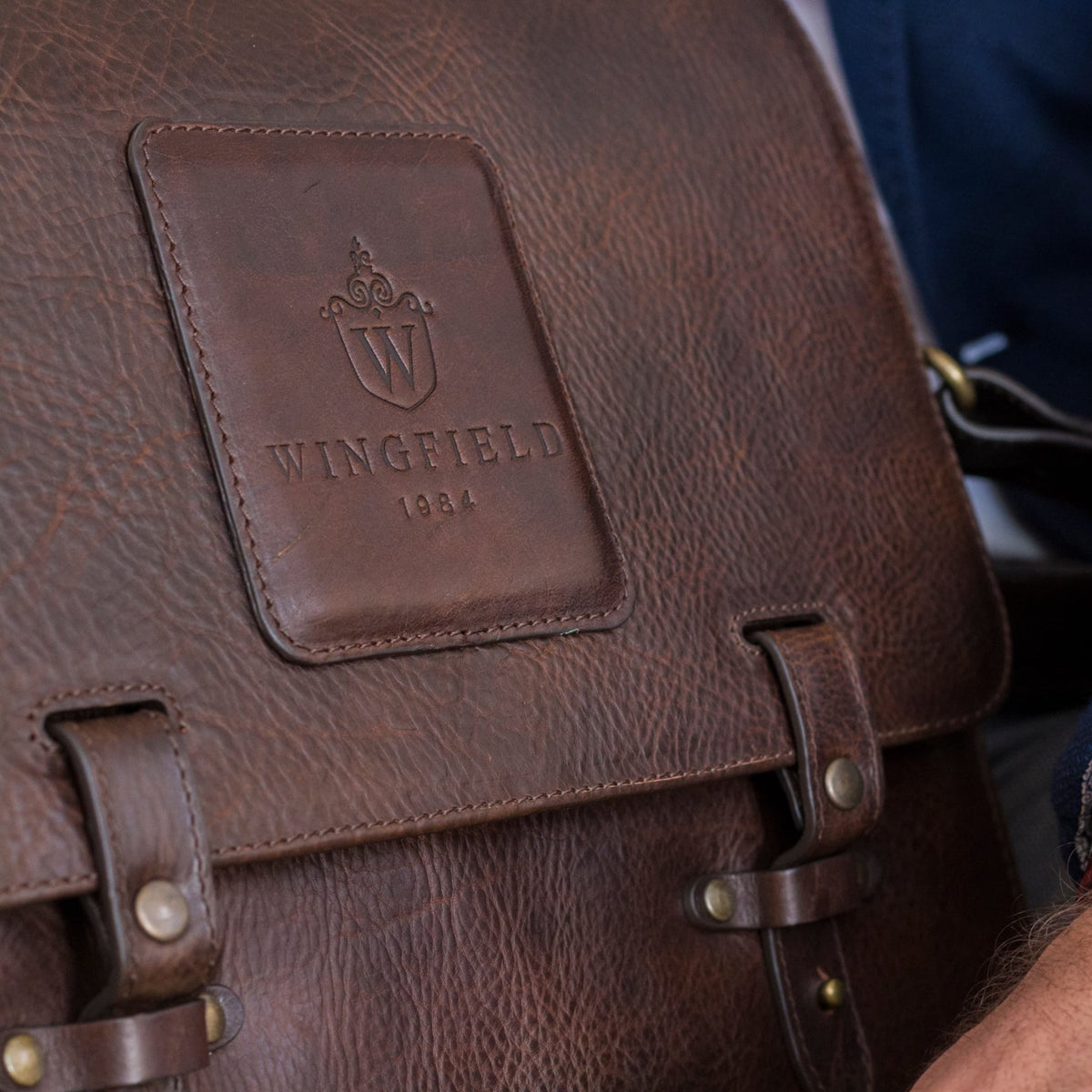
Vegetable-tanned leather, like the leather in the Wingfield Leather Messenger Bag, develops a deeper tone with light and air, so a bag that sits in a sunny spot will change color unevenly. Store it out of direct light if you want even aging, and rotate the bag you carry if you own more than one.
What About Conditioner?
Conditioner is the part people get wrong most often. Conservation guidance does not generally recommend leather dressings or saddle soap, noting that oils can in some cases stiffen leather further and oxidize over time. For a bag that has been well cared for and stored properly, most of the time the best treatment is no treatment. If a bag looks very dry, test a tiny hidden spot with a light, product-specific conditioner first and use as little as you can.
If You Find Mold or Dryness
Surface mold usually appears as a white or gray powdery film. Move the bag to a dry, well-ventilated space, avoid breathing the spores, and wipe the surface gently with a dry cloth. The Canadian Conservation Institute publishes a detailed guide to removing mold from leather, and a professional leather restorer is the safer call for a valuable or heavily affected piece. Fix the cause, which is usually humidity, before you put the bag back.
Stiff, dry leather is usually the result of low humidity and heat. Move the bag somewhere more stable and avoid forcing it to bend. A bag that lasts decades is also an argument for cost per wear: the longer it lives, the less each carry costs.
Frequently Asked Questions
Should I store a leather bag in a dust bag?
Yes, if the dust bag is breathable cotton. It keeps off dust and light while letting air move. Avoid plastic covers for anything beyond short trips.
How should I stuff a leather bag for storage?
Fill it loosely with acid-free tissue or a clean cotton cloth so it holds its natural shape. Do not pack it tightly, and avoid newspaper because the ink can transfer.
Can I hang a leather bag in the closet?
You can hang it briefly, but a shelf is better for long periods. Hanging by the strap or handles for months can stretch them and pull the bag out of shape.
What humidity is best for storing leather?
Conservation guidance from the Canadian Conservation Institute recommends a stable 45% to 55% relative humidity. Mold becomes a risk above 65%, and leather can become brittle below about 30%.