Article: Cost Per Wear: Why Leather Bags Cost Less Long-Term
Cost Per Wear: Why Leather Bags Cost Less Long-Term
A $45 bag that falls apart in eight months is not actually cheap once you do the math. Cost per wear is the simple calculation that separates a real bargain from a false one, and it is the single clearest reason a well-made leather bag almost always beats its fast-fashion equivalent. Once you start counting wears instead of dollars, the whole idea of "expensive leather" starts to look backwards.
What Cost Per Wear Actually Measures
Cost per wear (CPW) is a simple formula borrowed from sustainable-fashion and personal-finance writing: take what an item costs you, including any repairs or maintenance, and divide it by the number of times you actually use it.
Cost Per Wear = (Purchase Price + Maintenance/Repair Costs) ÷ Number of Uses
It reframes value around usage instead of the sticker price. A $500 coat worn 200 times a year for a decade costs a few cents per wear. A $40 coat that falls apart after one winter can easily cost more per use, even though it looked like the "cheaper" choice at checkout. Bags work the same way, and because a bag gets picked up, loaded, and set down almost every single day, the gap between a durable piece and a disposable one compounds fast.
The Math: A Real Cost-Per-Wear Comparison
Here is a straightforward, conservative comparison between a budget synthetic tote and a full-grain leather tote used the same way — three times a week, roughly the pace of a daily commuter bag.
| Bag | Price | Typical Lifespan | Estimated Wears | Cost Per Wear |
|---|---|---|---|---|
| Budget synthetic tote | $45 | ~8 months | ~100 wears | $0.45 |
| Mid-range synthetic tote | $90 | ~2 years | ~300 wears | $0.30 |
| Full-grain leather tote (with one $40 strap repair at year 6) | $160 + $40 | 10+ years | ~1,500 wears | $0.13 |
The synthetic option costs less at the register and more at every single use. That is the core insight of this math: price and value are not the same number, and leather's higher upfront cost is usually recovered many times over.
Why Fast Fashion Bags Lose This Race
The math above is not a hypothetical problem. The Ellen MacArthur Foundation, which has published some of the most cited research on the fashion industry's growth in volume and decline in durability, reports that clothing utilization has dropped by nearly 40% over the past fifteen years even as production roughly doubled over the same period, and that some garments are discarded after as few as seven to ten wears. The same report estimates that consumers lose out on roughly $460 billion in value every year by discarding items that still had useful life left in them. Bags follow a similar pattern to garments: glued seams separate, bonded-leather coatings peel, and hardware pulls loose from thin backing well before the bag has earned its price back in actual use.
None of this means synthetic materials are inherently worthless, or that everyone can or should spend more upfront. A lower price point has real value for someone who needs a bag today and cannot absorb a bigger purchase. But it does mean "inexpensive" and "good value" are different claims, and running the numbers is the only way to tell them apart.
What Makes Full-Grain Leather Hold Up
This math favors leather specifically because of how the material behaves under repeated use, not just because it sounds premium. A few reasons full-grain leather tends to outlast synthetic alternatives:
- It develops patina instead of wearing out. Scuffs and creases blend into the surface over years of handling rather than showing up as visible damage the way scratches do on coated or bonded materials.
- The grain layer is structural, not cosmetic. Full-grain leather is the outermost, densest layer of the hide, so the surface you see is also the surface doing the work — unlike corrected-grain or bonded leather, which relies on a sanded or reconstituted base with a printed finish on top.
- It is repairable. Stitching can be redone, straps can be replaced, and edges can be reconditioned. A delaminating synthetic coating generally cannot be fixed — once it peels, the bag is done.
- Stress points are reinforced, not glued. Well-built leather bags use riveted or stitched attachment points at handles and straps, which is why they tend to fail at a repairable seam rather than at the material itself.
Readers who want the deeper mechanics of grain quality can see how to tell if a leather bag is well made before buying, since not every bag labeled "leather" is built to the same standard.
The Hidden Cost of "Cheap": Replacement and Waste
A bag with a low per-wear cost is not just a personal savings story — it is also a waste story. Every bag that fails after a few months becomes landfill or incineration volume, and it gets replaced by another bag that will likely follow the same short arc. A bag bought once and used for a decade removes that entire replacement cycle: no second purchase, no third, no accumulating pile of broken totes. This is the practical, unglamorous side of slow fashion — fewer purchases, made more deliberately, doing more work over time.
Buying for Cost Per Wear, Not Just for Price
A few practical filters help when you are shopping with the per-wear math in mind rather than sticker price alone:
- Check the leather type. Full-grain or top-grain leather will outlast corrected-grain or bonded leather, which are built from lower layers of the hide reinforced with backing and coating.
- Look at the stitching, not just the color. Even, tight stitching along stress points is a better durability signal than a flawless-looking surface.
- Ask whether it can be repaired. A bag with replaceable straps and re-stitchable seams has a much longer possible life than one that is glued or bonded together.
- Think in years of use, not seasons. A bag you will carry for a decade justifies a different budget than one you expect to replace next year.
Extending the Curve: Repair, Care, and Resale
Cost per wear keeps improving for as long as a bag stays in use, which is why care and repair are part of the calculation, not an afterthought. A cracked handle or a worn strap does not have to end a leather bag's life; our guide on how to repair a leather bag walks through what a home fix can handle and when it is worth sending a piece to a professional. And because full-grain leather ages into character instead of just wearing out, it holds resale value that synthetic bags rarely do — something we cover in our guide to buying a secondhand leather bag, which works both directions: a well-cared-for bag you eventually sell keeps its per-wear cost falling for its next owner, too.
Three Pieces Built for a Low Cost Per Wear
A few examples from our own lineup show how this plays out across different categories of everyday carry:
- The Classic Leather Tote is built from full-grain leather designed to age beautifully with daily use — the kind of everyday bag that is meant to be reached for every single morning, not rotated out after a season.
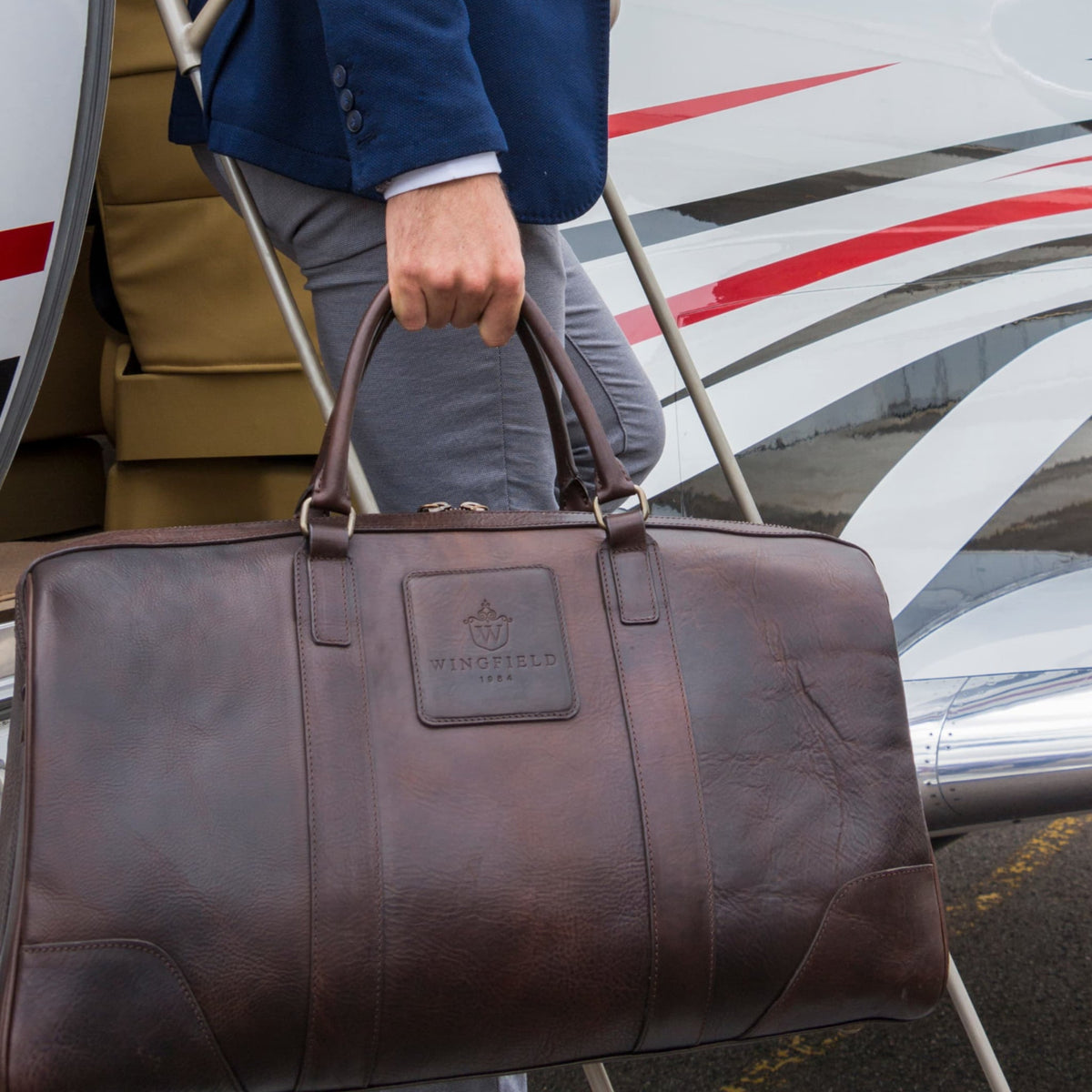
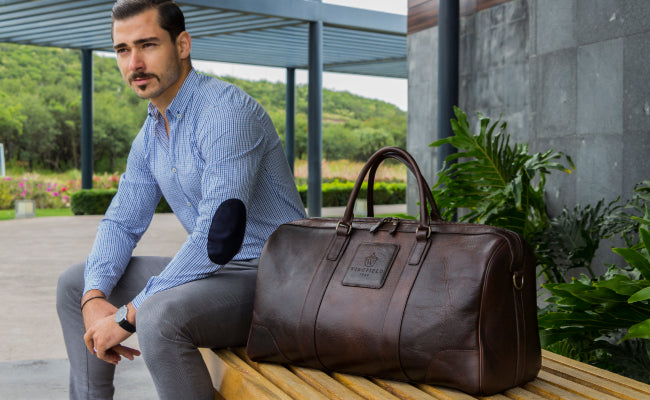
- The Dakota Medium Leather Duffel Bag is a full-grain weekender built for the kind of repeated travel use — thrown in overhead bins, set down on curbs — that would shred a synthetic duffel's seams within a year or two.
- The Ivy Leather Large Wallet is a small, high-frequency item — handled daily, often more than a bag — made from full-grain bovine leather so the piece you touch most keeps its structure instead of splitting at the fold.
Frequently Asked Questions
What is a good cost per wear for a bag?
There is no fixed target, but the useful comparison is relative: if a cheaper bag's cost per wear ends up higher than a pricier one because it fails sooner, the "cheap" option was actually the more expensive purchase. Running the math on your own buying pattern — how often you would realistically use the bag — is more useful than any universal number.
Does cost per wear apply to bags the same way it applies to clothing?
Yes, and often more directly. Clothing sizes and styles change, which shortens usable life independent of durability. A well-made bag has no size or seasonal expiration, so its per-wear cost keeps dropping for as long as the owner keeps using it.
Is full-grain leather always worth the higher price?
Not automatically — it depends on how often the bag will actually be used. An occasional-use bag may never rack up enough wears to beat a cheaper option on this math, even if it lasts longer in years. Full-grain leather makes the most financial sense for bags carried often.
How can I lower the cost per wear on a bag I already own?
Use it more consistently, keep it conditioned so it does not need early replacement, and repair small issues — a loose strap, a worn corner — before they become reasons to stop using it. Each additional wear lowers the number, for the life of the bag.