


Chromium VI in Leather: Is Chrome-Tanned Leather Safe?
Chromium VI in leather is the one chemical question buyers ask most often about chrome-tanned bags, wallets and straps, and it deserves a precise answer rather than a scare or a shrug. The short version: chrome tanning uses trivalent chromium, which is not the hazardous form, and the EU caps the hazardous hexavalent form at a very low level in leather that touches skin.
Chromium III vs Chromium VI: Two Very Different Substances
Most of the world's leather is chrome tanned, and the tanning salts contain trivalent chromium, written Cr(III). Once bound into the hide, Cr(III) is what gives chrome-tanned leather its softness, heat resistance and consistency. It is not the compound regulators worry about.
Hexavalent chromium, Cr(VI), is different. It is a recognized skin sensitizer: it can cause allergic contact dermatitis in people who become sensitized. The key point for buyers is that Cr(VI) is not an ingredient. It is an unwanted by-product that can form when a small part of the Cr(III) in leather oxidizes.
How Chromium VI Can Form in Leather
Tanneries and testing laboratories describe a consistent set of conditions that promote oxidation of Cr(III) to Cr(VI):
- Heat and UV exposure during production, storage or transport.
- High pH in the finished leather, because an alkaline environment favors oxidation.
- Certain fatliquors and auxiliaries with oxidation-promoting components, such as some unsaturated oils.
- Long, poorly controlled storage, especially warm storage.
This is why responsible tanneries control the pH of the leather, choose their oils carefully and test finished lots. Prevention happens in the tannery, not in your closet.
What the EU Limit Actually Says
Under Commission Regulation (EU) No 301/2014, which applies from 1 May 2015, leather articles that come into contact with the skin may not contain chromium VI at or above 3 mg/kg (0.0003% by weight) of the total dry weight of the leather. The rule also covers articles that contain leather parts touching the skin, if any such part exceeds the limit. The regulation gives skin sensitization as the reason.
| Question | Answer |
|---|---|
| Which form is restricted? | Hexavalent chromium, Cr(VI) |
| Limit in the EU | Below 3 mg/kg of dry leather weight |
| Applies to | Leather articles and leather parts in skin contact |
| In force since | 1 May 2015 |
| Health concern | Skin sensitization and allergic reaction |
Because the limit is expressed against a laboratory measurement, compliance is verified by testing a leather extract. The widely used test standard family is ISO 17075. Exceedance cannot be seen or smelled, which is exactly why testing and supplier controls matter more than appearance.
Does Vegetable-Tanned Leather Avoid the Issue?
Vegetable tanning uses plant tannins rather than chromium salts, so the Cr(III)-to-Cr(VI) pathway does not apply in the same way. That is one reason many buyers with sensitive skin or strong preferences choose it. It is a different set of trade-offs, not a free pass: vegetable-tanned leather is firmer at first, reacts to water more visibly and develops a deeper patina. Our full comparison is in vegetable tanned vs chrome tanned leather.
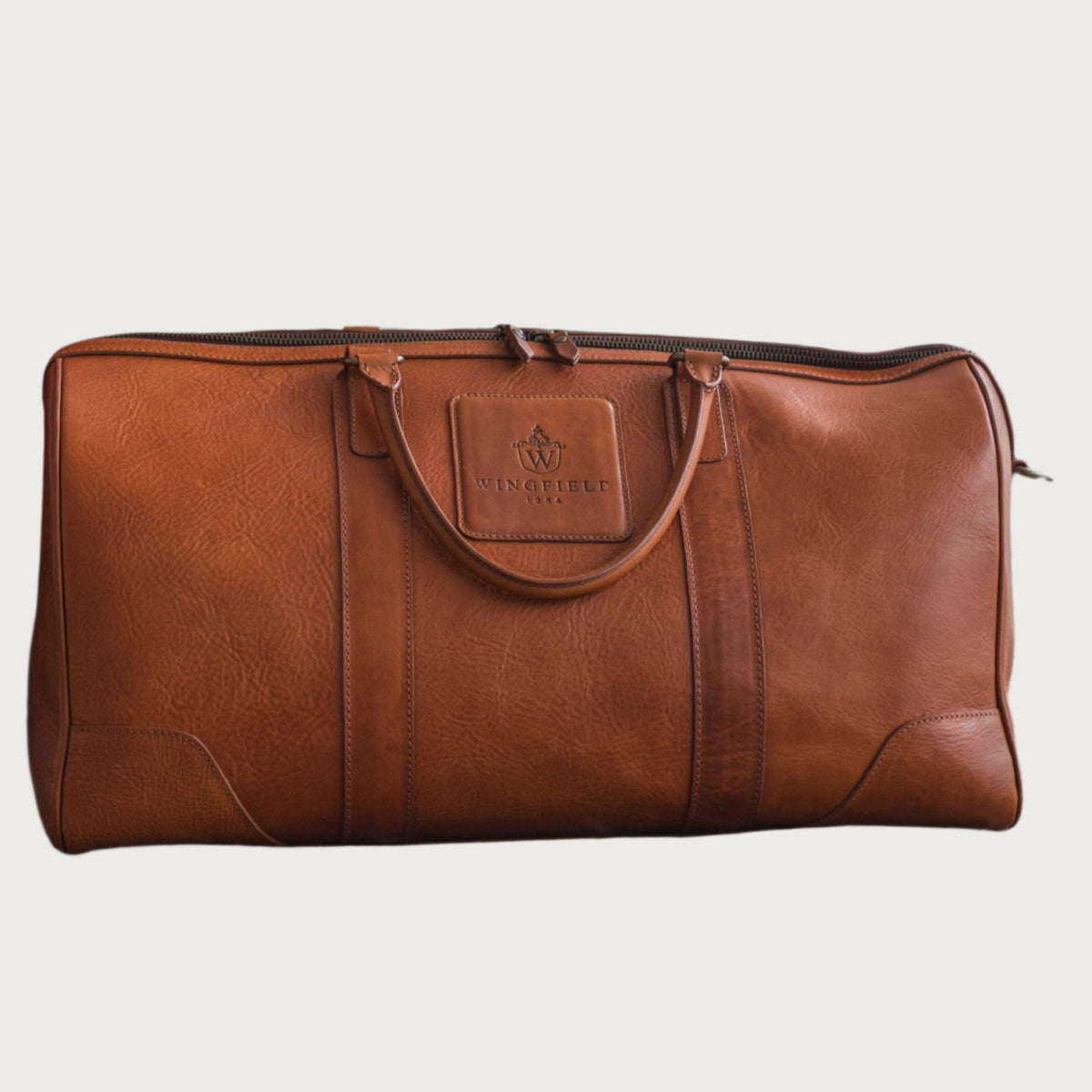
The Wingfield line is a clear example. The Wingfield Leather Messenger Bag and the Wingfield Large Leather Duffel Bag are both listed as cut from vegetable-tanned leather with old brass hardware.
Fair Counterpoints
Honest coverage needs both sides. Chrome tanning is not a defect: it is the dominant method because it produces consistent, durable, water-tolerant leather quickly, and the chromium in finished leather is overwhelmingly the trivalent form. Allergic reactions to leather exist, but they are not universal, and in a regulated market the concern is a limit exceedance, not chrome tanning itself.
Chrome tanning also has an environmental dimension in the tannery, where chromium-bearing wastewater and sludge must be handled properly. That is a separate question from skin contact, and we cover it in how tannery wastewater is treated.
How to Buy With Confidence
- Ask the maker about testing. A brand that sources responsibly should be able to say whether finished leather is tested against the Cr(VI) limit.
- Look for credible audits. Group audits do not replace a lab result, but they signal a tannery with process controls. See what LWG-certified leather actually means.
- Know your skin. If you have had reactions to leather goods before, vegetable-tanned leather is a reasonable option to try.
- Avoid very cheap, unlabeled goods. Origin and testing are hardest to trace on products with no stated material or maker.
- Store leather cool and dry. Heat and humidity are bad for leather in general; see our guide to storing a leather bag.
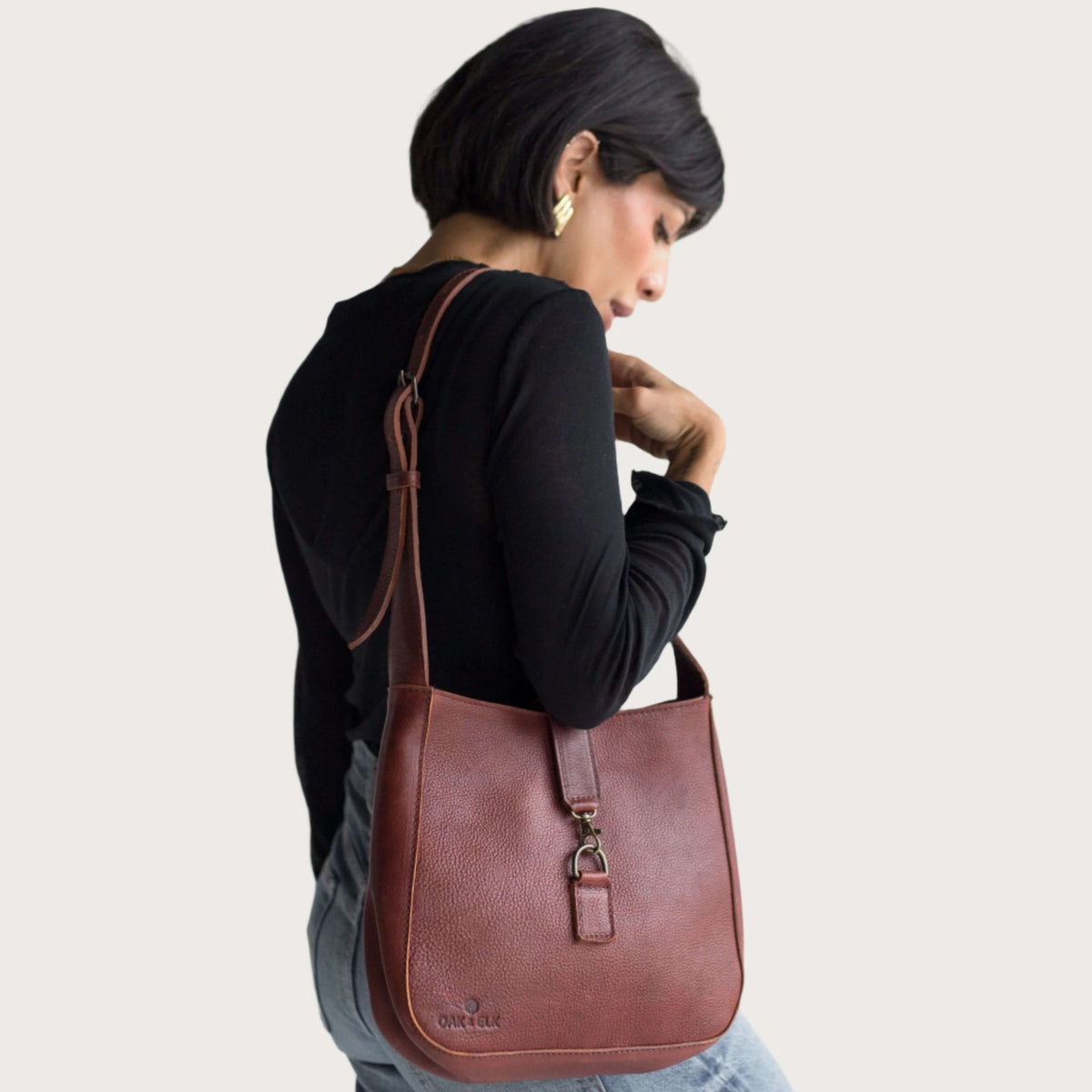
Bags that rest against skin or clothing all day, like the Paris Leather Shoulder Bag, are a good reason to ask these questions of any brand, ours included.
Why Older and Secondhand Leather Is Treated Differently
The EU regulation excludes second-hand articles that were already in end use in the EU before 1 May 2015. That exemption is practical rather than a statement about safety: it avoids retroactively banning goods people already own. If you buy vintage or pre-owned leather, there is no guarantee it was ever tested against the limit, which is one more reason to read our careful guide to buying a secondhand leather bag.
Where Testing Fits in the Supply Chain
A leather bag passes through a tannery, a cutting room and a workshop before it reaches you, and chromium control sits mostly at the first stage. A tannery can reduce the risk of Cr(VI) formation by keeping the finished leather's pH in a controlled range, selecting stable fatliquors and avoiding hot, long storage of semi-finished stock. A lab then checks a representative sample of each lot, and results near the limit are usually confirmed with a second measurement.
For a maker, the practical rule is simple: buy from tanneries that can show test reports, keep hides out of heat, and treat the report as part of the material's paperwork. For a buyer, the equivalent rule is to prefer brands that answer the question plainly. If you want to see how hides move from raw material to finished leather, how leather is made, step by step walks through each stage.
If You Think You React to Leather
Redness or itching where leather touches skin can have several causes, including finishing dyes, adhesives, metal hardware or simple friction and sweat. Chromium is only one possibility. A dermatologist can run a patch test and tell you what you are actually sensitive to, which is far more useful than guessing and switching materials blindly. Until then, a lining or a shoulder pad between skin and leather is a low-cost way to reduce contact.
Frequently Asked Questions
Is chromium VI in leather dangerous?
Chromium VI is a known skin sensitizer, which means it can trigger allergic contact dermatitis in some people. In the EU, leather in skin contact must stay below 3 mg/kg of dry weight, a limit set to prevent new cases of sensitization.
Is all chrome-tanned leather unsafe?
No. Chrome tanning uses trivalent chromium, Cr(III), which is not the restricted form. The concern is the small amount of Cr(VI) that can form under heat, high pH or certain auxiliaries, and compliant tanneries control and test for it.
Can you tell by smell or look whether leather contains chromium VI?
No. Cr(VI) cannot be seen or smelled. It is measured in a laboratory using an extract of the leather.
Is vegetable-tanned leather free of chromium VI concerns?
Vegetable tanning uses plant tannins instead of chromium salts, so the chrome oxidation pathway does not apply in the same way. It still has its own trade-offs in firmness, water sensitivity and patina.