



EU Deforestation Regulation and Leather: What Changed
The EU deforestation regulation and leather have been entangled since 2023, and in 2026 the relationship changed. Cattle hides, skins and leather were removed from the law's product list, while beef and live cattle stayed in. Here is what the rule is, what changed, and what it does and does not tell you about the bag in your hands.
What the EU deforestation regulation actually is
Regulation (EU) 2023/1115, usually shortened to EUDR, requires companies that place certain commodities on the EU market to prove those goods were not produced on land deforested after 31 December 2020. It covers seven commodities: cattle, cocoa, coffee, oil palm, rubber, soy and wood, plus products made from them.
Operators must collect geolocation data for the land where the commodity was produced and file a due diligence statement. The point is to keep EU consumption from driving forest loss, and cattle ranching is one of the largest drivers of tropical deforestation, which is why cattle was included from the start.
Why leather was in the conversation
Cattle products in the original scope reached beyond meat. Raw hides, tanned hides and finished leather sat in the product annex as well. For tanneries and importers, that meant tracing a hide back through slaughterhouse and dealer to the ranch where the animal was raised, which is a hard problem because a single batch of hides can come from animals raised on many farms.
The leather industry argued that hides are a by-product of the meat industry and have a low value compared with the animal's meat, so buyers have little leverage to demand farm-level data. Our own article on leather traceability and where hides come from explains why that chain is so fragmented.
What changed in 2026
In July 2026 the European Commission adopted a delegated act amending the EUDR product annex. Trade and legal summaries agree on the main points:
- Cattle hides, skins and leather are removed from the annex.
- Cattle itself remains one of the seven regulated commodities, so beef and live cattle are still covered.
- A few products are added, including frozen cattle tongues, selected palm oil derivatives and soluble coffee, with application from 30 December 2027.
- The core obligations apply from 30 December 2026 for large and medium operators and from 30 June 2027 for micro and small ones.
Sources differ on the exact date the leather removal took legal effect. The act was adopted on 13 July 2026 and was subject to a scrutiny period by Parliament and Council, and some summaries report it in force from mid-September 2026. Anyone who needs a precise date for compliance work should check the current text on EUR-Lex. One legal summary also notes a recital saying the Commission may revisit leather in a general review due by 2030, so the question may not be closed for good.
What stayed in and what came out
| Product | Status under the EUDR after the 2026 amendment |
|---|---|
| Live cattle | In scope |
| Beef and cattle offal | In scope |
| Frozen cattle tongues | Added, applies from 30 December 2027 |
| Raw cattle hides and skins | Removed |
| Tanned and crust cattle hides | Removed |
| Finished cattle leather | Removed |
Finished bags, shoes and clothing were never the regulated product. The obligations fell on whoever first placed raw or semi-processed leather on the EU market, usually a tannery or importer.
What the change does not mean
It does not mean leather has no link to deforestation. The cattle that provide hides are the same animals that stay under the regulation as beef. Removing hides from the list reflects a judgment about regulatory leverage and compliance cost, not a finding that the supply chain is clean. Anyone who writes in favor of leather should say this plainly.
It also does not mean leather is unregulated. Labeling rules still apply, and our guide to leather labeling laws and what the terms mean covers what words like genuine leather are permitted to claim. The environmental picture, including the farm stage, is covered in our review of what life cycle studies really show about leather's carbon footprint.
There is a practical consequence for makers too. Without a legal requirement to map hides to farms, any origin information a brand shares is voluntary, and its quality depends on the tannery relationship behind it. A maker who buys from a small number of known tanneries can say more than one who buys through brokers, which is one reason short supply chains deserve credit even when no law demands them.
Finally, it helps to keep two questions apart. One is whether a hide came from land cleared for pasture, which is a supply chain question. The other is whether the finished leather was tanned and dyed responsibly, which is a production question answered by audits and wastewater treatment. A bag can score well on one and poorly on the other, so a single label rarely settles both.
What it means when you buy a leather bag
For a buyer outside the EU, nothing changes at the checkout. The useful questions are the ones you could always ask: which tannery made the leather, which tanning method was used, and whether the maker can say anything about where the hides came from. A brand that can answer the first two and is honest about the third is doing better than most.
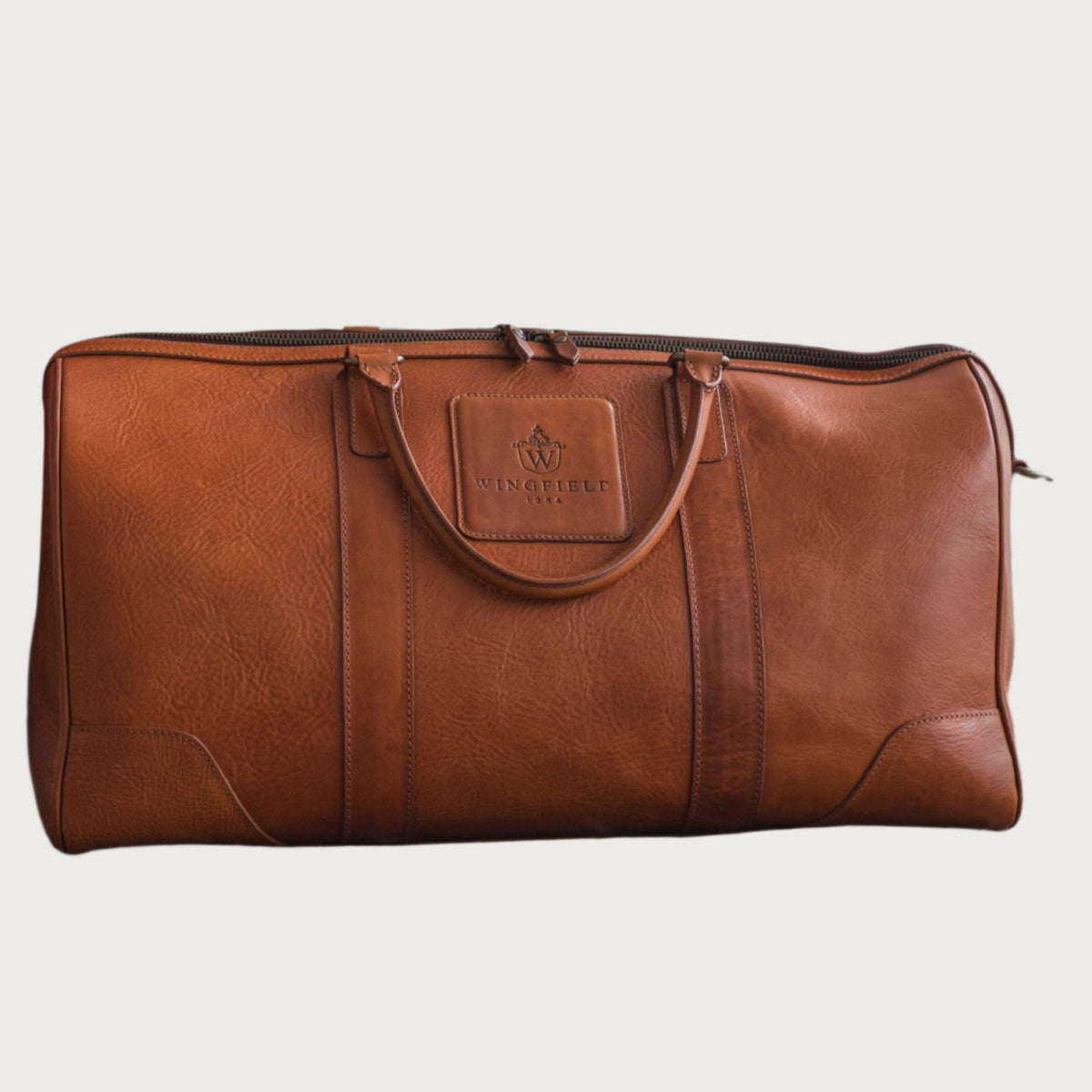
The bag itself is the other half of the argument. Leather that lasts decades spreads the environmental cost of one hide over a very long life. The Dakota Large Leather Duffel is cut from full-grain cowhide with antique brass hardware and reinforced stitching, and the Wingfield Leather Messenger Bag uses vegetable-tanned leather with old brass hardware. The Classic Leather Tote pairs vegetable-tanned handles with a choice of Signature, Pebbled and Rustic leathers, and the Paris Leather Shoulder Bag is available in Signature and Pebbled leathers. We do not claim any of them is deforestation-free, because a tannery receipt is not a ranch audit. We do claim they are built to be repaired and used for years.
What to watch next
- The compliance dates of 30 December 2026 and 30 June 2027 have been postponed before, so further changes are possible.
- Voluntary schemes such as Leather Working Group audit tanneries rather than ranches, so they address a different part of the chain.
- Brands that publish tannery names and hide origin by country are ahead of the legal minimum.
Frequently asked questions
Is leather covered by the EU deforestation regulation?
Not after the 2026 amendment. Cattle hides, skins and leather were removed from the product annex, although cattle, beef and cattle offal remain regulated. Check EUR-Lex for the current text if you need an exact legal position.
Why did the EU remove leather from the deforestation law?
Industry groups argued that hides are a low-value by-product of the meat industry, so tracing them to individual farms would be costly while giving buyers little leverage. The Commission's own recital reportedly cites the low value of hides relative to meat.
Does this mean leather causes deforestation?
Cattle ranching is a major driver of deforestation in some regions, and hides come from cattle. The regulation change concerns how the law is applied, not whether the link exists. Hide origin varies widely, so the honest answer depends on the supply chain.
Does the EUDR apply to a leather bag I buy online?
No. Finished bags were never the regulated product, and leather itself is now out of scope. Labeling and consumer protection rules still apply.