

Mexican Leather Craftsmanship: León's 400-Year Story
Mexican leather craftsmanship is one of those traditions that hides in plain sight. A pair of boots, a saddle, a work apron — objects so ordinary that few people stop to ask why a single city in the Bajío highlands has been tanning hides for nearly four hundred years. The answer runs through Indigenous workshops, Spanish guild law, cattle country, and a modern industrial cluster that still argues with itself about water.
Before the Spanish: hides as everyday technology
Leatherwork in Mexico did not begin with the conquest. Indigenous communities across Mesoamerica worked animal hides long before European contact, using them for clothing, tool coverings, shields, drum heads, and ceremonial objects. Deer was the dominant hide — there were no cattle in the Americas — and the treatments were closer to what we would now call brain tanning or smoke curing than to the vat tanning that came later.
What matters here is that the skill base already existed. When Spanish methods arrived, they did not land on empty ground. They met craftspeople who already understood how a hide behaves: how it stretches, where it is thickest, how it rots if you get it wrong.
The colonial graft: guilds, cattle, and a new craft language
Two Spanish imports changed everything. The first was cattle, which arrived in the early sixteenth century and multiplied across the northern grasslands, turning hides from a scarce hunting product into an agricultural surplus. The second was the guild system — the gremio — transplanted from medieval Europe.
Guilds in colonial Mexico were not decorative. They regulated who could practice a trade, set quality standards, defined apprenticeship terms, and fixed prices. A tanner or a saddler moved through recognised stages before working independently, and the guild could reject substandard goods. Workshops clustered in Mexico City, Puebla, and Oaxaca, where Indigenous artisans were trained in European decorative styles and promptly began combining them with their own.
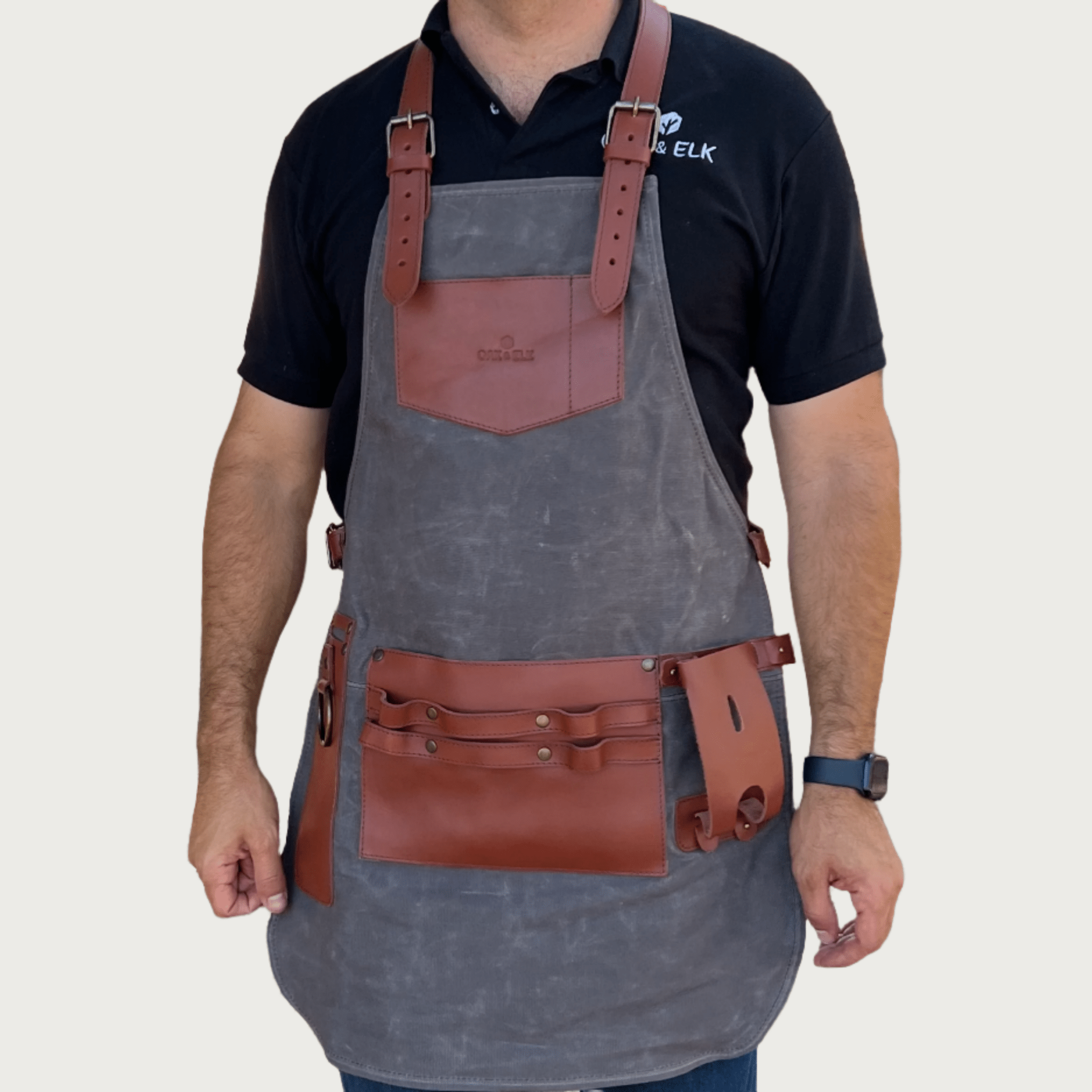
That fusion is the origin of Mexican leather craftsmanship as we recognise it now: European construction methods carrying Indigenous ornament, motifs, and material intelligence. It is also why the vocabulary of the craft is still Spanish — talabartería for saddlery and strap work, curtiduría for tanning, marroquinería for fine leather goods.
Why León became the leather capital of the Americas
León, in the state of Guanajuato, is the centre of gravity. Local accounts trace the beginning to 1576, when a friar is said to have taught residents to tan hides for warmth. Whatever the truth of that story, artisans in the barrios of Arriba and Coecillo were tanning and shoemaking by the early 1600s, and by the end of that century the trade was established.
Geography did the rest. León sat between cattle-raising country and the silver-mining economy of the Bajío, which meant a steady supply of raw hides and a steady demand for boots, saddles, harness, and bags. Tanning is water-hungry and unpleasant to live beside, so it concentrated where it was tolerated — and once concentrated, it compounded. Tanners attracted finishers, finishers attracted last-makers and hardware suppliers, and the cluster became self-reinforcing.
Today Guanajuato holds roughly 700 tanneries and more than 5,000 footwear manufacturing units, according to Mexico's 2025 DENUE business registry. León alone produces around 70% of the shoes made in the country and anchors the largest complete leather supply chain in Latin America — raw hide intake, tanning, finishing, manufacture, and export in one place.
Regional traditions worth knowing
León is the industrial hub, but Mexican leather craftsmanship is regional, and the traditions remain distinct from one another.
| Region | Known for | Character |
|---|---|---|
| León, Guanajuato | Tanning, footwear, bags, industrial-scale finishing | Full supply chain; the reference point for Mexican leather |
| Colotlán, Jalisco | Piteado — embroidery in agave pita fibre on leather | Belts and saddlery for charro dress; slow, highly skilled handwork |
| Central highlands (Mexico City, Puebla) | Colonial guild saddlery and decorative leather | The historic origin of formal training and standards |
| Oaxaca | Sandals, bags, tooled and dyed goods | Strong Indigenous design continuity |
Piteado deserves a note. It emerged in the mid-nineteenth century in Colotlán and involves embroidering leather with fibre drawn from the agave plant. A single belt can take weeks. It is the clearest surviving example of a technique that is entirely Mexican in origin rather than adapted from Europe.
What "made in León" means in 2026
A four-hundred-year-old industry does not get a pass on environmental questions, and the serious tanneries in León know it. The most credible signal available to a buyer is Leather Working Group certification — an independent audit that scores tanneries on water use, energy, waste, chemical management, effluent treatment, and traceability of hides, awarding Gold, Silver, or Bronze ratings. Several León tanneries hold current LWG certification, including Procesos Modernos de León and HQ Leather Group.
Certification is not a moral guarantee. It is an audit of process. But it is verifiable, it is renewed, and it is the difference between a supplier who can document where hides came from and one who cannot.
The honest counterarguments
Any honest account of Mexican leather craftsmanship has to address two objections rather than deflect them.
- Water. Tanning is water-intensive, and the Bajío is water-stressed. This is a real constraint on León's growth, not a talking point, and it is why effluent treatment and water recycling dominate the technical conversation among tanneries there.
- Chemistry. Most commercial leather is chrome-tanned. Chromium III used in tanning is not the carcinogenic chromium VI, but poorly managed tanneries can generate the latter and discharge it. The fix is regulation, closed-loop systems, and audit — which is precisely what LWG certification exists to check.
Vegetable tanning avoids chrome entirely, using tannins from bark and plant matter, but it is slower, more expensive, and produces a firmer leather with its own trade-offs. We cover that comparison in more depth in our guide to the history of leather tanning, and the broader question of leather as a meat-industry byproduct in our piece on why leather is a byproduct rather than a driver of cattle farming.
Buying with the tradition in mind
If you want the heritage and not just the label, a few things actually matter:
- Ask what grade of leather it is. Full-grain keeps the outer surface intact and develops patina; corrected and bonded grades do not. Our breakdown of full-grain versus top-grain leather covers the distinctions.
- Ask where the hide was tanned, not just where the item was sewn. These are often different countries.
- Look at the hardware and the stitching density. Heritage workshops do not economise here; volume manufacturers do.
- Buy things meant to be repaired. The strongest environmental argument for leather is a twenty-year service life, and that only holds if the object can be resoled, restitched, and reconditioned.
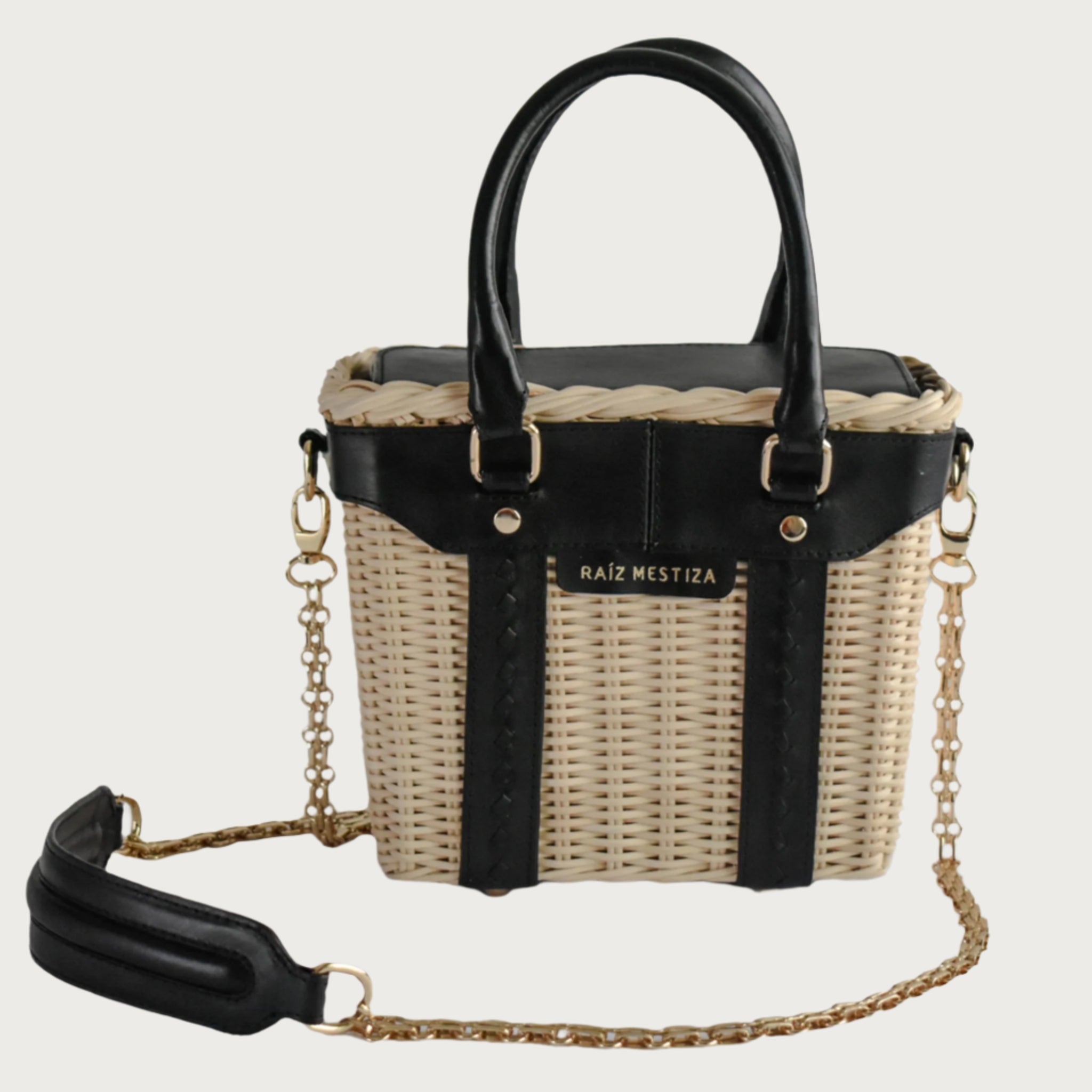
The clearest expression of this tradition in our own collection is the Raiz Mestiza line, where handwoven plant fibre meets leather in the same object. The Erandi wicker and leather tote pairs handwoven natural wicker with bovine leather finished using mixed tanning and hand-stitched detailing — a literal joining of the Indigenous and European halves of the story. The Amaité handwoven cane and leather tote sets cane panels against full-grain leather in a structured silhouette, and the Aruma wicker and black leather bucket bag uses interwoven wicker fibre with black bovine leather and a drawstring closure. Weaving cane or wicker by hand is slow work, and it is the part of the process that cannot be industrialised.
Frequently asked questions
Why is León, Guanajuato called the leather capital of Mexico?
León has been tanning hides and making footwear since the early 1600s, sitting between cattle country and the mining economy of the Bajío. It now holds the largest complete leather supply chain in Latin America and produces roughly 70% of Mexico's shoes, with around 700 tanneries in the surrounding state.
Is Mexican leather good quality?
Quality depends on the tannery and the grade, not the country. León produces everything from premium full-grain hides to inexpensive corrected-grain. The useful question is whether the tannery is Leather Working Group certified and what grade of leather the finished item uses.
What is talabartería?
Talabartería is the Spanish term for saddlery and strap work — belts, harness, saddles, and heavy leather goods. It arrived with Spanish guild traditions in the sixteenth century and remains a distinct trade from marroquinería, which covers fine leather goods such as bags and wallets.
What is piteado leather?
Piteado is leather embroidered with pita, a fibre from the agave plant. It originated in Colotlán, Jalisco in the mid-nineteenth century and is associated with charro belts and saddlery. The work is done entirely by hand and a single piece can take weeks to complete. The related tradition of weaving cane and wicker into leather bags is explored in our piece on the art of wicker and cane with leather handbags.