History of the Duffel Bag: From Flemish Cloth to Leather
The history of the duffel bag begins with a fabric, not a bag. Before anyone packed a weekend away into one, "duffel" described a coarse woollen cloth, and the story of how that word ended up on a leather travel bag is more interesting, and more uncertain, than most brand histories admit.
This guide sticks to what dictionaries and reference sources support, flags where the origin is disputed, and explains why the humble duffel moved from the sailor's shoulder to the leather-goods workshop.
Where the name comes from
Most sources link the word to Duffel, a town in Flanders, Belgium, where a thick woollen cloth was made in the 17th century. The Oxford English Dictionary dates the word to 1649, when it described a coarse woollen cloth with a thick nap, or frieze. The origin is still described as disputed, so treat the Flemish town as the leading explanation rather than a settled fact.
The earliest cited reference to a duffel bag specifically comes from 1768. That gap of more than a century between the cloth and the bag is worth remembering: the cloth came first, and the bag borrowed its name from the material it was sewn from.
Duffel or duffle?
Both spellings appear in dictionaries. American retailers use both interchangeably, and in British English the same object is often called a holdall, while Americans may also say gym bag or carryall. If you are choosing which spelling to search or write, either is correct; consistency matters more than the letter.
The original design: a drawstring sack
Historically, duffel bags closed with a drawstring. Later versions added a webbing hand grip and a shoulder strap with a clip that closed the opening through grommets around the rim, and some added a padlockable eye loop or separate rucksack straps. These are practical answers to one problem: moving everything you own from one place to the next.
The seabag: military and naval use
Non-commissioned military personnel commonly used duffels, and when a sailor or marine used one it was called a seabag. This is the strongest link between the duffel and the idea of a bag built for hard use. A seabag had to survive being stowed, hauled and dropped, so strength and simple construction mattered more than looks.
How the duffel changed over time
| Stage | Typical material | Closure and carry |
|---|---|---|
| Early duffel | Heavy cloth | Drawstring, hand grip |
| Military seabag | Heavy fabric | Grommets, clip, shoulder strap |
| Modern gym and sports bag | Synthetic fabrics | Zipper, padded straps |
| Leather weekender | Full-grain or vegetable-tanned leather | Zipper, top handles, adjustable strap |
The table is a simplified summary of how the form evolved, not a dated timeline. Different makers moved at different speeds, and several versions coexisted for generations.
Why leather entered the picture
Leather suits the same job the seabag did. It resists abrasion, holds a shape when packed and, when it is vegetable-tanned, develops a patina rather than just wearing out. If you want to understand what happens to a hide before it becomes a bag, our guide to how leather is made, step by step covers it from raw hide to finished material.
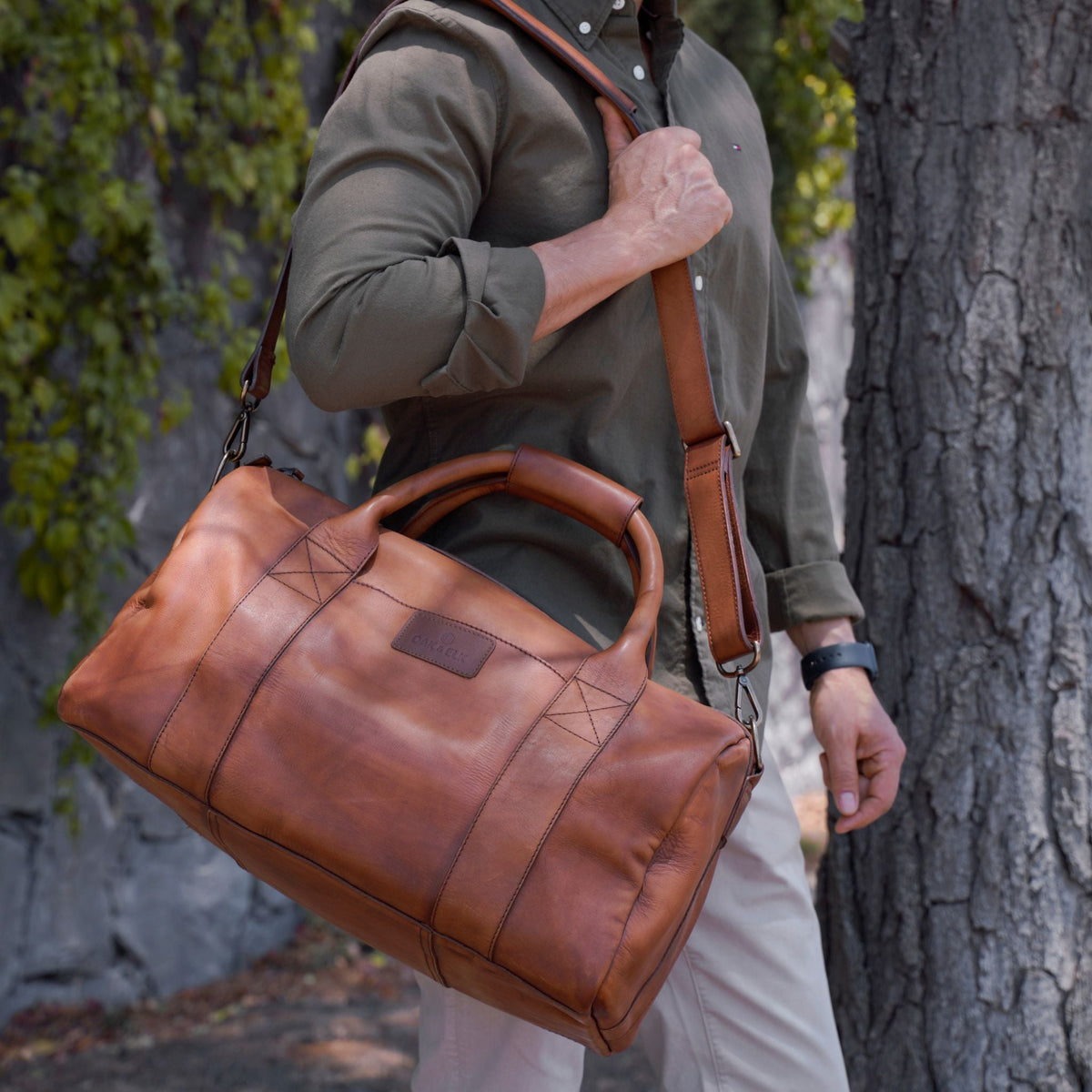
A leather duffel is also a different object from a cloth one. The zipper replaced the drawstring, the structured base replaced the sack shape, and brass hardware replaced rope and grommets. What stayed constant is the barrel silhouette and the demand that it be strong.
What a modern leather duffel keeps from the original
- The barrel shape: a long, rounded body that packs soft items efficiently.
- Reinforced carry points: top handles and a shoulder strap, descended from the webbing grip and clip strap.
- Durability as the main virtue: built to be loaded, thrown in a trunk and used for decades.
Duffels you can see this in today
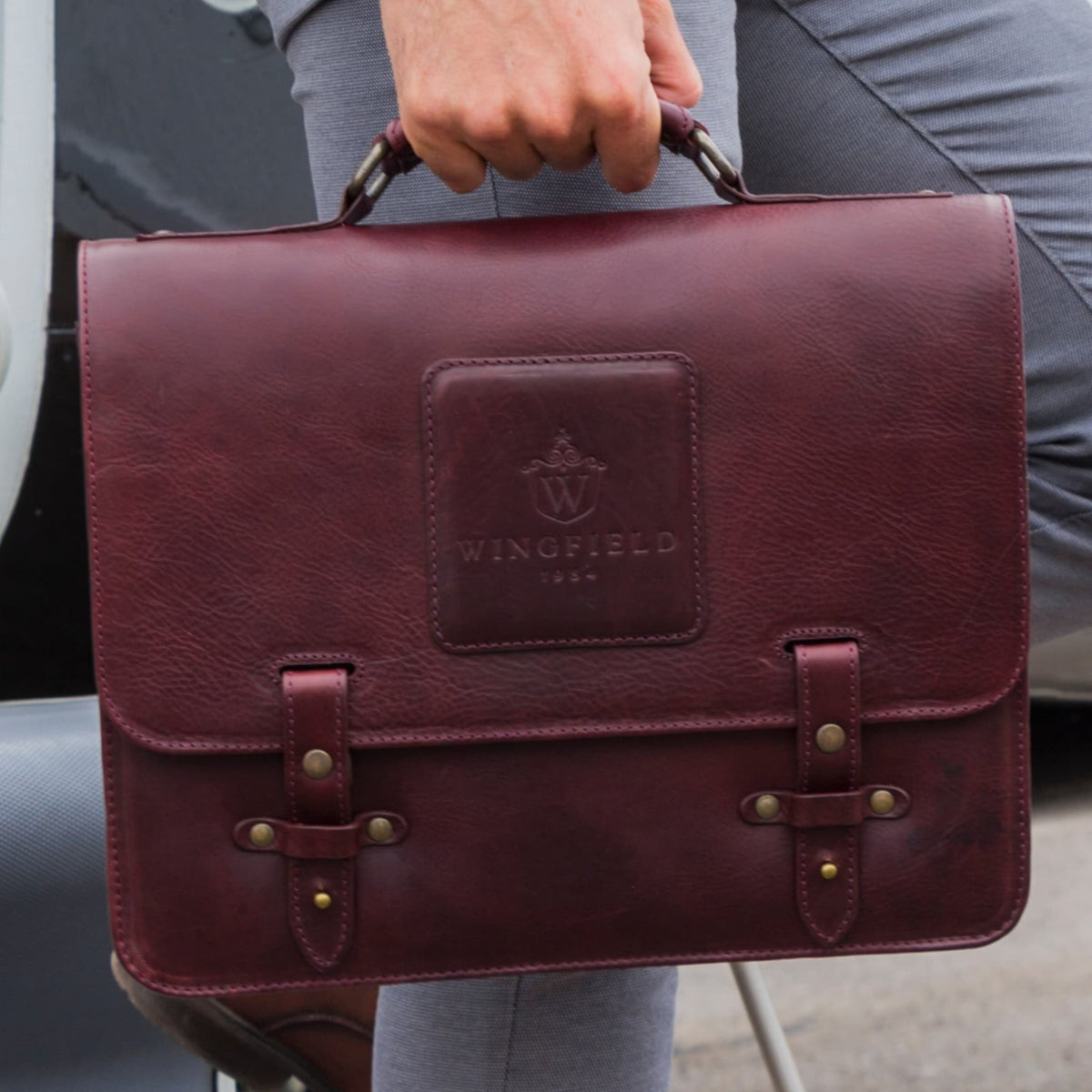
The Wingfield Large Leather Duffel Bag is cut from vegetable-tanned leather with old brass hardware, a premium zipper and a cotton-lined interior, sized for a long weekend. For a lighter overnight carry, the Wingfield Small Leather Duffel Bag uses the same materials with an adjustable strap. If you prefer a lighter, more casual build, the Wingfield Large Canvas & Leather Duffel Bag pairs durable canvas with vegetable-tanned leather trim, a nod to the cloth the bag was named after. For daily carry rather than travel, the Wingfield Leather Messenger Bag shares the same leather and hardware.
Stitching is the other place a good duffel earns its keep. Our comparison of saddle stitch versus machine stitch explains what to look for at handles and strap anchors, and the guide to leather duffel bag carry-on size helps you choose a size before you buy.
What we cannot tell you
Many brand pages tell a tidy story of one inventor, one year and one battlefield. The sources we checked do not support that. The word's origin is disputed, the first documented bag reference is from 1768, and the transition from cloth sack to modern travel bag happened gradually. If a source gives you a precise date for the first leather duffel, ask what it is citing.
Frequently asked questions
Where does the word duffel come from?
Most sources trace it to Duffel, a town in Flanders, Belgium, known for a thick woollen cloth in the 17th century. The origin is described as disputed, so this is the leading explanation rather than proven.
What is the difference between a duffel and a duffle bag?
There is no functional difference. Both spellings appear in dictionaries, and the bag may also be called a gym bag, carryall, sports bag or holdall depending on region.
What is a seabag?
A seabag is the name given to a duffel bag when it is used by a sailor or marine. Non-commissioned military personnel commonly used duffels for carrying their kit.
Why are modern duffels made of leather?
Leather is abrasion-resistant, holds its shape and ages into a patina when vegetable-tanned. It keeps the strength that made the original duffel useful while adding a finish that improves with use.