


Article: Hair-On-Hide Leather: How It's Made and How to Care for It
Hair-On-Hide Leather: How It's Made and How to Care for It
Hair-on-hide leather is cowhide tanned with the animal's coat left in place, so the hair itself becomes the outer surface of the bag. It looks wild and graphic, it feels unlike any other leather, and it raises fair questions: how is it made, does it shed, and how do you keep it looking good for years? This guide answers all three without the marketing gloss.
What Hair-On-Hide Leather Actually Is
Most leather you handle, from a smooth wallet to a pebbled tote, started as a hide covered in hair. Early in conventional production, in the stage tanners call the beamhouse, the hide goes through unhairing and liming: chemicals and lime remove the hair and the outer epidermis so the grain underneath can be tanned, dyed and finished. If you want the full sequence, our guide to how leather is made step by step walks through every stage.
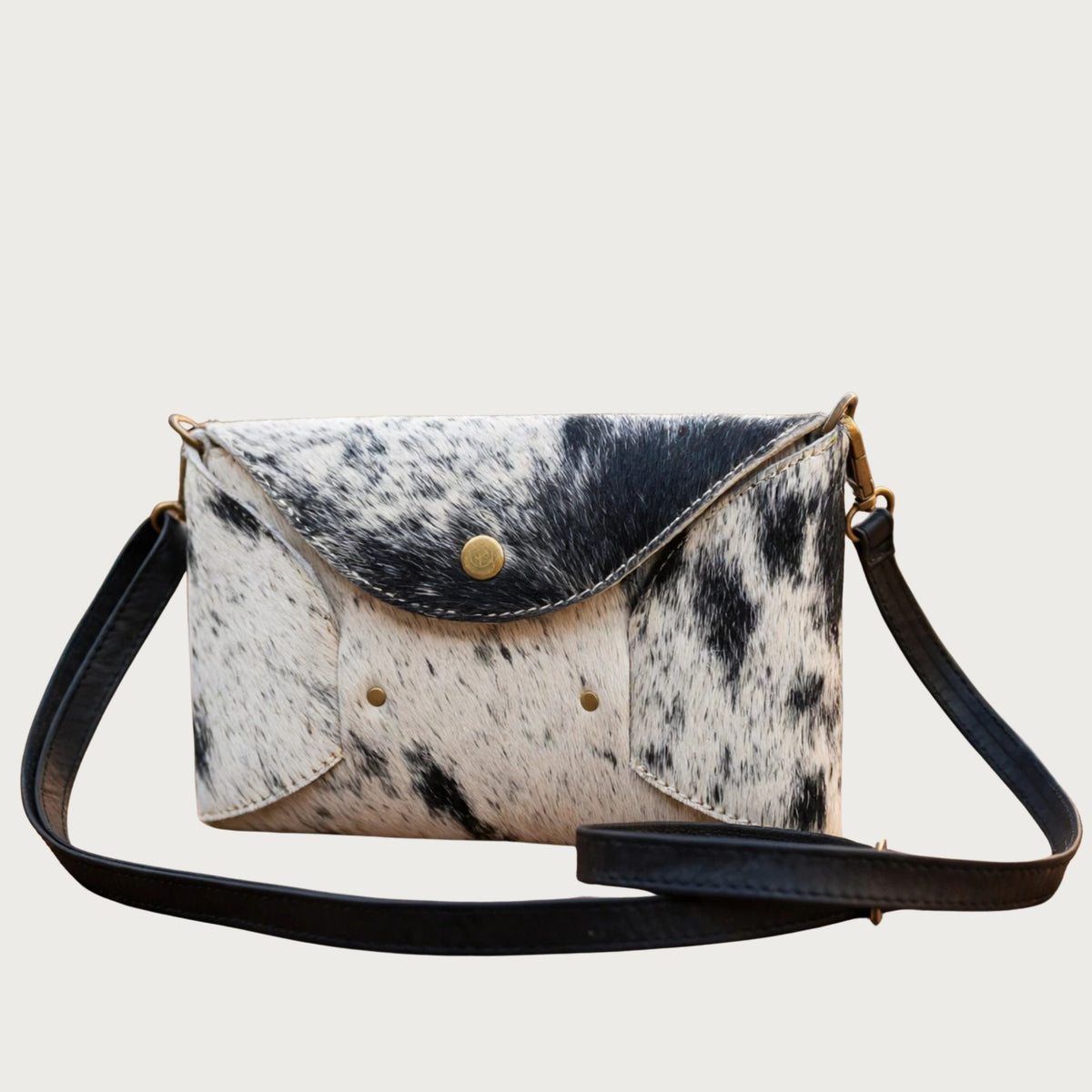
Hair-on-hide skips the goal of that step. The tanner preserves the coat instead of stripping it, and the hide is tanned with the hair intact. The result is a two-sided material: a living-looking hair surface on the outside and a tanned flesh side on the inside. Because the coat's natural pattern is the face of the material, no two pieces are alike. A black-and-white Holstein pattern, a solid brown, a brindle or a tri-color hide each carries the markings of the animal it came from.
Where the hides come from
Cattle hides are a product of the meat industry. Cattle are raised for beef and dairy, and the hide is what remains after processing. Turning that hide into a rug, a chair seat or a crossbody bag is one way to use the whole animal rather than discard part of it. The same logic applies to all cowhide leather, but hair-on makes it visible: you are looking at the animal's actual coat.
How Hair-On-Hide Is Made, Step by Step
Tanneries vary in their exact recipes, but the general sequence for hair-on cowhide looks like this:
- Salting. Fresh hides are cured with salt to draw out moisture and stop decomposition before they reach the tannery.
- Soaking. The salt and dirt are washed out, and the hide is rehydrated.
- Fleshing. Fat and remaining tissue are removed from the flesh side. The hair side is handled with care, because damaged follicles mean bald patches later.
- Tanning. Hides tumble in drums with a tanning agent. Chrome tanning is the most common method for hair-on cowhide, and suppliers credit it with helping the hide resist shedding; some hides are vegetable tanned or given extra fat treatments for softness.
- Drying and softening. Hides are stretched and dried flat to prevent shrinkage, then mechanically softened so they drape and sew well.
- Grading and trimming. Each hide is inspected for loose hair, bald spots and tears, then brushed and trimmed.
Hides that come out with flaws in some areas are often cut into smaller pieces for patchwork rugs or accessories. A bag panel only needs a small, clean section of coat, which makes accessories a sensible home for hides that will not work as a full rug.
Natural, Dyed and Printed: The Main Types
Not every hair-on surface you see is the animal's original coat. Knowing the difference helps you judge what you are buying.
| Type | What it is | What to expect |
|---|---|---|
| Natural hair-on | Coat kept in its original colors and pattern | Every piece unique; pattern placement varies from bag to bag |
| Dyed solid | Hair dyed a single color, often over a lighter coat | More uniform look; color can soften with wear and sun |
| Printed or stenciled | Pattern such as zebra or animal print applied to light hair | Graphic effect; lower-grade hides are often used this way |
| Metallic or acid-washed | Coating or treatment applied to the hair tips | Sheen on the surface; coating can wear at friction points |
| "Pony hair" | A trade name for short-haired hide, usually calf, not horse | Shorter, flatter, glossier hair than standard cowhide |
If a listing says "pony hair," it almost always describes short-haired cowhide or calfskin. That is not misleading in itself, but it is worth knowing what the term means. Labeling language in leather is full of terms like this, which we unpack in our guide to leather labeling laws.
Is Hair-On-Hide Durable? An Honest Answer
The hide underneath is ordinary cowhide, so the structure of a hair-on bag is as strong as the leather and construction that hold it together. The hair is the part that behaves differently. Here is what to expect:
- Some early shedding is normal. A few loose hairs in the first weeks are common, especially along cut edges where follicles were sliced during cutting.
- Friction wears hair down. Corners and the panel that rubs against your hip or arm will flatten and thin over years of use. Think of it as the hair-on version of patina.
- Water is the real enemy. Prolonged soaking weakens the follicles and can cause hair loss. A light drizzle wiped off promptly is fine; submerging or scrubbing is not.
- Heat and direct sun fade it. Long exposure dries the hide and lightens the coat.
A well-tanned hide on a small bag, which is handled far less roughly than a floor rug, can look good for many years. Expect it to age, not to stay frozen in its first-day state.
How to Care for a Hair-On-Hide Bag
Hair-on cannot be cleaned the way smooth leather can. The routine is simple, though:
- Brush with the grain. Use a soft brush and always stroke in the direction the hair lies. Brushing against it lifts and breaks hairs.
- Blot spills, never rub. Press a clean, dry cloth on the spot. Rubbing mats the hair and pushes the stain deeper.
- Spot clean only. For a stubborn mark, use a barely damp cloth with a drop of mild soap, wipe gently in the hair direction, then let it air dry away from heat.
- Keep conditioner off the hair. Wax and oil conditioners are made for smooth leather. On hair, they leave it greasy and clumped.
- Store it dry and covered. A breathable dust bag, away from sunlight and humidity, protects the coat. Our guide on how to store a leather bag covers shape, humidity and dust bags in detail.
What about the smooth leather parts?
Most hair-on bags combine the hide with smooth leather straps, trims or gussets. Those parts age like any other leather and benefit from occasional conditioning. A wax-based product such as Snowshoe Leather Conditioner, a blend of beeswax, pine resin and carnauba, works well on straps and trim. Apply it with a cloth, sparingly, and keep it away from the hair panels.
What to Look for When Buying a Hair-On-Hide Bag
Because the hair draws all the attention, buyers sometimes forget to check the rest of the bag. A few things separate a piece that lasts from one that does not:
- Dense, even coat. Run your hand against the hair. It should feel full, with no thin or bald patches.
- Clean edges. Edges should be bound, folded or stitched neatly so cut follicles are not constantly exposed to friction.
- Solid stitching. Hand stitching or tight, even machine stitching keeps panels from pulling apart.
- Quality hardware and lining. Brass hardware and a real lining tell you the maker did not cut corners elsewhere.
- Honest pattern photos. Natural hides vary, so a good maker tells you your piece will differ from the photo.
The PALOMA handmade cowhide crossbody bag is a good example of how these details come together: it is offered in black-and-white or brown hair-on-hide, with hand-stitched saddle stitch edges, a natural suede interior lining and antique brass hardware. It is also available in smooth cognac leather for anyone who loves the shape but prefers a classic surface.
If you want something that pairs with a hair-on statement piece, smooth vegetable-tanned leather is a natural companion. The Wingfield Leather Passport Wallet, cut from vegetable-tanned full-grain leather with hand-stitched edges, develops the kind of patina that balances the texture of hair-on.
Frequently Asked Questions
Is hair-on-hide real leather?
Yes. Hair-on-hide is genuine cowhide that has been tanned, just like smooth leather. The only difference is that the hair was preserved instead of removed during production, so the coat forms the outer surface.
Does a hair-on-hide bag shed?
A small amount of shedding is normal at first, mostly along cut edges. Over time, hair thins at high-friction points such as corners. Keeping the bag dry and brushing it in the direction of the hair minimizes loss.
Can hair-on-hide get wet?
Light rain wiped off quickly with a dry cloth is fine. Prolonged soaking can weaken hair follicles and cause bald spots, so never submerge or machine wash a hair-on piece, and let it air dry away from heaters.
What is the difference between hair-on-hide and pony hair?
"Pony hair" is a trade name for short-haired hide, usually calfskin rather than horse. Standard hair-on cowhide tends to have longer, coarser hair and bolder natural patterns, while pony hair is shorter, flatter and glossier.

