
Leather Apron for Pottery: Clay, Water and Real Fit
Choosing a leather apron for pottery is a different problem than choosing one for the workshop or the grill. Clay is wet, gritty, and relentlessly abrasive, and the wheel puts your whole torso in contact with slip for hours at a time. This guide covers what leather actually does well in a ceramics studio, where canvas still wins, and how to fit and clean an apron so it survives a decade of throwing.
What a pottery apron actually has to survive
Studio work is messier than most trades because the mess is a suspension: water carrying fine mineral particles. That combination behaves differently from sawdust or grease.
- Slip and splatter at the wheel. Centering throws a fine spray from your hands outward, and it lands on your lap and lower chest first.
- Standing water. Leaning against a splash pan or bat means sustained contact, not a quick splash.
- Abrasion from dried clay. Clay that dries on a fabric surface becomes sandpaper against itself every time you move.
- Glaze and oxide staining. Colorants stain porous fabric permanently; a sealed surface gives you a chance to wipe.
- Silica dust. Dry clay dust is the real long-term health concern in ceramics, and a smooth-surfaced apron is easier to wet-wipe than one that traps dust in a weave.
Where leather outperforms fabric in the studio
Leather's advantage is surface behavior. Slip sits on top of a finished hide rather than soaking through to your clothes, which means you can wipe it down with a damp sponge between sessions instead of throwing it in a wash cycle that will never quite get it clean. That same low porosity is why glaze splashes tend to lift off leather instead of setting into it.
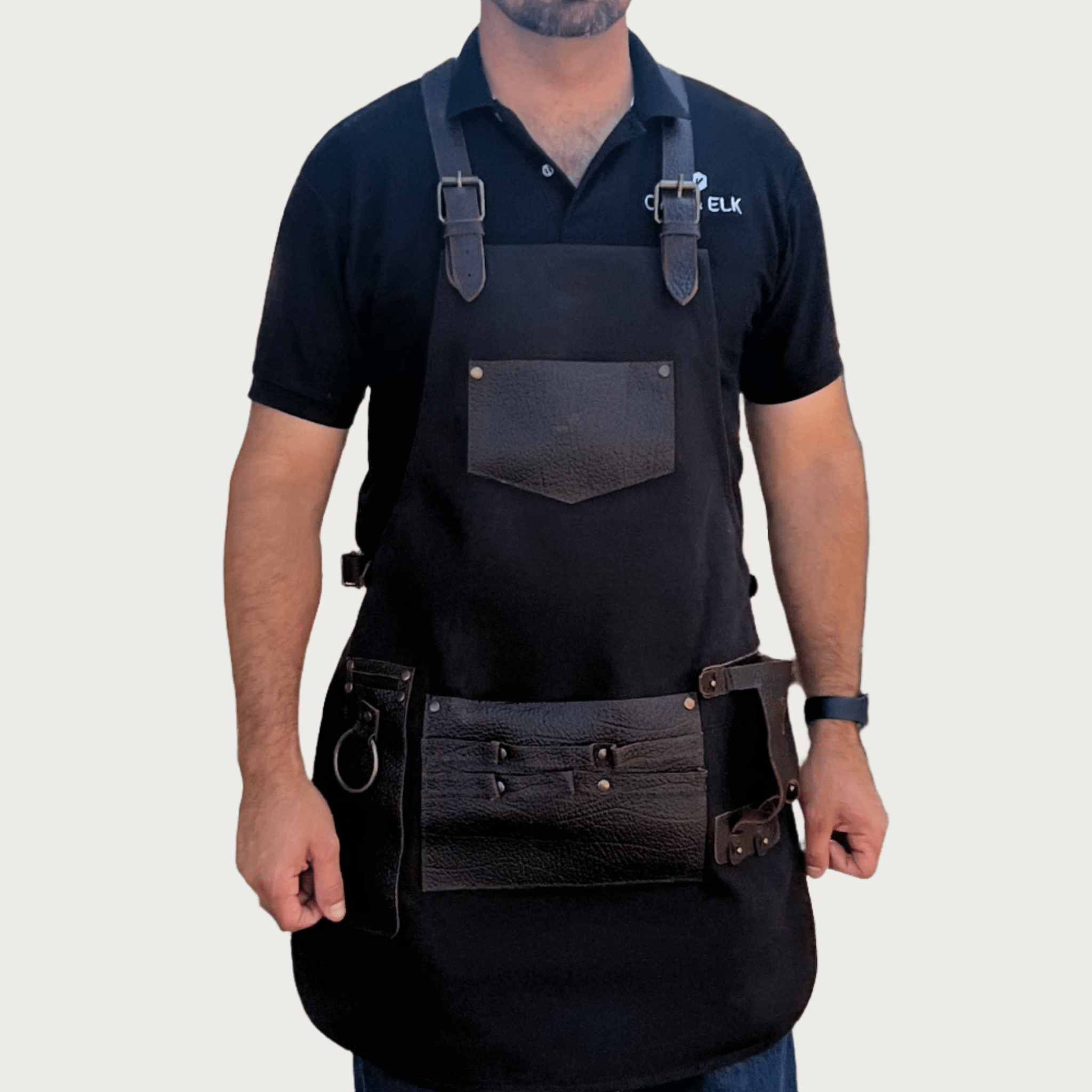
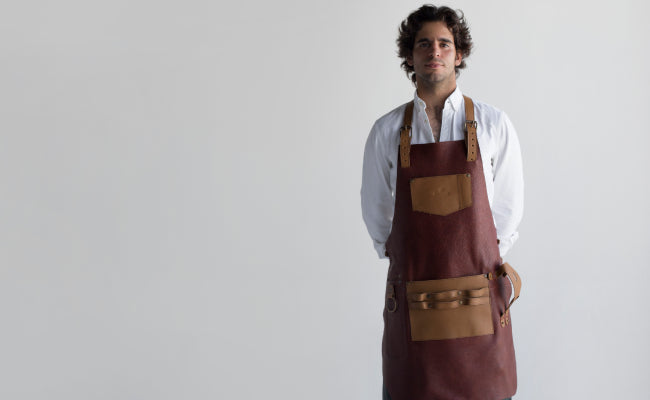
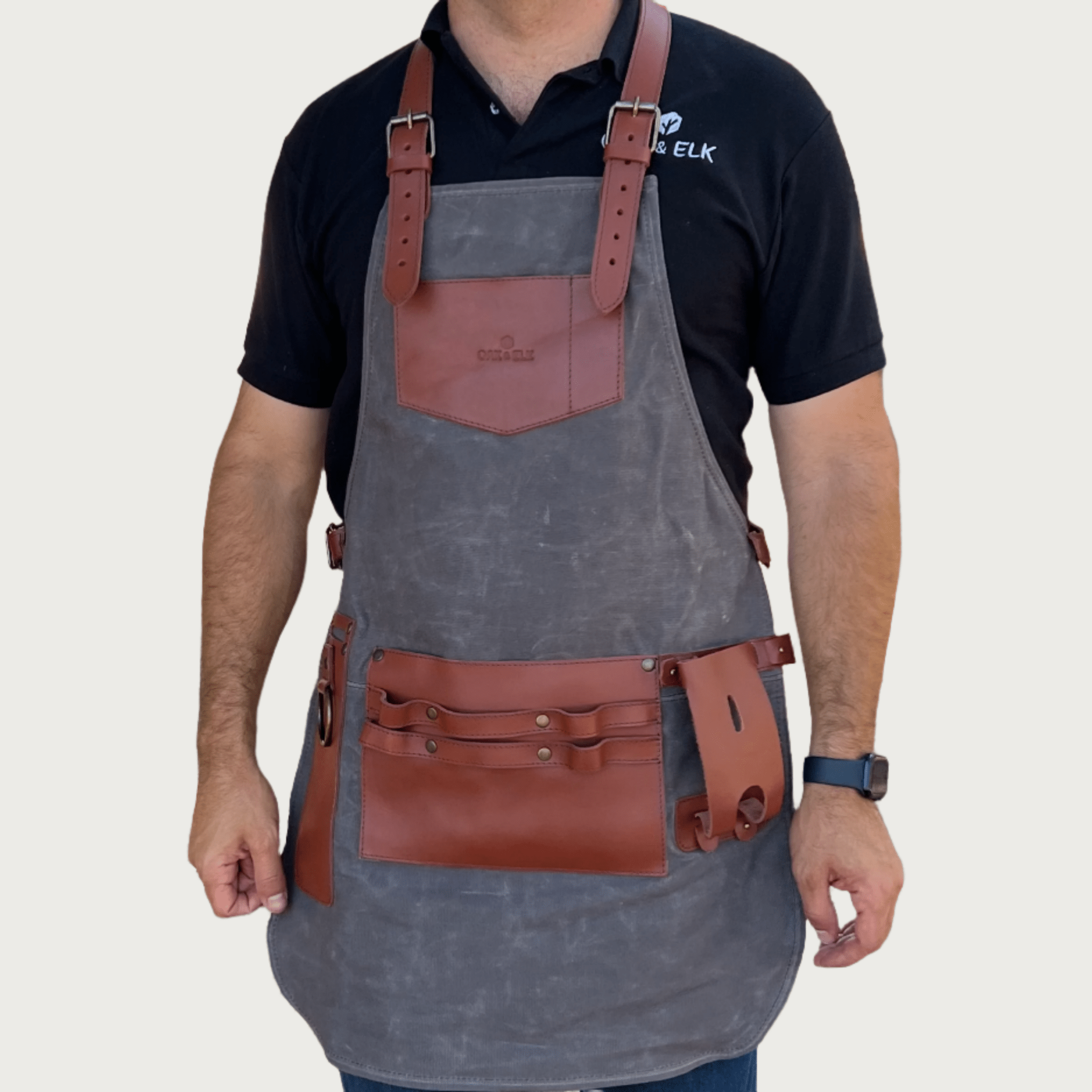
Weight matters too. A heavier apron hangs plumb and stays put while you lean into a piece, instead of riding up or catching the rim of the bat. The pebbled hide on our Max Leather Apron has enough body to hold its line at the wheel, with adjustable straps sized to fit a range of body types and front pockets that keep ribs, needle tools, and a wire cutter within reach rather than scattered across the bench.
The trade-off is honest: leather does not breathe like cotton, and it does not absorb. If you prefer an apron that soaks up water rather than shedding it, you want canvas. If you want one you can wipe clean and keep for years, leather is the better long-term buy.
Leather vs canvas for ceramics: an honest comparison
Most working potters use cotton canvas, and there is a good reason for it. Canvas absorbs moisture instead of letting it run, and heavier cotton duck softens with use. Leather solves a different set of problems. Here is how the two compare for studio work specifically.
| Factor | Leather | Cotton canvas |
|---|---|---|
| Slip and water contact | Sheds; wipes clean with a damp cloth | Absorbs; needs washing |
| Glaze and oxide stains | Resists setting into the surface | Stains tend to be permanent |
| Stability at the wheel | Hangs heavy, stays in place | Lighter weights can shift or bunch |
| Breathability | Lower | Higher |
| Dust management | Smooth surface, easy to wet-wipe | Weave can trap dry clay dust |
| Lifespan | Years; develops patina | Softens, then wears through |
If you want the middle ground, a mixed build makes sense. The Vic Canvas & Leather Apron pairs a canvas body with leather reinforcement, which gives you the breathability of cotton where it sits against you and the durability of hide at the stress points. We compared the two materials in more depth in our guide to leather aprons versus canvas aprons.
Fit and coverage for wheel throwing
Fit is the difference between an apron you wear and one that lives on a hook. Wheel work is a seated, forward-leaning posture, which changes what coverage means.
- Measure your lap, not just your chest. Sit at your wheel in your usual throwing position and measure from your sternum to just past your knees. That is the zone that gets wet.
- Check the bib width. A bib that is too narrow lets slip reach your shirt at the ribs, which is where most potters end up soaked.
- Set strap length while seated. An apron adjusted standing will sit two or three inches too high once you sit down at the wheel.
- Watch the hem. A hem that hits the splash pan will pick up standing water by capillary action. Aim for a hem that clears the pan rim.
- Mind the pockets. Pockets that sit low on the body will collect slip. Tools you use constantly belong at chest height.
If you are buying your first apron of any kind, our introduction to leather apron fit walks through the measurement basics in more detail.
Cleaning a leather apron after a studio session
The rule is simple: deal with clay while it is wet, and never let leather dry near heat.
- Wipe wet slip off with a damp sponge before it dries. Thirty seconds now saves a scraping job later.
- For dried clay, let the apron dry fully, then flex the leather gently so the crust cracks and brushes off with a soft brush. Do not scrape with a metal rib.
- Air dry flat or on a wide hook, away from kilns, radiators, and direct sun. Heat is what makes leather stiffen and crack.
- Condition a few times a year, or whenever the hide looks dry. Water contact strips oils out of leather over time.
- Never machine wash a leather apron. Our leather apron maintenance guide covers conditioning products and intervals.
What leather protects against, and what it does not
Leather is genuinely good at blunt, wet, and abrasive hazards: slip spray, glaze splash, water contact, scraping against a wheel head or bench edge, and the general wear of studio life. It also gives you a surface you can wipe rather than a fabric that holds dust.
What it is not: an apron is not respiratory protection. Silica exposure in ceramics is managed by wet cleaning, ventilation, and appropriate respirators, not by what you wear over your shirt. Nor is a general-purpose leather apron rated protective equipment for kiln work. Loading and unloading a hot kiln calls for gear specified for that heat range, along with proper gloves and eye protection. Treat your apron as workwear that keeps clay off you and lasts, not as certified safety equipment.
Choosing between studio, teaching, and production use
How you work should drive the choice as much as the material.
- Home or hobby studio. One well-made apron you wipe down and hang up. Leather earns its price over years of weekend sessions.
- Teaching or shared studios. Adjustable straps matter more here, since the apron may be worn by different people between classes.
- Production potters. Consider two aprons in rotation so one can dry fully while the other works.
- Gallery days and markets. For front-of-house work where you want something lighter and easy to launder, our server aprons are cut for service rather than the wheel.
Frequently asked questions
Is a leather apron good for pottery?
Yes, particularly for wheel throwing. Leather sheds slip rather than absorbing it, wipes clean with a damp sponge, resists glaze staining, and hangs with enough weight to stay in place while you lean into a piece. Cotton canvas remains the more breathable option if absorbency matters more to you than longevity.
How do you get dried clay off a leather apron?
Let it dry completely, flex the leather so the dried clay cracks, then brush it off with a soft brush. Follow with a damp cloth on any residue. Avoid metal tools and never soak the apron; conditioning afterward restores oils that water contact strips out.
Will water ruin a leather apron in the studio?
Occasional splashes will not, provided you air dry the apron away from heat and condition it periodically. What damages leather is drying it fast near a kiln or radiator, which stiffens the fibers and eventually cracks them.
What length should a pottery apron be?
Long enough to cover from your sternum to just past your knees when seated at the wheel, but short enough to clear the rim of your splash pan. Measure in your actual throwing posture rather than standing, since an apron loses several inches of effective coverage once you sit down.