Leather Apron for Barbers: Fit, Pockets and Cleanup
A leather apron for barbers has to survive a very specific kind of day: fine hair clippings that work into every seam, water from the sink, and the occasional splash of color or developer. Choosing one is less about looks than about strap geometry, pocket placement, and how the hide behaves when you wipe it down between clients. This guide covers what actually matters on the shop floor.
Why barbers reach for leather instead of cotton or vinyl
Most shop aprons are cotton twill, poly blends, or coated vinyl. Each fails in a predictable way. Cotton absorbs water and color products, so stains set and the fabric thins after repeated hot washes. Vinyl repels liquid well at first, then cracks and peels once the coating flexes at the waist for a few hundred hours. Leather sits in a different category: it is a dense, non-woven surface that clippings sit on rather than sink into, and a damp cloth removes most of what a haircut throws at it.
The trade-off is weight and break-in time. A full leather bib carries more mass than twill, and it takes a few weeks of wear before it drapes to your body. Barbers who stand eight to ten hours notice that weight, which is exactly why strap design matters more than the hide itself.
Cross-back versus neck strap: the decision that affects your shoulders
A single neck loop hangs the entire apron from your cervical spine. Add a comb, shears, a spray bottle, and clipper in the pockets and that load compounds over a full book of appointments. A cross-back or H-back strap moves the same weight onto the shoulders and upper back, where you can carry it all day without the end-of-shift ache.
- Cross-back: best for full days, heavier pocket loads, and anyone with existing neck tension. Slightly slower to take off between clients.
- Adjustable neck strap: faster on and off, easier to share between staff, fine for light tool loads or a half-day chair.
- Waist-tie only: good for a colorist working mostly at the bowl, but leaves the chest unprotected.
Whichever you choose, the straps should be adjustable at both the shoulder and the waist. A fixed-length apron will fit exactly one body type well and everyone else poorly.
Pockets: depth, angle, and the clipping problem
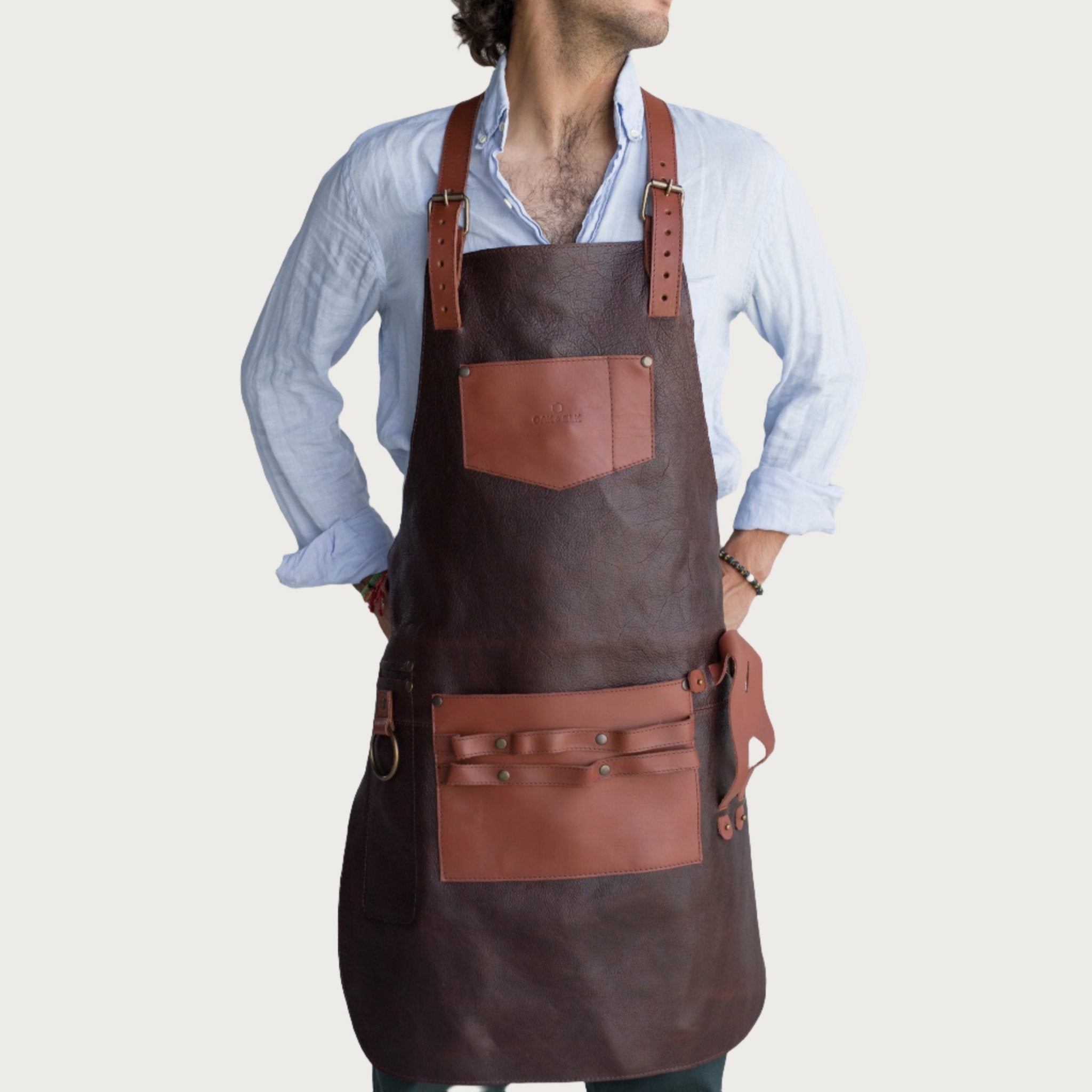
Hair clippings are the reason barber pockets differ from chef pockets. An open patch pocket facing straight up will fill with cut hair within two clients. Look for pockets that are angled, gusseted, or set slightly under a flap so debris falls past rather than in. Beyond that, think in zones:
- Chest: shears and combs, kept high and vertical so blades are not pointed into your body when you bend.
- Waist: clipper, guards, and a folded neck strip or towel. This is your highest-traffic zone, so it should be the most reinforced.
- Side: phone, cards, or a small brush. Keep anything you do not want covered in product on the outer edge.
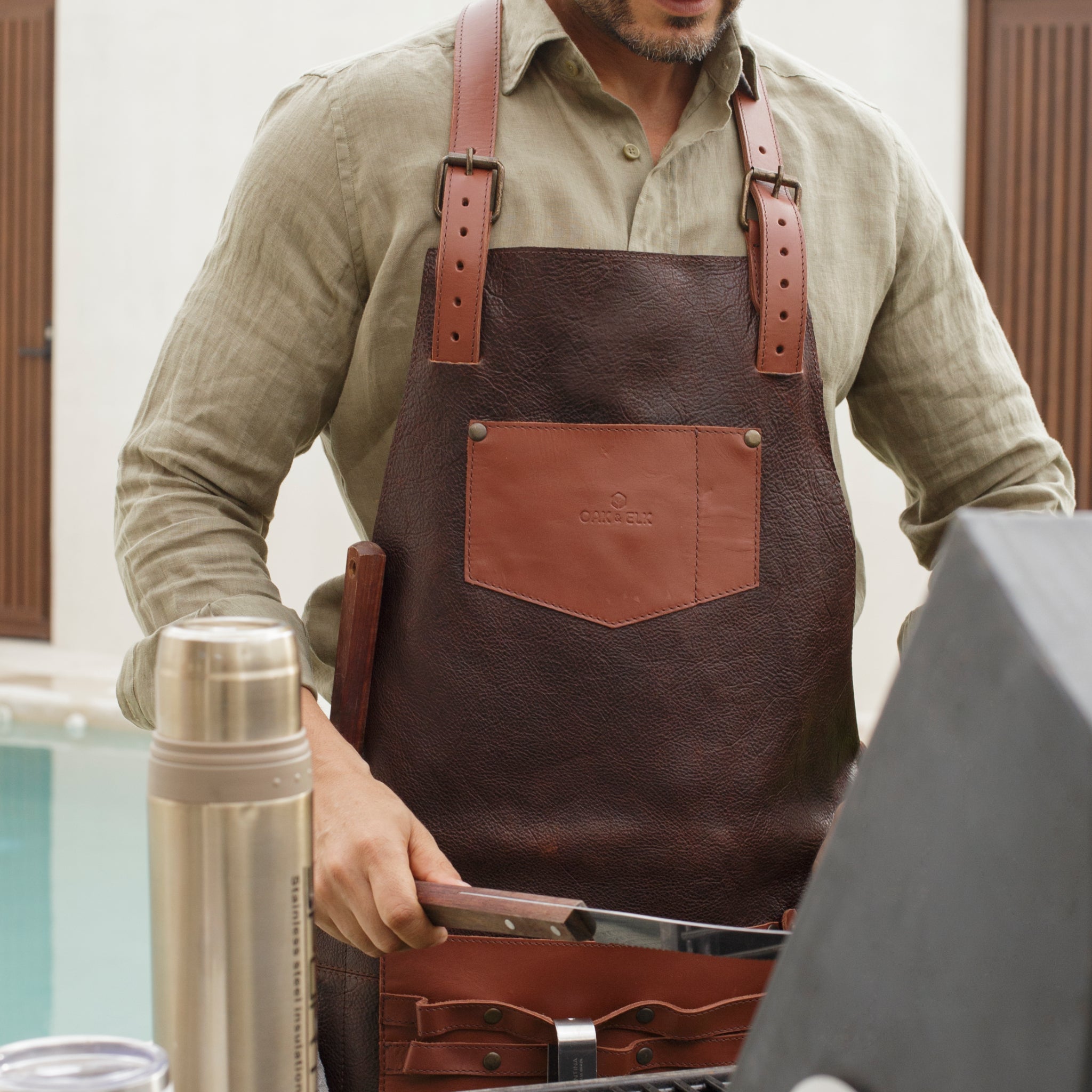
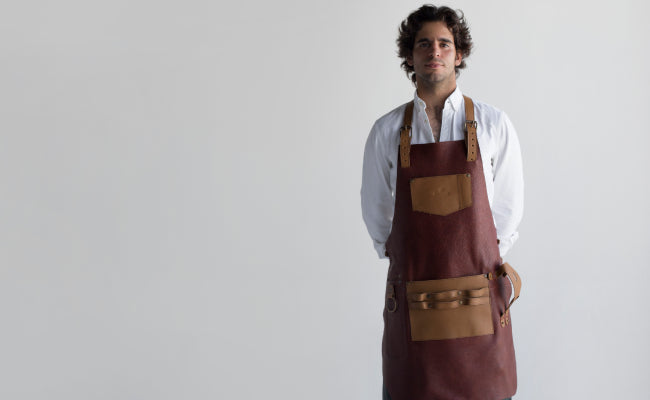
The Max Leather Apron in pebbled leather is built around this kind of multi-pocket layout, with dedicated tool spaces, fully adjustable straps, and a hanging handle originally designed for a beverage that doubles neatly as a spot to clip a spray bottle or towel. It comes in Nutmeg, Coldbrew, Black, Tan, and Copper Brown at $280.
What leather protects against, and what it does not
Be precise here, because vague claims lead to ruined aprons. In a barbershop, a leather apron reliably handles:
- Hair clippings, including short, sharp neckline trimmings that embed in woven fabric
- Water splash from the shampoo bowl and steam towels
- Brief contact with styling products, pomade, and oils, wiped promptly
- General abrasion from leaning against the chair and station
It does not make you invulnerable. Bleach and peroxide-based developer will lighten or spot most finished leathers if left to sit, and there is no such thing as a bleach-proof hide. If you do heavy color work, wipe splashes immediately and consider a dedicated coated apron for lightening services. Leather is also not a substitute for certified protective gear in any trade that involves molten metal or sustained flame.
Leather, canvas, and blended aprons compared
| Material | Weight on the shoulders | Clipping and water resistance | Cleaning | Best for |
|---|---|---|---|---|
| Full leather bib | Heaviest | Highest | Wipe down; conditioner every few months | Barbers with heavy tool loads who want a piece that ages well |
| Canvas with leather trim | Moderate | Good; canvas can absorb product | Spot clean; leather parts wiped | Long shifts, warm shops, lighter tool kits |
| Coated fabric | Lightest | High until the coating cracks | Wipe or wash | Color-heavy services and short replacement cycles |
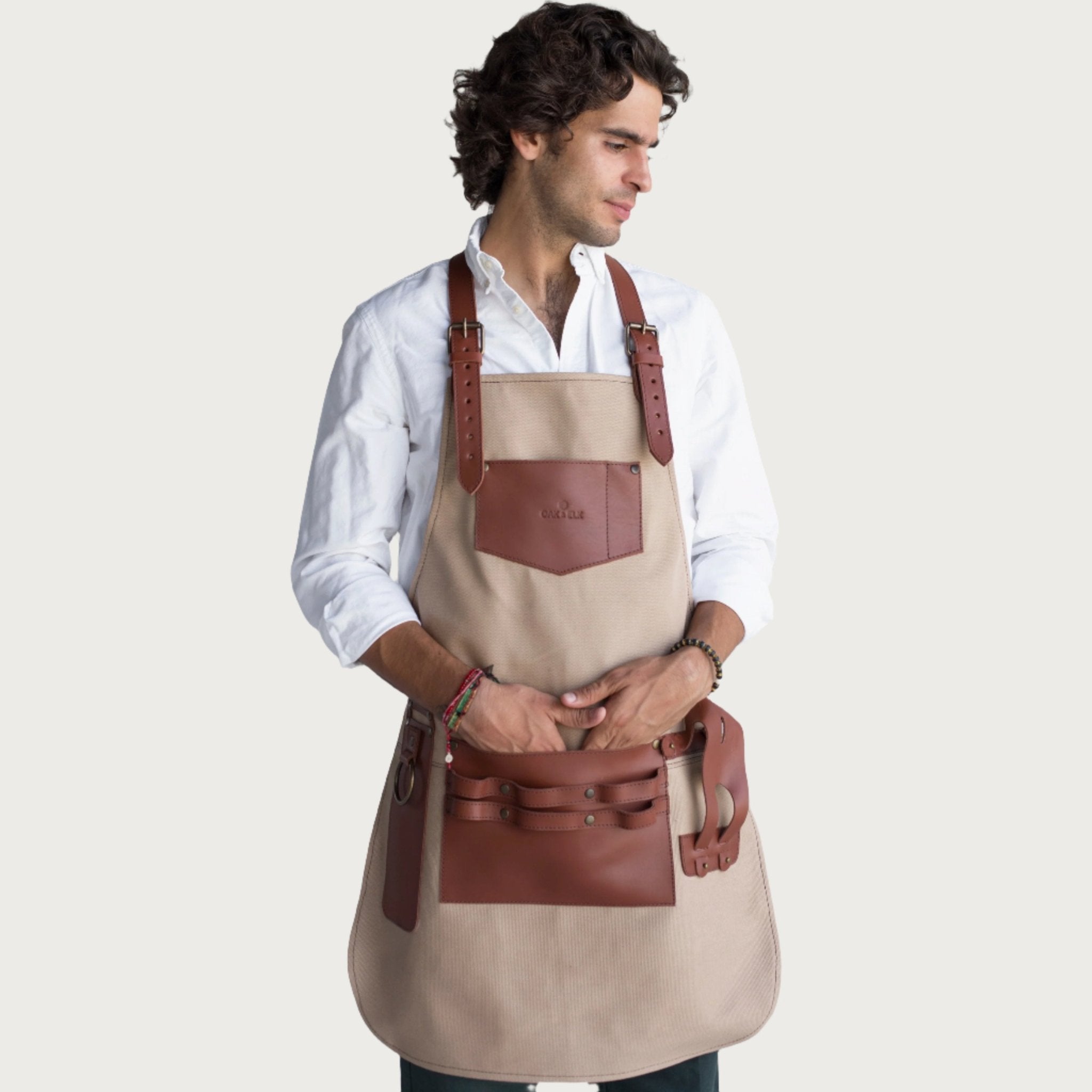
If the full-leather weight is more than you want on a busy Saturday, the Vic Canvas & Leather Apron pairs a canvas body with leather panels and the same adjustable-strap system, in Beige, Black, Blue, Gray, and Olive at $250. Shops outfitting a front-of-house or assistant station often add the simpler Server Aprons in durable fabric at $75.
Getting the size and coverage right
Measure before you buy rather than guessing from a model photo. Two numbers decide the fit:
- Bib width: measure across your chest from armpit seam to armpit seam. The bib should cover your sternum without cutting into your arm swing when you raise shears to a fade.
- Length: measure from your collarbone to where you want the hem. Most barbers want it at or just above the knee, since a longer hem catches on the chair base and the hydraulic pedal.
Then adjust the straps while wearing your normal shop shoes and standing at your station, not in front of a mirror at home. The waist strap should sit at your natural waist, snug enough that the apron does not swing when you pivot between the chair and the counter.
Daily and weekly care
The routine is short, and it is what separates an apron that looks better in year three from one that looks tired by month six.
- Between clients: brush clippings off with a dry towel, working downward along the grain. Do not rub them in.
- End of shift: wipe with a barely damp cloth, then hang it on a hook rather than folding it over a chair. Folding sets creases that become cracks.
- Weekly: check the seams around the waist pocket, the highest-stress point, and clear hair from the stitch lines with a soft brush.
- Every few months: apply a thin, even coat of leather conditioner and let it absorb overnight.
For a fuller routine, including how to handle oil marks, see our nine tips for keeping leather aprons in top condition. If you are curious how this piece of workwear became a trade symbol in the first place, our piece on the legacy of leather aprons from ancient craftsmen to modern makers traces the line. Barbers who also spend weekends in a shop or garage may find the fit notes in our guide to leather aprons for woodworking useful, since the tool-load logic carries over.
Frequently asked questions
Is a leather apron too hot for a busy barbershop?
Full leather does hold more heat than twill, particularly in a shop without strong airflow. Most barbers manage it by wearing a short sleeve underneath and loosening the waist strap slightly. If your shop runs warm year-round, a canvas body with leather panels breathes noticeably better.
How do I get hair clippings out of a leather apron?
Brush downward with a dry, slightly stiff towel or a soft brush so the clippings fall away from the grain. For hair caught in stitch lines, a dry toothbrush along the seam works. Avoid lint rollers on textured leather, as the adhesive can leave residue on pebbled finishes.
Will hair color or bleach stain a leather apron?
It can. Developer and lightening products will spot most finished leathers if they sit on the surface, and no leather is bleach-proof. Blot immediately with a dry cloth, then wipe with a barely damp one. For heavy color days, use a dedicated coated apron.
How long should a leather barber apron last?
With daily use, a well-made leather apron with reinforced pocket seams and adjustable hardware should outlast several fabric ones, and it develops a patina that reads as time in the chair. Lifespan depends far more on whether you hang it and condition it than on how many hours it sees.
Choosing yours
Start with the strap: if you work full days with a loaded apron, go cross-back. Then check that the pockets are angled or covered, that both the shoulder and waist adjust, and that the hem clears your chair. Get those three right and the rest is preference, from Black for a modern shop to Nutmeg or Coldbrew for a warmer, more traditional room.